Custom Industrial Labels
Main category for chemical, safety, equipment, electrical and tracking labels.
View detailsResource Guide
Industrial label materials should be chosen by application, not by material name alone. PET, PP, BOPP, vinyl, synthetic paper and coated paper can all be useful, but the right discussion depends on surface, environment, adhesive, print data, finishing and buyer documentation needs.
Digital proof before production. Material and adhesive options are discussed according to your application requirements.
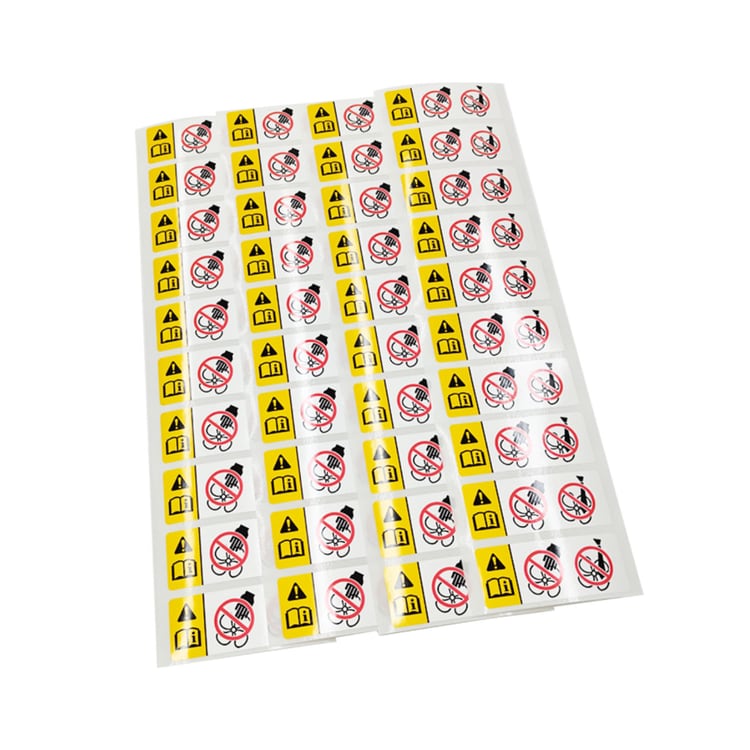
Choose the material after you define the surface and risk. Smooth packaging, chemical containers, outdoor panels, electrical rating labels and asset tags may need different constructions. A buyer should describe the surface, exposure, required lifetime, print data and application method before asking the supplier to recommend a material.
Material selection becomes clearer when the buyer starts from the use case. Chemical labels may prioritize moisture and content clarity. Electrical rating labels may need small text readability and durable film. Asset labels may need barcode readability and abrasion resistance. Safety labels may need color contrast and adhesive compatibility with the application surface.
PET is often discussed for durable industrial label needs. PP and BOPP are common film options for moisture-resistant label projects. Vinyl may be considered for flexible or outdoor-style label applications. Paper can still be useful for packaging, cartons and lower-exposure uses. These are general material categories, not final specifications; exact constructions, adhesive and finish must be confirmed for the project.
A strong film does not solve the project if the adhesive is wrong for the surface. Painted metal, textured plastic, drums, cartons and curved containers may need different adhesive discussions. Tell the supplier whether labels are applied to clean dry surfaces, rough surfaces, low-energy plastic, outdoor surfaces or surfaces exposed to oil, moisture or cleaning.
Industrial labels often carry data, not just logos. Barcode labels, QR code labels, serial number labels and rating labels should be designed so the readable area is protected. If scanning matters, provide the code type, scanner distance, minimum code size, data file and any verification requirements. Print method, ribbon, finish and material all affect the discussion.
Some buyers ask about FSC paper, SGS test report review, RoHS, REACH or other customer-specific documents. These should be handled as project requirements, not decorative website badges. Ask which document is required, which material it applies to and whether the buyer needs a report review before bulk production.
A clear industrial label brief saves time and makes the quotation more useful. Use this list before contacting CYJ.
After reading the material guide, the buyer should move into the closest product group so the inquiry stays focused.
Main category for chemical, safety, equipment, electrical and tracking labels.
View detailsFor rating labels, appliance labels, model labels and small text layouts.
View detailsPublic industrial labeling resources commonly group material choice with durability, scanning and adhesive selection. These references are context, not a promise that one construction fits every project.
Supplier context on synthetic labels, barcode readability and durable materials.
View detailsPublishing context: content should be helpful, reliable and written for people first.
View detailsFAQ
There is no single best material. The right option depends on surface, environment, adhesive, print data, finish and project requirements.
No. PET may be useful for durable applications, while paper can be suitable for cartons, packaging or lower-exposure uses. Choose by application.
Send application, surface, environment, label size, quantity, artwork, data needs and any required document or compliance request.