Equipment & Machinery Labels
For labels placed around panels, controls, machine ID areas and maintenance zones.
View detailsResource Guide
A custom die-cut label shape should follow the real placement area, not just an attractive outline on a screen.
Digital proof before production. Material and adhesive options are discussed according to your application requirements.
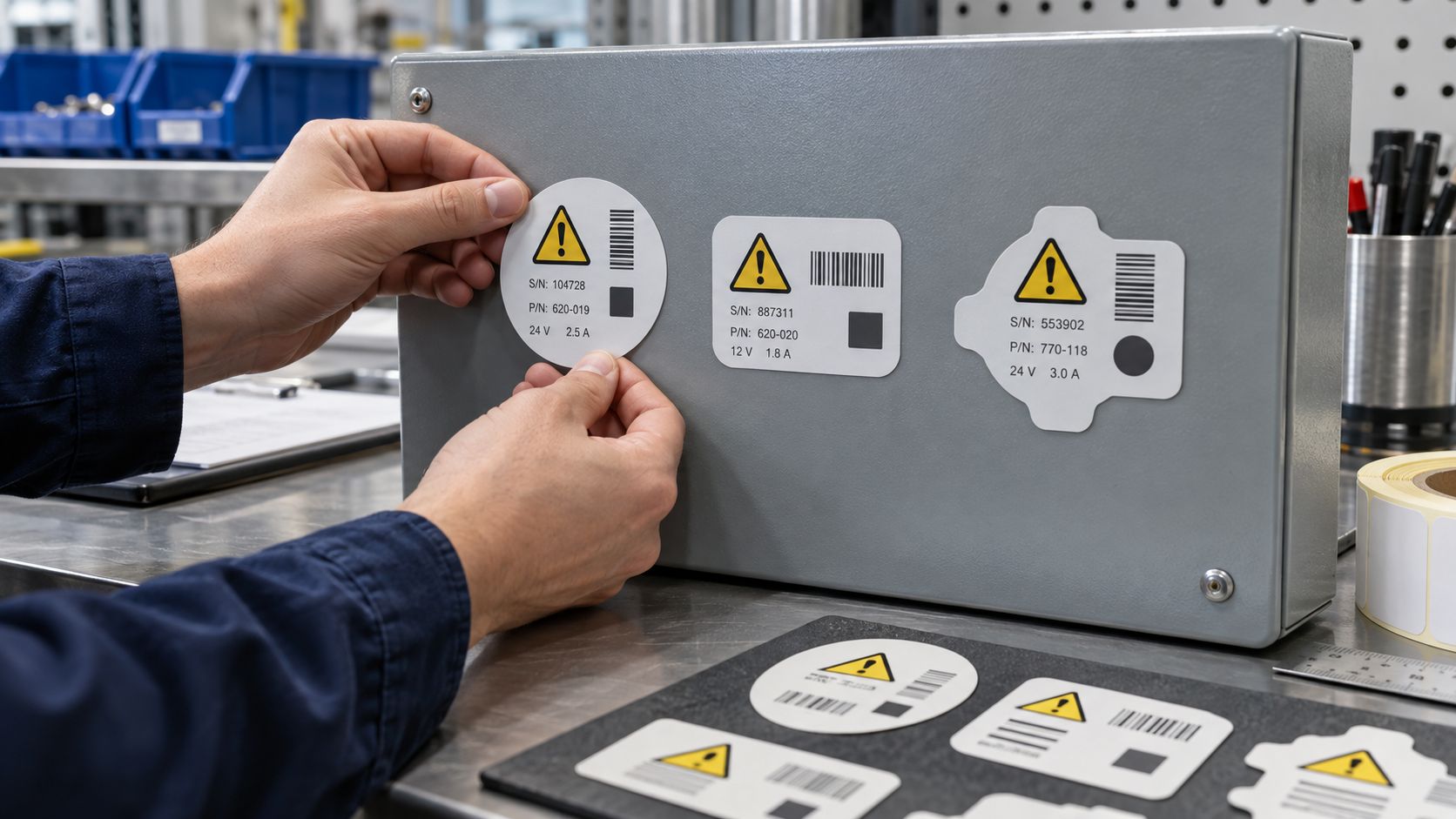
A label shape can make information easier to place around a panel edge, a container curve, a screw position or a brand element. It can also create unnecessary complexity when the physical surface was never measured. Start with the available label area and obstacles first, then decide whether a rectangle, rounded corner, circle or custom contour actually solves a use problem.
In a composite equipment-label project, a custom contour makes the artwork feel distinctive. The installer later finds that the shape sits too close to a raised screw and needs to be moved by hand. The useful lesson is simple: a good die line has to work on the actual product, not just around the artwork. A placement photo and a measured panel drawing are stronger inputs than a decorative outline alone.
Share the physical constraints before requesting a die-cut quote. Corners, curves, recessed areas, button cutouts, seams and product edges can all affect the usable shape. If the label includes a barcode, warning icon or small text, those elements still need a protected layout area after the shape is confirmed.
A production proof should make the finished cut shape clear. Ask the reviewer to check the die line, orientation and the distance between critical content and the edge. When a label is applied by machine or supplied on rolls, include the winding direction and dispensing method in the same review.
FAQ
Many shapes can be discussed, but the finished size, material, application method, die line and production format all need review.
A clear finished-size and cut-line reference helps the proof process. The supplier can discuss the required file setup for the project.
Yes, roll format can be discussed with the label shape, spacing, core and winding direction needed for the application method.