ESD Labels: Identify Susceptible Items Without Claiming Protection
Published
The artwork request says ESD label and includes two similar hand-in-triangle symbols. One identifies an item susceptible to electrostatic discharge. The other indicates a protective function. Choosing the one that looks more familiar can change what the label tells the handler.
Obtain the approved symbol and its intended meaning from the responsible ESD or product owner before printing. Keep identification of a sensitive item separate from a claim that a material or product provides protection. The label reproduces that decision; it does not qualify the underlying item.
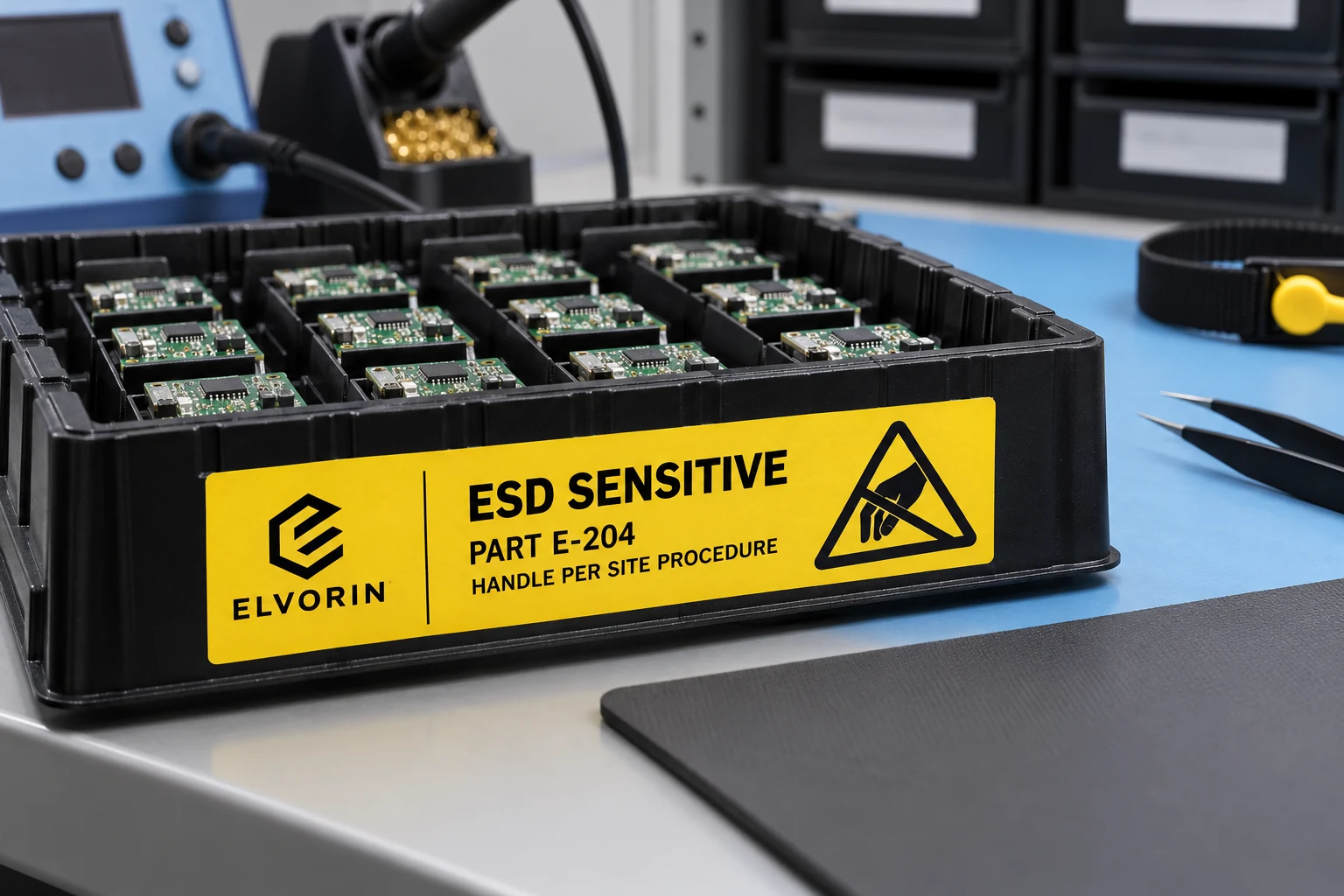
Ask what the symbol is meant to identify
The EOS/ESD Association's fundamentals distinguishes susceptibility and protective symbols. Its current ANSI/ESD S8.1 standard page describes the purpose of clarifying these meanings. Use the responsible owner's approved artwork and applicable requirements rather than redrawing a symbol from memory.
Ask whether the mark belongs on a susceptible assembly, a protective material, an equipment item or another approved application. Keep that object identity in the brief. A package containing a sensitive component and a package qualified to provide a protective function create different approval questions.
This guide does not determine ESD performance or certify a material. It addresses the procurement handoff that prevents an ambiguous ESD request from becoming the wrong printed message.
Do not let a graphic become an unsupported claim
A symbol on an ordinary label does not establish protective properties for the label, package or equipment. If the buyer wants to claim protection, obtain the responsible technical approval and the exact authorized marking instruction. The print supplier should not infer performance from a yellow-and-black design.
Likewise, an item marked as susceptible still needs the owner's appropriate handling controls. The label is part of communication, not a replacement for those controls. Do not add a sensitivity value, test level or standard reference unless the owner provides and approves it for the specific item.
An illustrative artwork review can use a clearly identified symbol-reference card without assigning any performance result to a real product. Keep example imagery distinct from evidence of an actual tested package or installation.
Build a symbol-purpose approval card
| Field | Owner input | Review question |
|---|---|---|
| Object | Exact product, assembly or material | What is being identified? |
| Purpose | Susceptibility or approved protective function | Does the symbol communicate the intended meaning? |
| Source artwork | Authorized file and reference | Is this the approved symbol version? |
| Supporting wording | Exact approved text | Does it reinforce rather than contradict the symbol? |
| Placement | Marked object or package photo | Will the intended handler encounter it? |
| Authority | Responsible technical approval | Who confirms the application? |
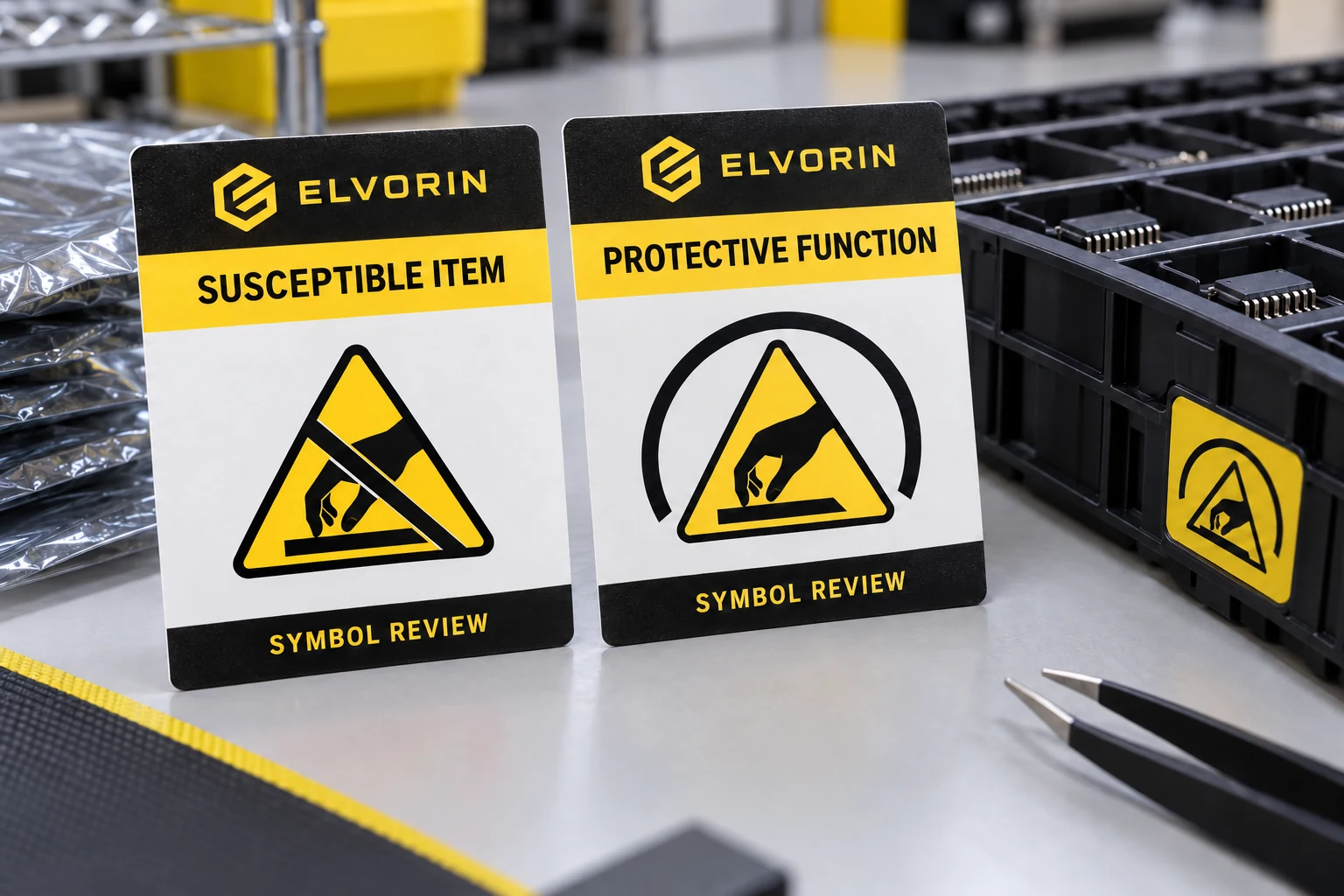
Keep optional data fields separate from the symbol itself. A product ID, lot field or barcode can support the workflow, but should not alter the approved graphic or crowd its intended presentation. The warning-layout guide covers the broader reading hierarchy.
Review the final output at the use point
Confirm the correct symbol, orientation and approved wording in the complete proof. Compare the output with the authorized source, including details that distinguish one meaning from another. A small preview may make different graphics look deceptively similar.
Then review the physical placement and readability under the intended conditions. A technically correct mark hidden beneath another label does not communicate at the required moment. The owner should define the relevant visibility and application requirements.
Material and adhesive suitability remain separate decisions. A label can carry the correct ESD message while being unsuitable for the selected surface or process. Conversely, a durable label with the wrong symbol is not made acceptable by good adhesion.
Keep existing approved artwork when it is correct
If the current symbol and application are owner-approved and remain suitable, preserve them. A fresh redraw can introduce unnecessary differences. Obtain the original controlled source rather than tracing a worn photograph when that source is available.
If a reference file is ambiguous, ask the responsible owner to select the appropriate authorized graphic before ordering. Do not make two alternative production versions and let the packing team choose by appearance. The selection belongs upstream with the meaning and application review.
For mixed products, map each approved symbol and wording version to the relevant item records. A common label template should not hide a switch between identifying sensitivity and claiming protection. Make the distinction visible in the proof and order matrix.
Treat later substitutions as content changes
A designer replacing a missing graphic with a similar library icon may think the layout is unchanged. Preserve a rule that symbol substitution requires the appropriate owner review. Keep the source reference and final proof with the purchase record.
If an application or product function changes, have the owner reassess the marking. The label supplier can reproduce the revised instruction, but cannot decide that an earlier symbol still fits simply because the new item occupies the same package size.
For electronics and electrical labels, prepare an ESD-marking brief with the approved symbol file, intended meaning, exact wording, product or package photos, surface details, dimensions and quantity. Organize the requirements on the contact page and send supporting files through email or WhatsApp. The first approval is what the mark means on that object; printing follows that decision.