Materials & Adhesives
For face stock, adhesive, finish and application-condition discussion.
View detailsResource Guide
The printed face of a label gets attention, but liner choice and release behavior can affect application, dispensing and waste on the production floor.
Digital proof before production. Material and adhesive options are discussed according to your application requirements.
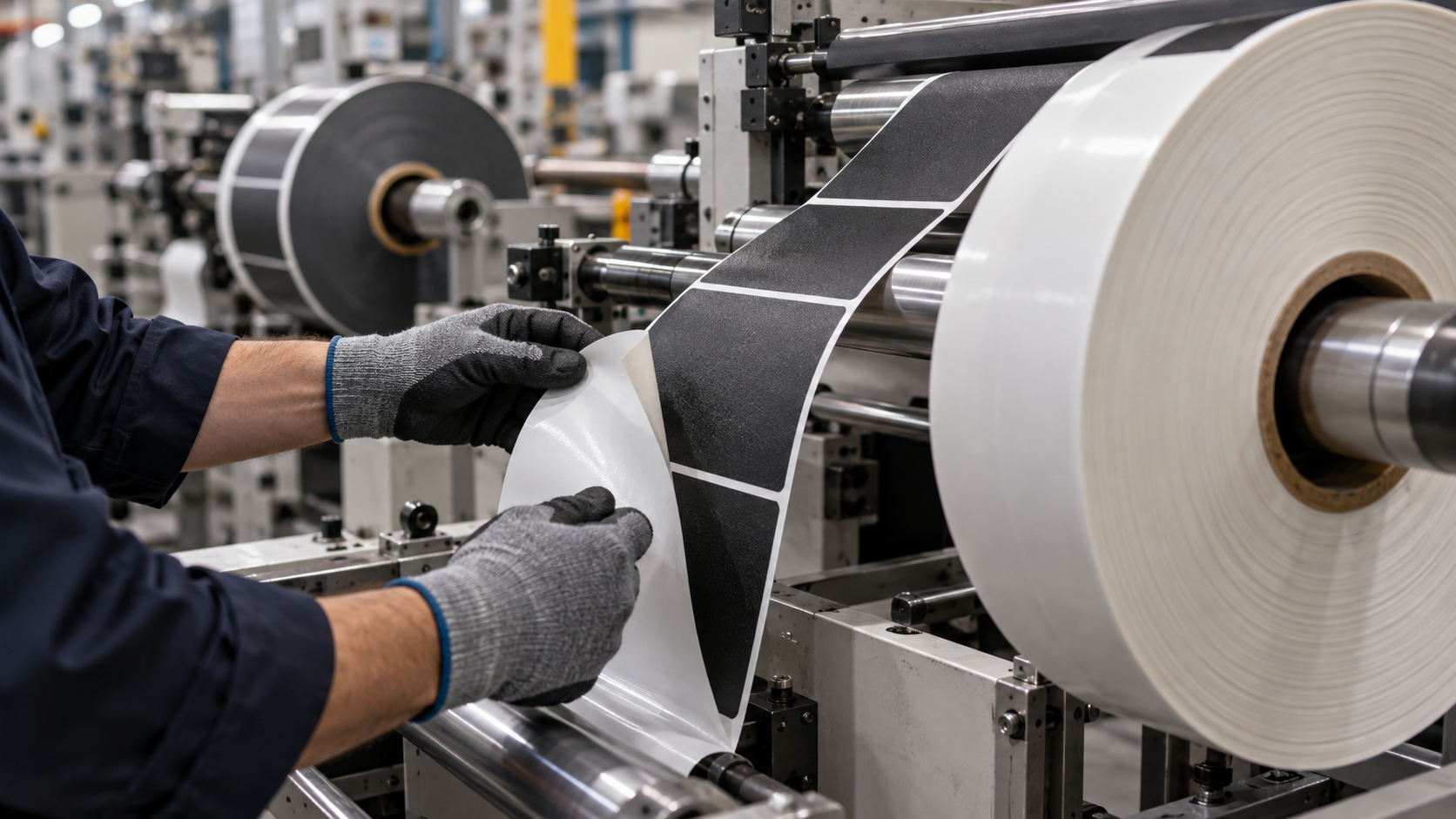
Buyers naturally focus on the printed face, adhesive and finished appearance. The liner underneath also matters because it carries labels through converting, packing, dispensing and application. Release behavior is the relationship between the adhesive and liner as labels are peeled away. It should be discussed as a production and application detail, not as an invisible afterthought.
In a composite roll-label project, the sample label looks correct when peeled by hand at a desk. On the actual line, the application team needs a roll direction that matches the dispenser and a release feel that suits the process. The decision is not about choosing a liner by name. It is about describing the machine, speed, label size, application method and rewind direction before the construction is finalized.
Manual application may prioritize handling, label presentation and simple peel behavior. Automated dispensing adds equipment geometry, roll direction, label spacing, web tension and the exact point at which the label separates from the liner. A buyer does not need to solve every technical parameter alone, but the supplier needs enough operating context to raise the right questions.
Artwork files often arrive first, while roll information arrives after a proof is approved. That order creates avoidable rework. Add the roll format to the same request: labels per roll, unwind direction, gap requirements, core preference, machine restrictions and packing needs. The label face and the label delivery format should be approved together.
For a new dispenser, unusual label shape, demanding adhesive or critical throughput, a representative trial can reveal questions that do not show up on a flat proof. The objective is not to promise a universal result; it is to compare the selected construction with the actual application process before bulk production.
FAQ
It is the backing material that carries pressure-sensitive labels before application and supports converting, dispensing and handling.
The way a label separates from its liner can affect manual handling and automated dispensing. It should be reviewed with the actual application method.
Include labels per roll, core size, unwind direction, dispenser or machine details, label dimensions, spacing requirements and quantity by SKU.