Preprinted GHS Label Frames: Approve the Finished Label, Not the Empty Template
Published
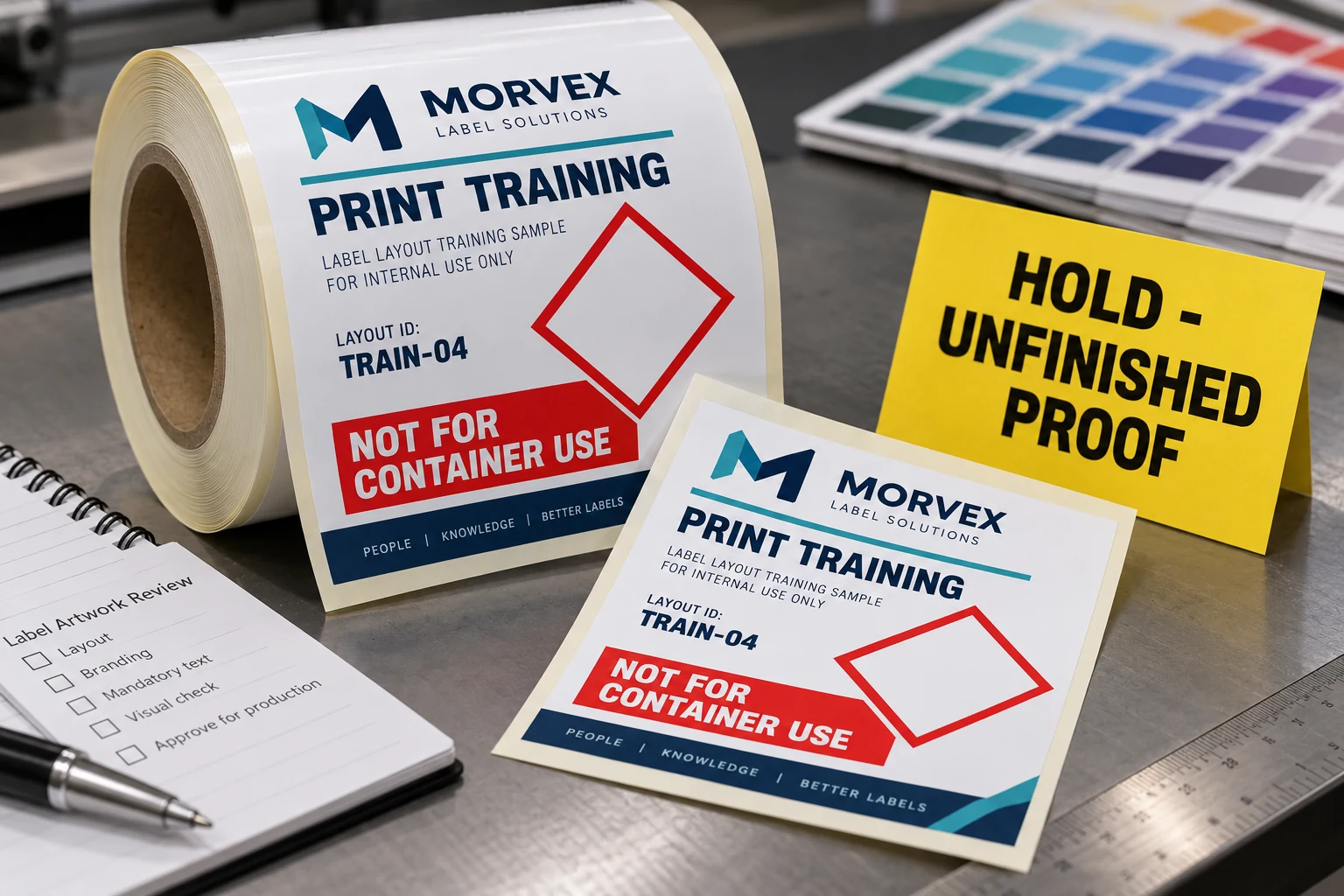
A common preprinted roll looks efficient: print several red frames once, then add the required symbols and text for each product later. The purchasing problem appears when one product needs fewer pictograms than the stock has frames.
Before ordering that roll, ask what every frame will look like on the completed label. For labels within the applicable US OSHA Hazard Communication framework, a spare empty red frame cannot simply remain. A note saying it is intentionally blank does not solve the problem.
The qualified hazard-communication owner must approve the actual final label and its completion process. This guide addresses that narrow stock-and-proof decision. It does not classify a chemical, select its pictograms or declare any illustrated label compliant.
Review what leaves the line
The incoming roll and the finished label are different artifacts. A stock proof may show where later information will go without demonstrating what the final printing step will leave behind.
Map the proposed stock to each approved product layout. Identify which frames will contain the required symbols and what happens to every unused frame. Include the person responsible for approving the completed result. A purchasing signature on the stock design should not be mistaken for that content approval.
For the applicable US rule, OSHA Appendix C, section C.2.3.1 states that a red frame without a hazard symbol is not a pictogram and is not permitted on the label. That makes the final state of spare frames a decision to resolve before supply, rather than an aesthetic preference left to the operator.
The broader GHS information-before-printing guide covers approved content and responsibility. Here the extra question is precise: what will remain visible after a common preprinted template has been completed for this product?
Do not fill a spare frame with reassuring words
A buyer might propose adding an X, “Intentionally Blank,” or similar wording inside the frame. It can seem clearer than leaving white space, especially when the stock is already on the shelf.
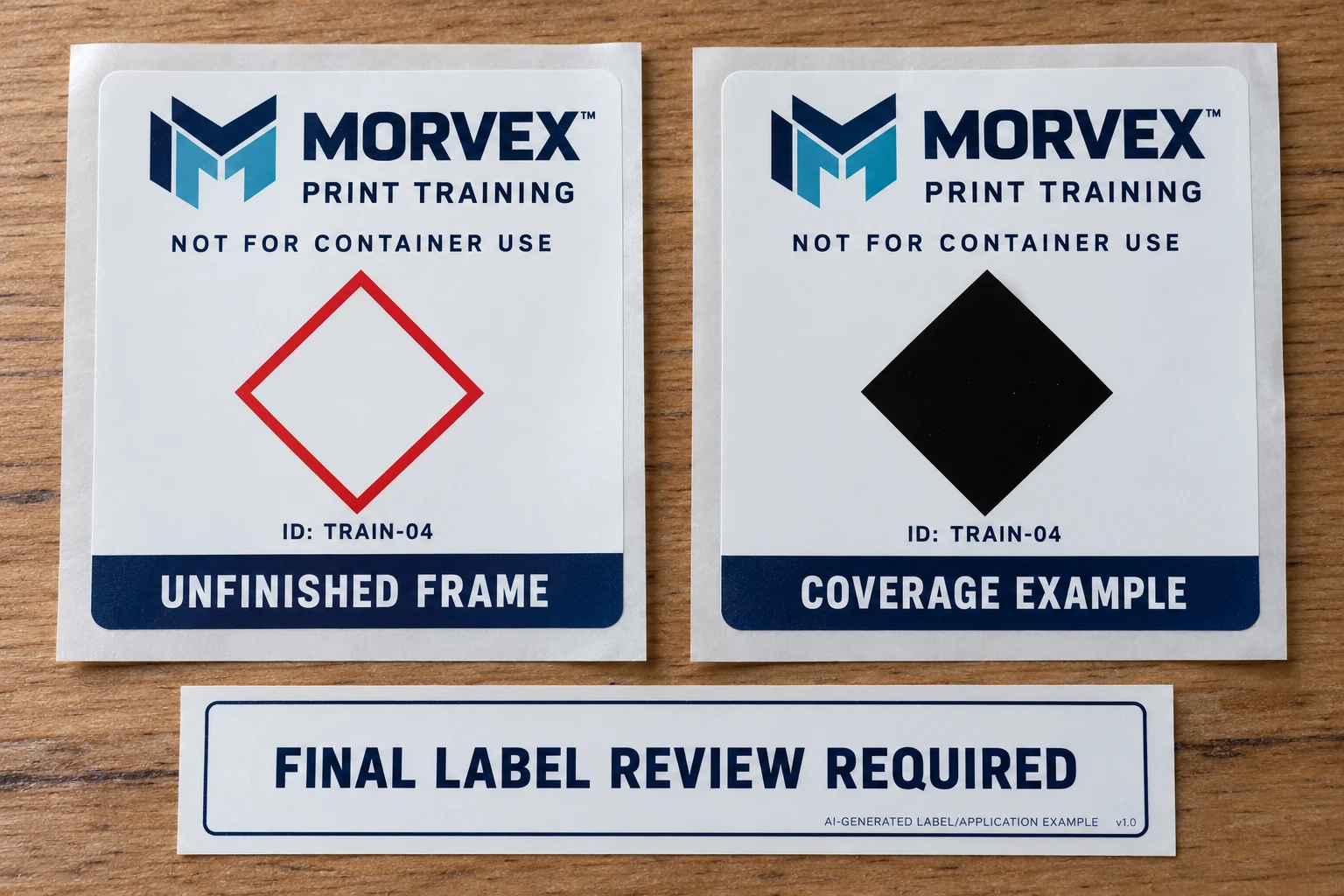
OSHA's December 23, 2014 interpretation expressly rejects those approaches. In its stated HCS 2012 circumstances, the letter also discusses complete blacking-out of an unused frame and says partial coverage is insufficient. Read that as a scoped interpretation alongside the current rule, not a complete approval of a new chemical label or an arbitrary covering method.
Do not ask an operator to invent the remedy during a filling run. The qualified owner should determine whether an intended completion or coverage process is appropriate for the actual label and applicable requirements. The print discussion then concerns reproducing that approved result consistently, with the limitations recorded.
Compare common stock with a layout that has the required frame count
Common stock can reduce the number of blank templates to manage, but it adds a completion task. Each product needs the correct content, and any unused frames need an approved disposition. That obligation does not disappear because the purchasing team prefers one roll code.
A layout containing the required frame count can be simpler when the product range and artwork are stable. It can remove a later step and make the final proof easier to compare with approved content. It may also require more controlled stock versions. Compare those actual handling demands rather than declaring either approach universally cheaper.
For an illustrative decision, consider two products whose approved layouts require different pictogram arrangements. The question is not whether their names can fit the same template. It is whether the proposed workflow produces each approved final label without an unresolved extra frame or an undocumented operator choice.
Give completion its own review record
Build a record that connects the preprinted template to the completed output. Keep it short enough to use during procurement and changeover:
| Field | Decision to retain |
|---|---|
| Product and scope | Approved product reference, market and responsible reviewer |
| Stock layout | Preprinted template identity and frame arrangement |
| Frame disposition | Required symbol placement and approved handling of unused frames |
| Final reference | Completed artwork and the actual result submitted for review |
| Release or hold | Named approver, unresolved exceptions and affected stock |
The record does not supply hazard statements or approve classification. Those inputs must already come from the responsible party. Its purpose is to prevent a gap between content approval and the physical sequence used to produce the label.
Use a hold when the final reference is unresolved
If the completed proof still contains an unexplained frame, separate that issue from ordinary print approval. A sharp print or attractive design does not close it. Ask the qualified owner for the required disposition and retain the corrected final reference before releasing the affected work.
If preprinted rolls already exist, identify the affected stock and planned jobs. The owner must decide whether the proposed workflow can use it, requires an approved change or needs another disposition. Avoid treating an operator's improvised mark as permission to continue.
Also review the relevant product variants. Approval of one completed layout does not automatically cover another layout with a different pictogram arrangement. State which products and versions the review actually includes.
Keep the quote attached to approved content
For chemical labels, the useful starting point is the approved final information and the intended production sequence. Stock commonality is a purchasing option to evaluate after those requirements are understood.
I would ask for both the preprinted template and the proposed completed reference. That makes the unresolved task visible before quantities and roll formats distract from it. A printer can discuss the reproduction brief; a training image cannot become the authority for a chemical's hazards.
Planning preprinted stock? Prepare a chemical-label requirements brief with the qualified owner-approved final artwork, template reference, frame-disposition instructions, product variants, container photos, dimensions, completion method and quantities. Use the contact page to organize the requirements, then send supporting material through the existing email or WhatsApp path for a project-specific discussion.