Tire Label Print Rubs Off: Test the Handling Path Before Choosing a Finish
Published
The label is still attached, but the tire size is becoming difficult to read. There may be a mark on the neighboring tire or packaging too. Calling the whole problem poor adhesion sends the supplier toward a different question from the one receiving needs answered.
Record the damage to the printed face and the contact path that precedes it. Compare the proposed finish under representative handling, then review readability and any transfer separately from attachment to the tire. Do not assume a laminate, varnish or thicker face material will automatically solve every observed mark.
Preserve the label before cleaning away the evidence
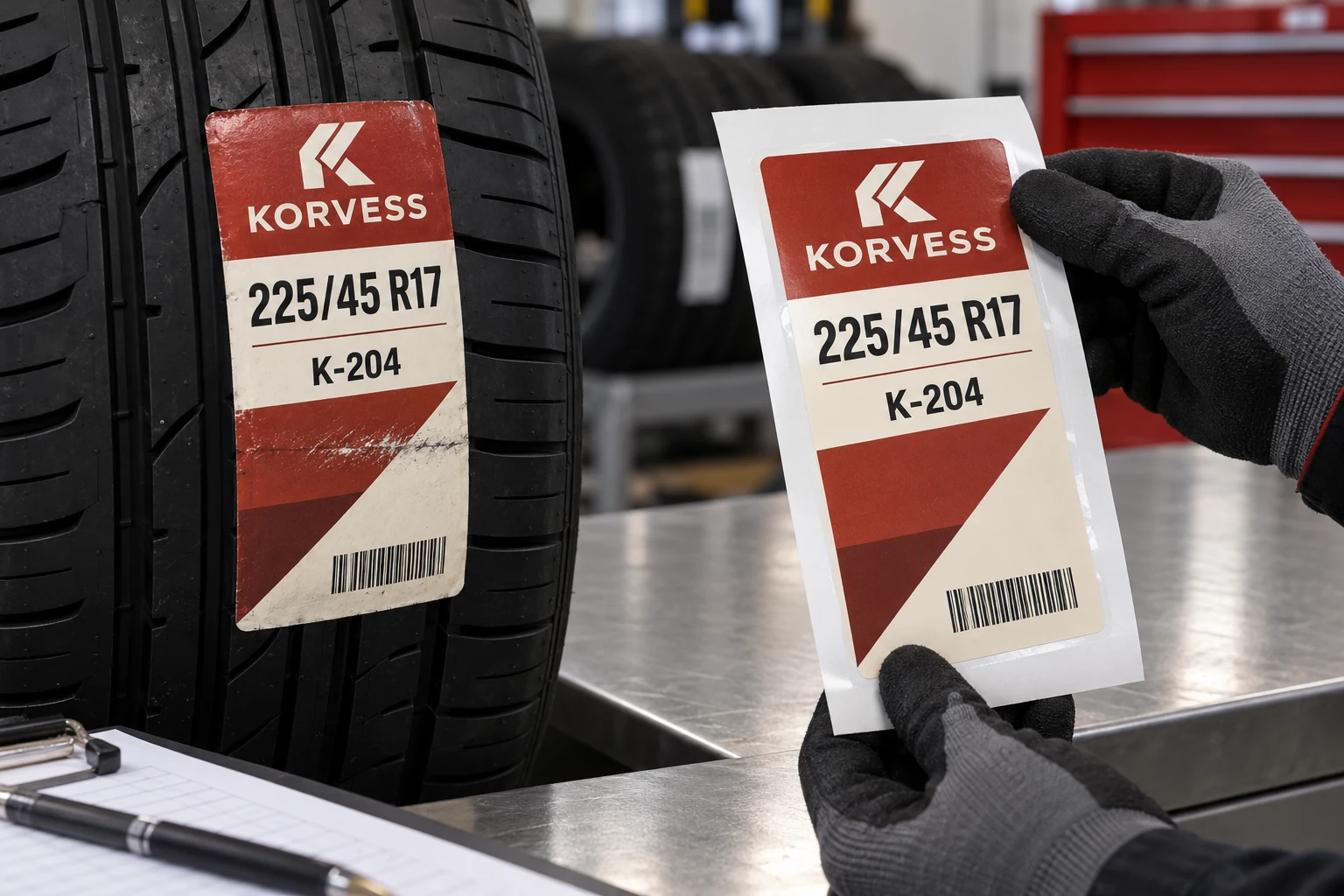
Photograph the affected label in place and identify the tire, label version and known handling stage. If there is a corresponding mark on another surface, photograph that relationship before cleaning or separating the evidence where practical and appropriate.
Describe what is visible: missing print, scuffing, a crease, a dark deposit or material transferred elsewhere. Keep the suspected cause in a separate field. A black mark on a light panel is not proof that the label ink migrated; it may have another source that the observation alone cannot establish.
Keep an unused sample from the relevant supply where available. Its identity helps the comparison, but it does not recreate the conditions experienced by the damaged label. Record any gaps in the history rather than filling them with an assumed route.
Map the contacts the label actually encounters
Follow the intended handling path from application to the point where information must still be read. Identify stacking, wrapping, contact with neighboring tires, bench handling and other relevant interactions. Include only conditions that belong to the project.
Ask which contact can be avoided through placement or handling changes and which is inherent in the intended process. Moving the label out of an unnecessary rubbing path may be a better solution than changing its finish. Any new position still needs the appropriate tire-surface and reading review.
The material considerations guide establishes the broader application brief. This narrower record links a particular print-damage observation to the contacts a sample needs to represent.
Write the trial before comparing finishes
Define a representative comparison with the responsible quality or application owner. State the sample constructions, contact materials, sequence, relevant conditions and observations to record. Use any required test method or acceptance criterion supplied by the buyer; do not invent a universal rub count.
| Trial field | Record | Decision supported |
|---|---|---|
| Sample identity | Artwork, construction and finish | Which output was reviewed? |
| Contact path | Actual material and handling stage | Does the comparison represent use? |
| Face condition | Text, color and visible damage | Is the required information preserved? |
| Other surface | Presence and location of any transfer | Is there a separate contamination concern? |
| Code result | Agreed capture or verification observations | Can the intended data task still be completed? |
| Attachment | Observations kept separately | Is adhesion also part of the issue? |
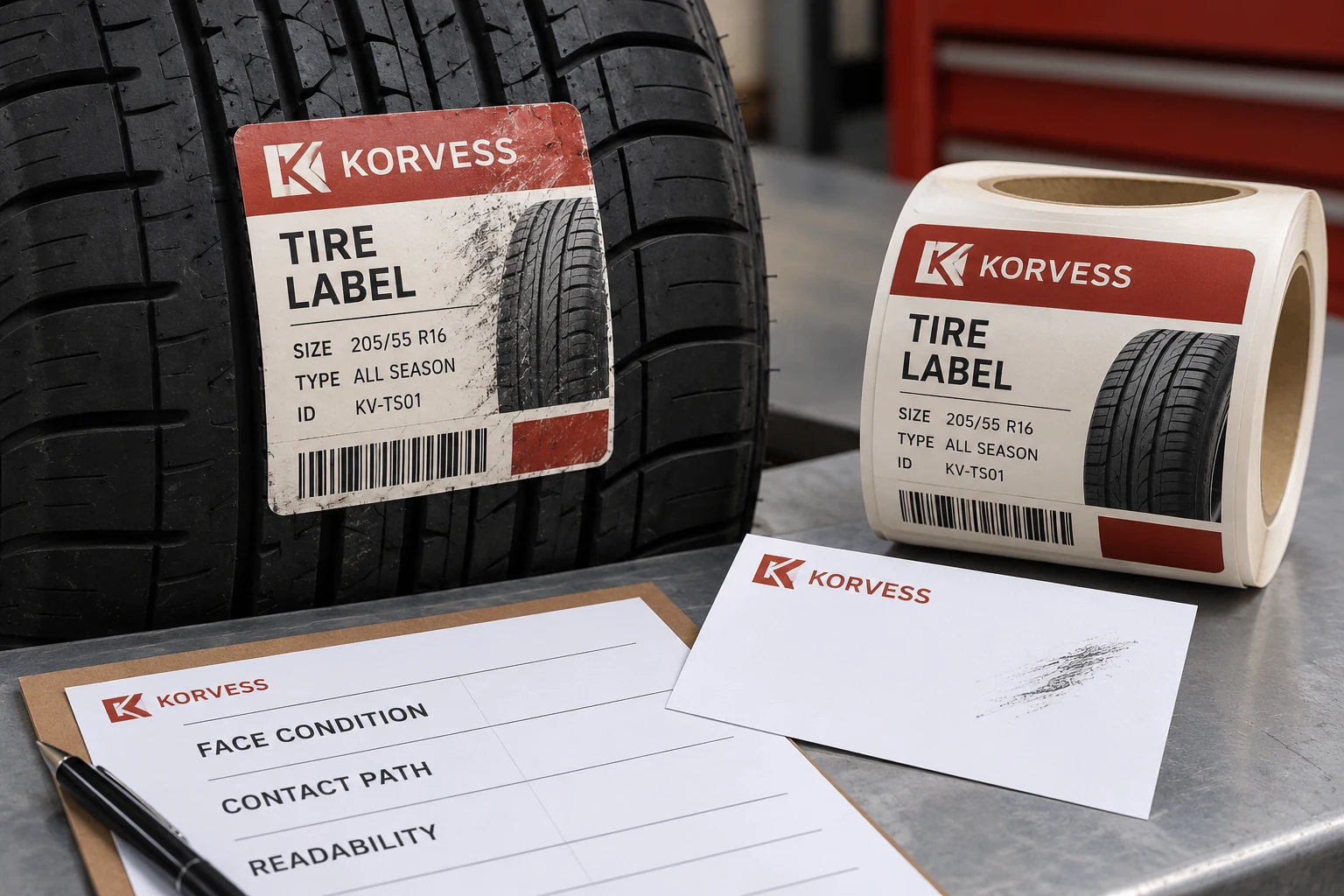
If multiple variables change together, record that limitation. A favorable candidate does not prove which single component caused the improvement. The purchasing decision can still be useful if it accurately describes the whole qualified construction.
Let the information requirement set the decision
A minor cosmetic change and an unreadable tire identifier are different outcomes. The buyer should define which fields must remain readable, where and for how long under the intended use. Do not accept a damaged code because the brand panel still looks good.
Review human-readable text as well as codes. A successful decode from one angle may leave the manual fallback unusable. Conversely, a visible scuff outside critical information may be acceptable under an agreed appearance requirement. Keep those decisions explicit rather than asking one photograph to speak for every acceptance criterion.
The finish comparison guide explains why finish selection belongs to the whole construction and exposure. It does not establish that one generic finish name guarantees the result for a tire project.
Compare a process change with a construction change
If damage occurs during an avoidable handling step, review that step first. Protecting the label from unnecessary contact may preserve existing suitable stock and avoid introducing another material into the design. Validate the revised process rather than assuming the problem disappears.
If contact is inherent and the current construction cannot meet the agreed requirement, compare appropriate candidates on the actual application. Ask the supplier to identify the proposed construction and any tradeoffs affecting flexibility, appearance, code glare or removal.
Do not let a more protective face finish silently change the rest of the specification. Confirm the label still dispenses, conforms and performs its reading task. A material improvement at one stage is useful only if the complete label remains suitable for the job.
Keep the observation with the approved reorder
Retain the relevant damaged sample, unused reference, trial description and decision scope. If the handling route changes later, the owner can determine whether the prior evidence still applies. A simple approved notation without those conditions is difficult to use when a new complaint appears.
For tire tread labels, prepare a print-wear brief with in-place photos, the contact path, critical readable fields, sample references, dimensions, intended removal and quantity. Organize the requirements on the contact page and send supporting files through email or WhatsApp. The useful question is what touches the printed face before the buyer needs to read it.