Tire TIN and Inventory Labels: Keep the Molded Record in View
Published
A receiving team wants the tire identification information in its inventory file. The designer receives a sidewall photograph and a request to put the DOT number on a new sticker. Some characters are unclear, and the proposed layout labels an internal SKU as though it were the same record.
Keep the tire's actual identification marking and the supplemental inventory identity separate. If the workflow requires a transcription, connect it to a readable source and an owner-approved field definition. Do not reconstruct missing characters or present a custom inventory sticker as a replacement for required tire markings.
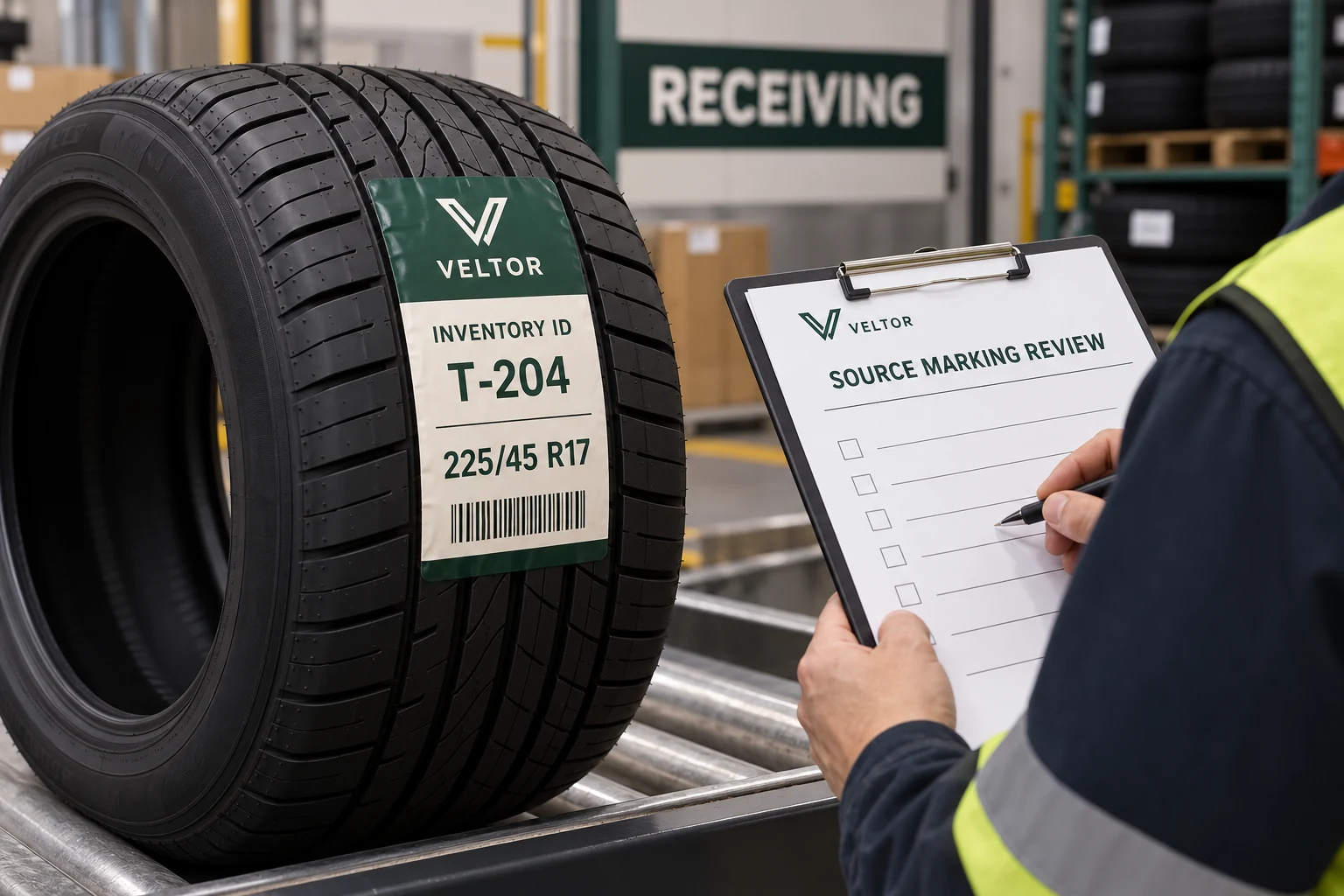
Start with the physical source
NHTSA's tire information directs users to the sidewall TIN and explains the date information in its final four digits. The current tire identification requirements in 49 CFR 574.5 govern the formal marking framework. A label printer should not infer that framework from a convenient sample image.
For the procurement handoff, ask the responsible tire business which information it needs captured and why. Obtain clear source images or its controlled product records as appropriate. If one view does not show the required information, collect the necessary view rather than guessing the missing segment.
Do not use this article to decide whether a tire is safe, compliant or suitable for service. The narrower task is preserving the relationship between a source marking and the supplemental record used in the buyer's workflow.
Distinguish a product code from a source marking
An internal SKU may identify a product type across many tires. A receiving reference may identify a transaction. A TIN field has a different source and meaning. A tidy label can carry several fields, but their headings must not imply they are interchangeable.
If the system uses a separate internal identifier, retain that identifier under its approved rule. Store a required source-marking transcription in its own field. Do not concatenate the fields into an improvised code unless the data owner has explicitly specified and validated that scheme.
The tire inventory guide covers the broader scan task. This source review adds the controls needed when a buyer wants a physical tire marking represented in the inventory record.
Create a source-to-record check
Use a record that lets another reviewer find the exact source behind the entered value.
| Field | What to retain | What remains unresolved if absent |
|---|---|---|
| Tire or receiving reference | Owner-approved link to the physical item | Which tire was observed |
| Source view | Clear image or controlled source reference | Where the characters came from |
| Captured text | Exact observed value in the designated field | What was actually transcribed |
| Review | Named responsible check and date | Whether the entry was confirmed |
| Unreadable segment | Explicit exception, not a guessed value | What needs another observation |
| Supplemental label | Its own approved identity and wording | Whether the print represents the intended record |
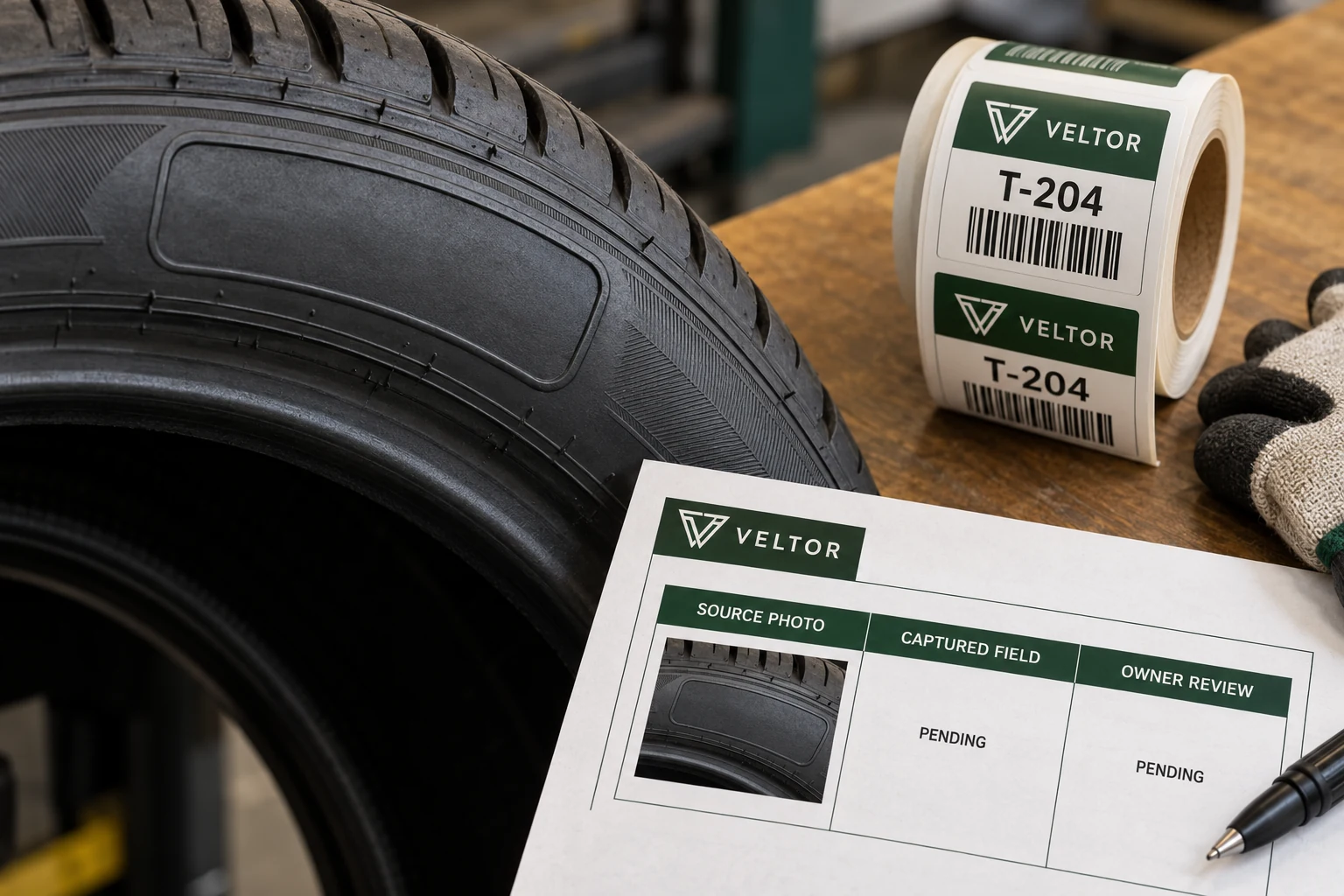
The table is a proposed receiving control, not a statutory registration form. The responsible business should determine any additional recordkeeping or regulatory obligations for its role and market.
Treat uncertain characters as an exception
If a character cannot be read, preserve the uncertainty. Obtain another suitable image or have the authorized owner inspect the source. Enlarging a blurred picture does not create missing evidence, and a character that looks plausible is not an approved transcription.
Avoid copying a value from a neighboring tire to fill the gap. Similar appearance, size or shipment location does not establish that the missing marking is the same. The workflow should say who resolves uncertain records and whether the affected receiving action must wait.
If the system requires a complete value before it can continue, the application owner needs an authorized exception process. Printing a fabricated value to satisfy a required field makes the downstream record look more certain than the evidence supports.
Keep the supplemental label visibly supplemental
Use headings that accurately describe the buyer's inventory reference and any approved copied information. Do not decorate the sticker with certification-style marks or wording that could be mistaken for an official approval. The printer should reproduce authorized content within the agreed scope.
Placement also matters. The equipment or tire-process owner should confirm that the supplemental label does not obscure information that must remain available for inspection. A photograph showing the proposed position can make this review concrete before a roll is ordered.
Where the existing marking and inventory process already provide adequate access, no additional sticker may be needed. A controlled database field or improved receiving capture can solve the requirement without adding another physical identifier to the tire.
Proof the link, not only the text
For a representative record, compare the source, captured field, proof and resulting inventory lookup. Confirm which value is encoded and which is only readable text. A code that opens the wrong record cannot be approved because the copied text looks correct.
Retain the source reference with the approval and define what happens if a transcription is corrected later. The data owner should decide which records and labels are affected. Do not silently replace a field while leaving an earlier supplemental label in circulation without a disposition decision.
For tire identification labels, prepare a source-marking brief with clear tire photos, the approved field definitions, sample records, proposed label position, dimensions and quantity. Organize the requirements on the contact page and send supporting files through email or WhatsApp. The print discussion should begin with a traceable source, not a best guess at a blurred character.