Zebra: Thermal-Transfer Ribbon Types
Manufacturer explanation of wax, wax-resin and resin ribbon choices.
View detailsResource Guide
The cheapest ribbon can be right for a short indoor label and wrong for a hard-used asset tag. Choose media and ribbon together, then test the printed result.
Published 2026-09-27
Digital proof before production. Material and adhesive options are discussed according to your application requirements.
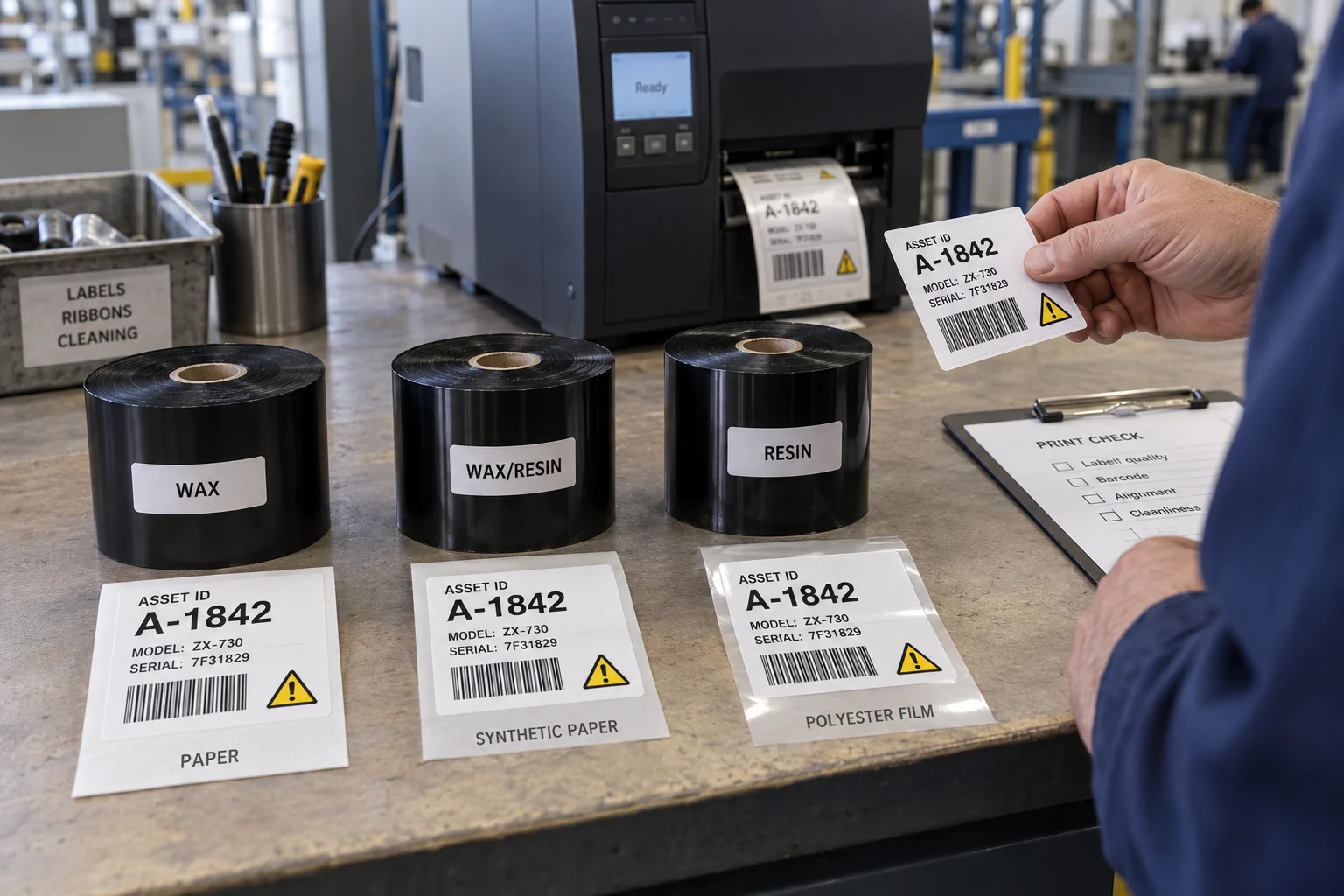
Wax, wax-resin and resin are families of thermal-transfer ribbon, not a simple good-better-best price ladder. The label stock, printer, ribbon and exposure all affect the finished print. Wax is often considered for compatible paper in relatively gentle conditions; wax-resin and resin may suit more demanding uses with the right coated paper or synthetic stock. Zebra manufacturer guidance describes these categories but also stresses matching the actual media and ribbon. Ask about the proposed combination and its test conditions, not just the word resin.
Picture an operator printing asset IDs for two jobs. One batch will sit on cartons in a dry warehouse; another will be handled and wiped on equipment. The buyer tries to use one ribbon across both because a single stock code is easier. That is a plausible workflow, not a customer case. It may work after testing, but the convenience of one ribbon does not make the two environments identical. The real choice is whether one qualified media-and-ribbon pairing meets both briefs or whether separate supplies reduce rework.
A print can look dark when new and still smear, rub off, or fail to decode after handling. Set the printer to the approved media and ribbon settings, then make a representative label with the smallest text and barcode you intend to use. Avoid changing print darkness and ribbon at the same time unless the trial records both settings. Zebra notes that thermal-transfer media requires a ribbon and that ribbon width must cover the media in the referenced printer guidance; follow the instructions for your actual printer model.
An indoor carton ID that is read once may not need the most resistant printed construction. A higher-cost resin ribbon can also be a poor choice if the stock and printer do not match it. On the other hand, a low-cost wax print that requires relabeling a frequently cleaned asset may cost more over its life. Look at the actual readable life required, not only the ribbon price per roll. If the label must survive chemicals or high abrasion, specify the substance and contact process before any durability claim is accepted.
Send the selected label stock or a sample roll, printer details, ribbon currently used, the code artwork, cleaning or handling routine, and an example of any failure. Request samples printed by the proposed combination. Compare adhesion of print, legibility, decoding and dispensing after the relevant trial. Freeze the accepted construction in the reorder record so a quiet ribbon substitution does not change a proven label. A trial supports one defined workflow; it does not certify every chemical or outdoor condition.
Cover image is an AI-generated comparison scene. Its printed barcodes and equipment data are illustrative, not verified production values.
FAQ
No. Performance depends on the named ribbon, face stock, printing settings and chemical contact conditions. Test the finished combination.
Some combinations may work, but compatibility and durability differ. Use the printer and supplier guidance and verify both printed stocks.
Follow the instructions for the actual printer and media. Zebra guidance for the referenced model says the ribbon should be as wide as or wider than its media.