Write-On Equipment Labels: Test the Pen on the Finished Surface
Published
The maintenance label has a generous date field, but the pen beads on the finish or smears when the technician handles the panel. The layout has room for handwriting. The supplied surface has not yet been shown to support that handwriting task.
Approve the intended pen or marking method on the finished label construction. Check how the entry is made, when it can be handled and what exposure it must survive. A writable base material does not establish that the surface remains writable after another finish is applied.
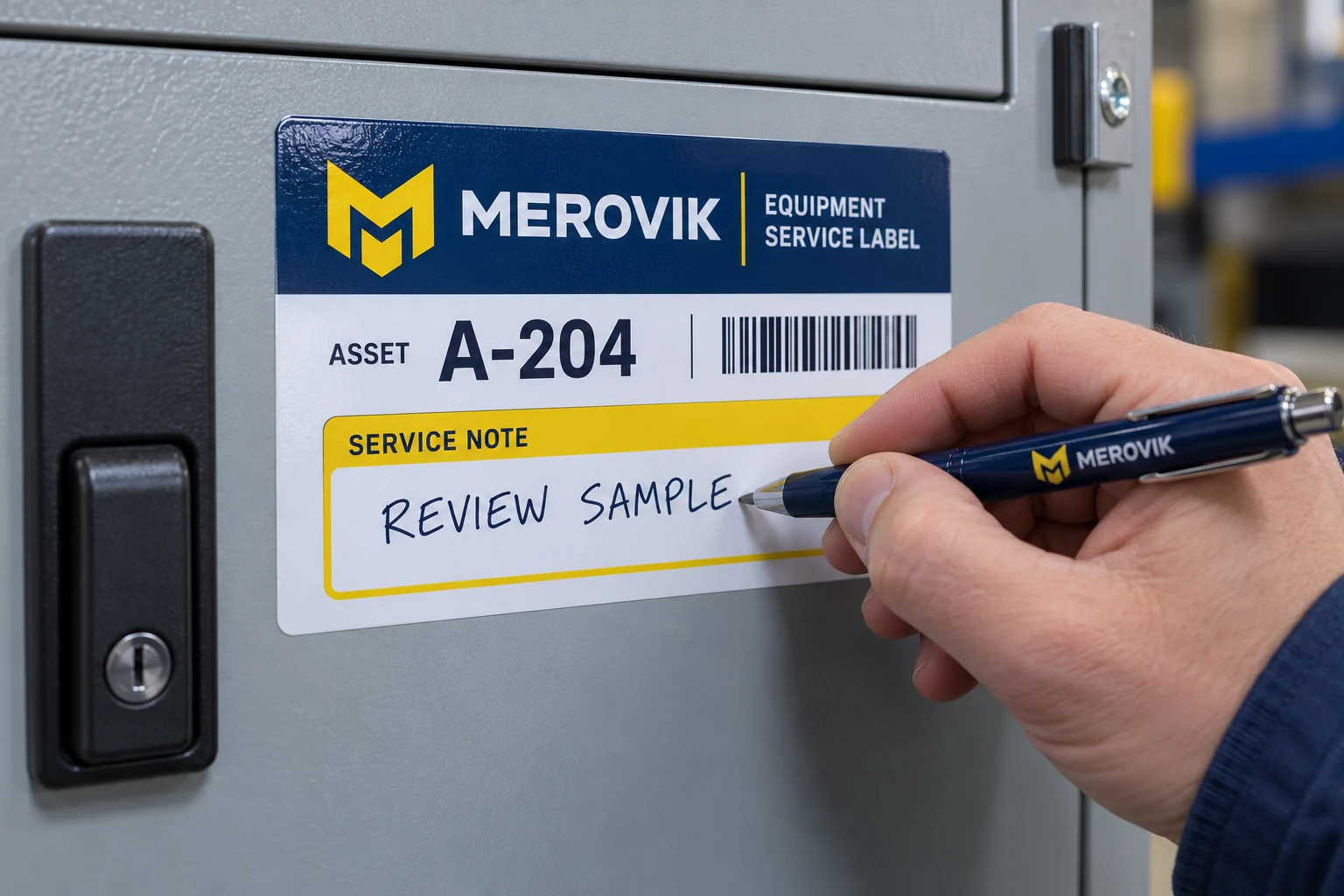
Define what the handwritten entry must do
A temporary note, a service date and a record used for an operational decision have different requirements. Identify who writes the entry, where they write it, how long it must remain legible and which approved record gives it meaning.
Keep the stable equipment identity separate from changing handwritten information where the workflow requires it. A service-date field should not obscure the asset number or turn a temporary note into an apparent permanent specification. The equipment owner should approve the wording and interpretation.
Do not infer that a completed date field authorizes operation or proves maintenance was performed. This guide concerns the reproduction and survival of an entry; the underlying maintenance and approval process remains the owner's responsibility.
Specify the actual writing tool
Ask what pen, marker or other method the team intends to use. Record the product reference and any relevant instructions from its manufacturer. Generic descriptions such as permanent marker can hide meaningful differences between products and uses.
If the business cannot control the writing tool, make that uncertainty part of the requirement. A construction that works with one tested pen should not be advertised as compatible with every pen staff may find in a drawer. The buyer may choose to standardize the tool or use another method for variable information.
The finish guide covers finish selection more broadly. A write-on field adds a specific compatibility task involving the top surface that the pen actually touches.
Test the supplied finish, not a convenient offcut
Use a representative finished label, including the proposed coating or laminate. Record which area is intended for writing and whether that area differs from the rest of the label. A test on uncoated stock does not qualify a coated production label.
Write the kind of entry the operation actually needs. Include representative small text, digits and any required initials or symbols. Use an authorized illustrative record rather than writing a false completed maintenance status on real equipment.
| Review field | Observation to retain | Buyer decision |
|---|---|---|
| Writing method | Actual pen or marker reference | Is the tool controlled? |
| Finished surface | Construction and writable-area reference | Was the supplied finish tested? |
| Initial entry | Legibility and visible behavior | Can staff complete the field? |
| Handling interval | Owner-approved procedure and observations | When may the label be handled? |
| Intended exposure | Relevant rubbing, cleaning or environment | Does the entry remain fit for its task? |
| Correction method | Approved way to replace or amend an entry | Can obsolete information be controlled? |
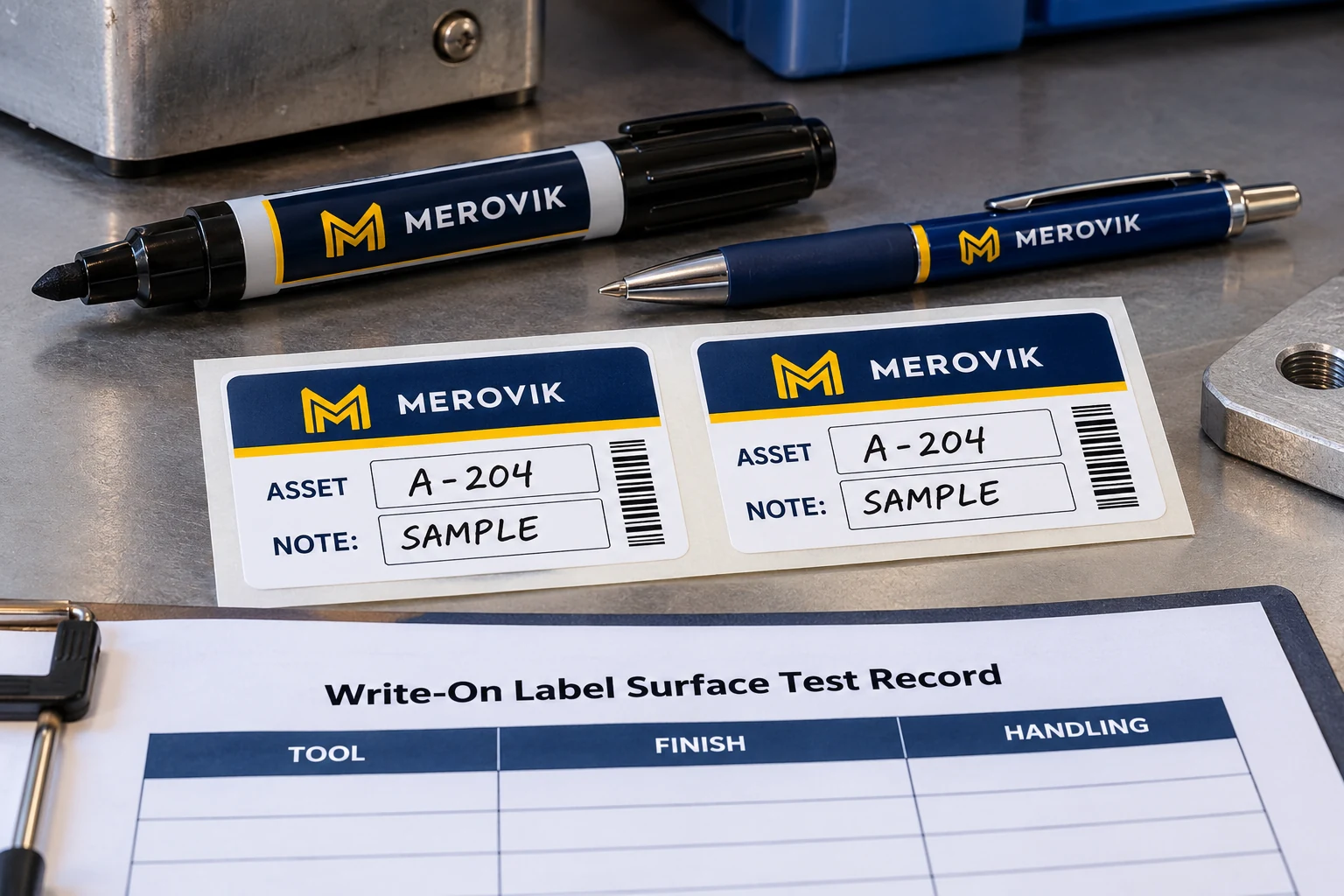
Set acceptance requirements with the responsible owner. Do not invent a universal drying time or durability claim from the appearance of one fresh entry.
Observe the entry after the next real action
The first useful check may be what happens when the technician moves a hand across the field, closes the panel or follows the normal cleaning process. Define representative conditions with the owner rather than improvising exposure to harsh chemicals.
Record both the written entry and the underlying printed information. A surface treatment that helps handwriting should still preserve the label's other required functions. Keep any code scan or print-quality requirements separate from the pen test.
If the entry fails, retain the sample and the method used. State whether the problem appeared during writing, handling or later exposure. That timing helps the supplier discuss alternatives without claiming the observation proves a particular chemistry is unsuitable.
Preprinted or on-demand information may be better
If the variable field is generated from a controlled system and rarely needs manual entry, a printed solution may reduce handwriting ambiguity. Compare the actual workflow, equipment and data ownership before deciding. Printing introduces its own compatibility and control requirements.
If staff need a short temporary note that changes frequently, a separately controlled replaceable field or tag may be more suitable than repeatedly writing over a permanent asset label. The owner should define how the changing status remains associated with the correct equipment.
If the existing construction works with the approved pen and handling method, keep it. A new finish is unnecessary when the actual problem is an uncontrolled substitution of writing tool or an unworkable procedure. Validate the correction before extending it to the full order.
Put the writing requirement in the purchase brief
Identify the writable area in the artwork and retain the approved sample with its pen reference and review conditions. If the finish changes on a reorder, repeat the relevant compatibility review. The label can look identical while presenting a different writing surface.
For equipment and machinery labels, prepare a write-on brief with the intended entry, actual pen, finished-surface sample, exposure and handling conditions, equipment photo, dimensions and quantity. Organize the requirements on the contact page and send supporting files through email or WhatsApp. A blank field is only useful when the approved entry can be made and kept readable.