Resource Guide
Asset Tracking Labels with QR Codes and Serial Numbers
Asset tracking labels connect equipment, tools, cartons, parts or inventory with a record system. The best custom label plan starts with the data structure, surface, scanning workflow, material durability and whether every label needs a unique QR code, barcode or serial number.
Digital proof before production. Material and adhesive options are discussed according to your application requirements.
Quick Answer for Asset Label Buyers
Start with the tracking workflow before choosing label material. Decide what the label identifies, where it will be applied, how it will be scanned, what data must be printed and whether labels need unique serial numbers. Then discuss material, adhesive, finish and roll or sheet format.
- ID TYPE: asset number, serial number, barcode, QR code or RFID-style reference
- DATA: fixed data, variable file, prefix, suffix and leading zeros
- SURFACE: metal, plastic, painted panel, carton, tool, equipment or container
- WORKFLOW: handheld scanner, phone QR scan, warehouse station or maintenance record
QR Code, Barcode or Serial Number
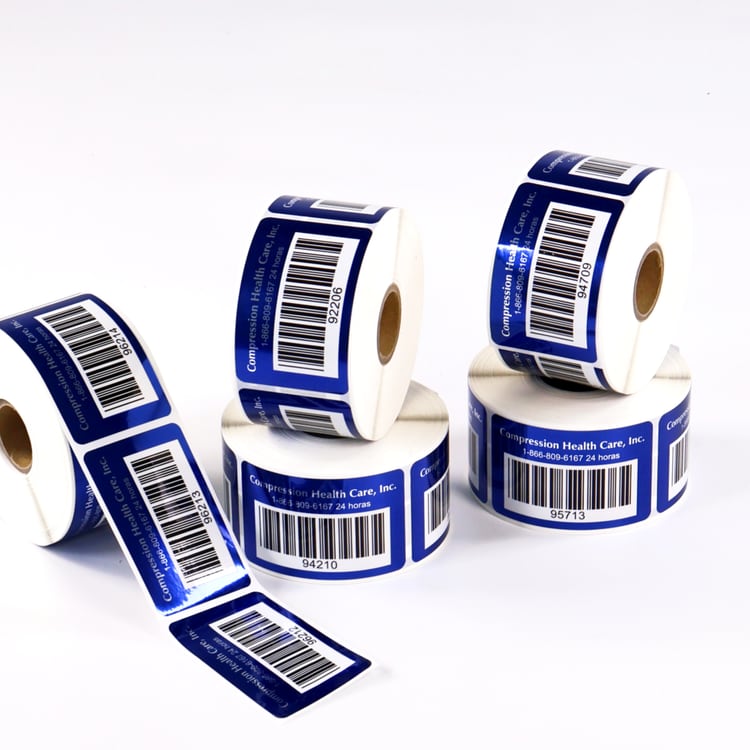
A serial number is human-readable and useful for manual checks. A barcode is useful for scanner-based workflows. A QR code can hold more data or connect to a web page or internal record. Many custom asset labels combine all three: a serial number, a barcode or QR code and company text.
Build the Data File Before Artwork
For variable data labels, the data file is part of the design. Send Excel or CSV data with one row per label. Confirm prefixes, suffixes, leading zeros, duplicate rules and whether the human-readable text should match the encoded code. This reduces proofing mistakes before production.
Match Material to the Asset Surface
Asset tags may be applied to equipment panels, metal surfaces, plastic housings, cartons, warehouse shelves or tools. Each surface may require a different material and adhesive discussion. If labels face abrasion, cleaning, outdoor use, moisture or oil, share those conditions before quotation.
Scanning and Readability
The label should be readable in the real workflow. Buyers should confirm code size, contrast, quiet zone, scanner distance and whether workers scan by phone or industrial scanner. If verification grading is required, provide that requirement before quotation instead of after proof approval.
Asset Label Quote Template
A strong inquiry makes the supplier understand both the label and the operation behind it.
- Asset type: equipment, tool, shelf, carton, container, part or fixed asset
- Data file: serial numbers, QR codes, barcodes, prefixes and human-readable fields
- Label size: readable area, code size and logo area
- Material: PET, PP, vinyl, synthetic paper, metalized film or Not Sure - Please Recommend
- Adhesive: permanent, removable, high tack or surface-specific discussion
- Format: rolls, sheets, individual pieces, core size and winding direction
Internal Links for This Project
This article should route readers to the exact asset, barcode or variable data product page, then to the quote form.
Industrial Barcode QR Code Labels
For industrial scan labels, warehouse codes and product tracking.
View detailsReference Points
Public standards and industrial labeling resources show why data structure, scanning and material selection should be planned together. The final label should be checked against the buyer workflow.
Brady Asset and Equipment Identification
Industry context on asset, equipment and workplace identification labels.
View detailsFAQ
Questions Buyers Ask
Can every asset label have a unique QR code?
Yes. Unique QR codes, barcodes and serial numbers can be printed when you send a clear data file and numbering rule.
Should asset labels be supplied on rolls or sheets?
It depends on how they are applied. Rolls can support repeated production workflows, while sheets or individual labels may suit smaller manual projects.
What makes an asset label durable?
Durability depends on material, adhesive, print method, finish, surface and exposure. Send the use environment before selecting a construction.