Resource Guide
Coastal Equipment ID Labels: Specify Exposure, Not Just Salt Hours
Near the coast, a sticker faces spray, sunlight, cleaning, temperature swings and a real mounting surface. A single salt-fog number cannot stand in for that whole service environment.
Published 2026-09-30
Digital proof before production. Material and adhesive options are discussed according to your application requirements.
Quick Answer: Describe the Service Location
Give the supplier photographs of the mounting surface and state whether the label sees direct sea spray, sheltered humidity, UV, washdown, abrasion or chemicals. ASTM B117 describes a controlled salt-spray environment used for comparative information, but cautions that stand-alone salt-spray results seldom correlate with natural-service performance. Do not turn a claimed number of laboratory hours into a field-life warranty. Ask which evidence applies to the exact face stock, print, overlaminate and adhesive proposed.
An Illustrative Pump-Bay Choice
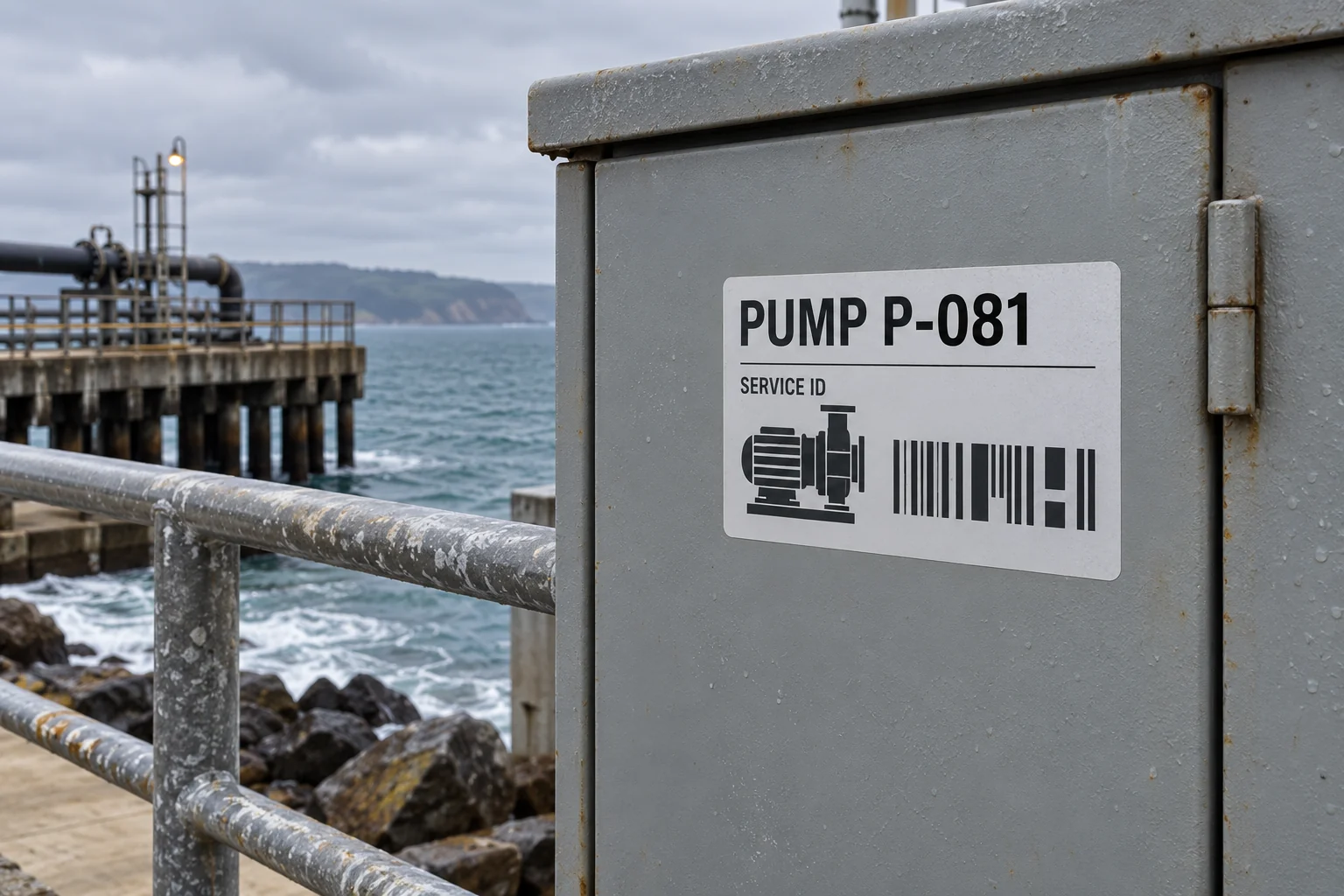
Picture an adhesive ID label on a painted pump cabinet facing a harbor. The upper edge is shaded by a cover but the lower edge catches rinse water. This is an illustrative setting, not a customer installation. A material brochure might focus on corrosion of a metal plate, while the actual failure is edge lift on aged paint or a faded code. Decide whether an adhesive label, mechanical plate or another marking method fits the maintenance plan. Do not cover an existing safety or rating plate.
Separate the Failure Modes
For an adhesive sticker, evaluate bond to the actual painted, powder-coated or plastic surface. Note rust, chalking, loose paint and contamination before applying anything. Evaluate the printed data separately for contrast after sunlight, handling and cleaning. Decide whether a protective film is warranted and whether it changes reflectance or scan performance. If a metal plate is chosen, fasteners and galvanic compatibility become another engineering responsibility. No single generic material adjective resolves all of these decisions.
- SITE: direct spray, sheltered outdoor or indoor marine air.
- SURFACE: paint type, age, texture, contamination and temperature.
- CONTENT: asset ID, hazard, service contact and required code.
- READ: human viewing distance and scanner used on site.
- LIFECYCLE: inspection, cleaning and replacement interval.
Plan an Honest Sample Trial
Apply finished-size samples to representative surfaces using the exact preparation steps and environmental limits supplied for that construction. Record application date and placement, then inspect edge integrity, readability and scan function during normal service. A lab report can help compare constructions, but the site should approve its own field acceptance rule. Do not claim this website has performed ASTM testing or holds a certification unless a project-specific valid report is provided. The cover photo is AI-generated and is not such evidence.
Build the Quote Around Maintenance
Send cabinet dimensions, photos, existing marking requirements, exposure description, cleaning schedule, variable asset list, quantity and replacement process. Ask the supplier to identify the exact face material, ink or ribbon, laminate and adhesive being quoted and what evidence supports them. If no adhesive construction can be justified for the surface, choose a different marking system rather than promising permanent adhesion. Make the asset ID prominent so a faded code is not the only way to find the record.
FAQ
Questions Buyers Ask
Does passing a salt-spray test guarantee coastal service life?
No. ASTM cautions against assuming a stand-alone laboratory result predicts natural service. Check the exact construction in the real environment.
Should a coastal asset ID always be a metal plate?
Not always. The surface, maintenance process and required life may support an adhesive label or a plate; evaluate the whole installation.