Suspected Label Liner Damage: Build a Receiving Record Before Use
Published
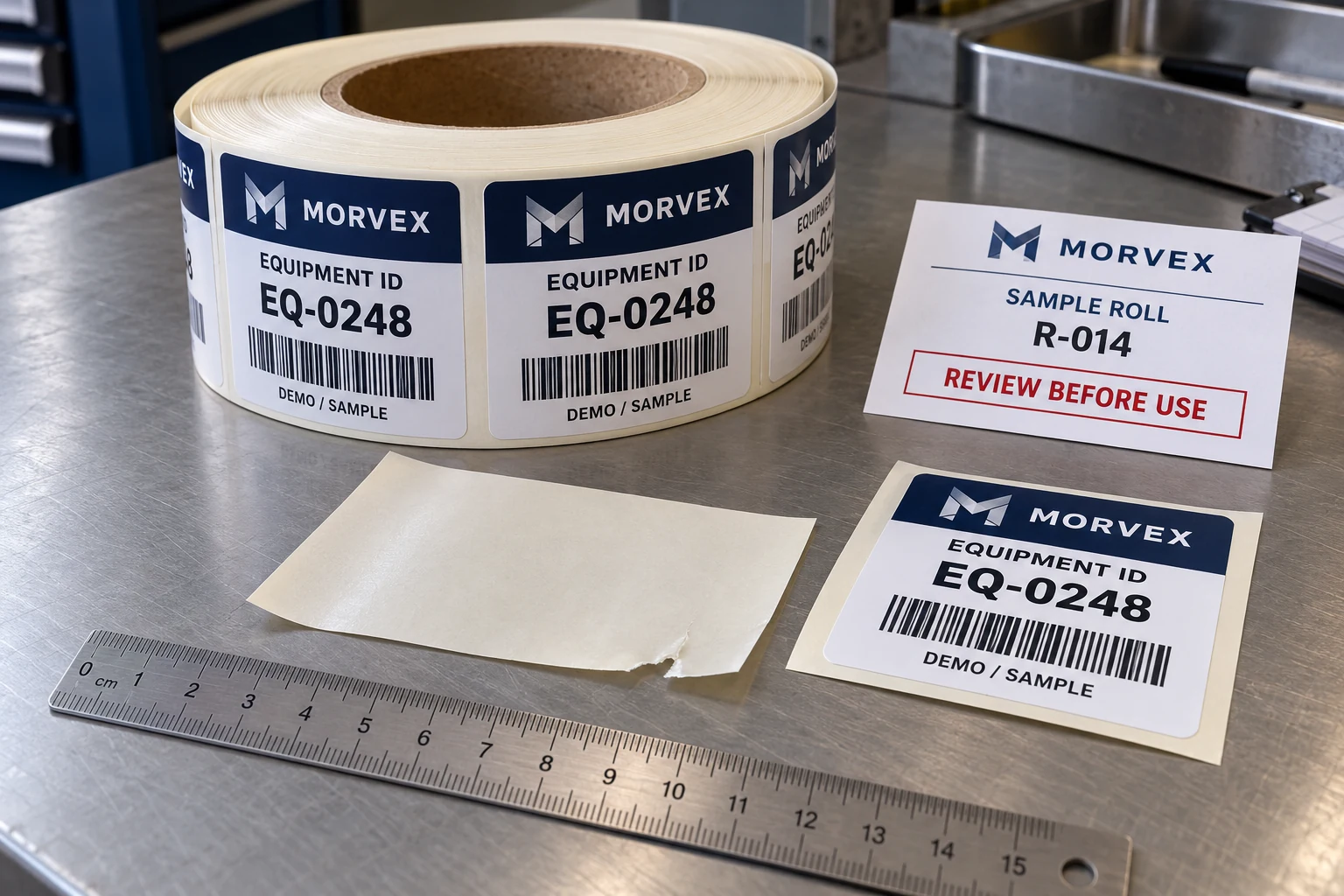
The print is sharp. The SKU is correct. Then receiving notices a cut or tear in the backing carrying the labels. The immediate temptation is to peel a few labels, decide they look usable and put the roll on the next production cart.
That can answer the wrong question. A face label can look acceptable while the supplied web still needs review against the application method. Before calling the roll defective or loading it into equipment, preserve the roll identity, record the actual observation and agree who can release it for the intended use.
This guide describes a hypothetical receiving decision. It does not diagnose a real roll from a photograph, set an industry rejection limit or instruct operators to test damaged media in a running machine.
Describe the observation before naming the cause
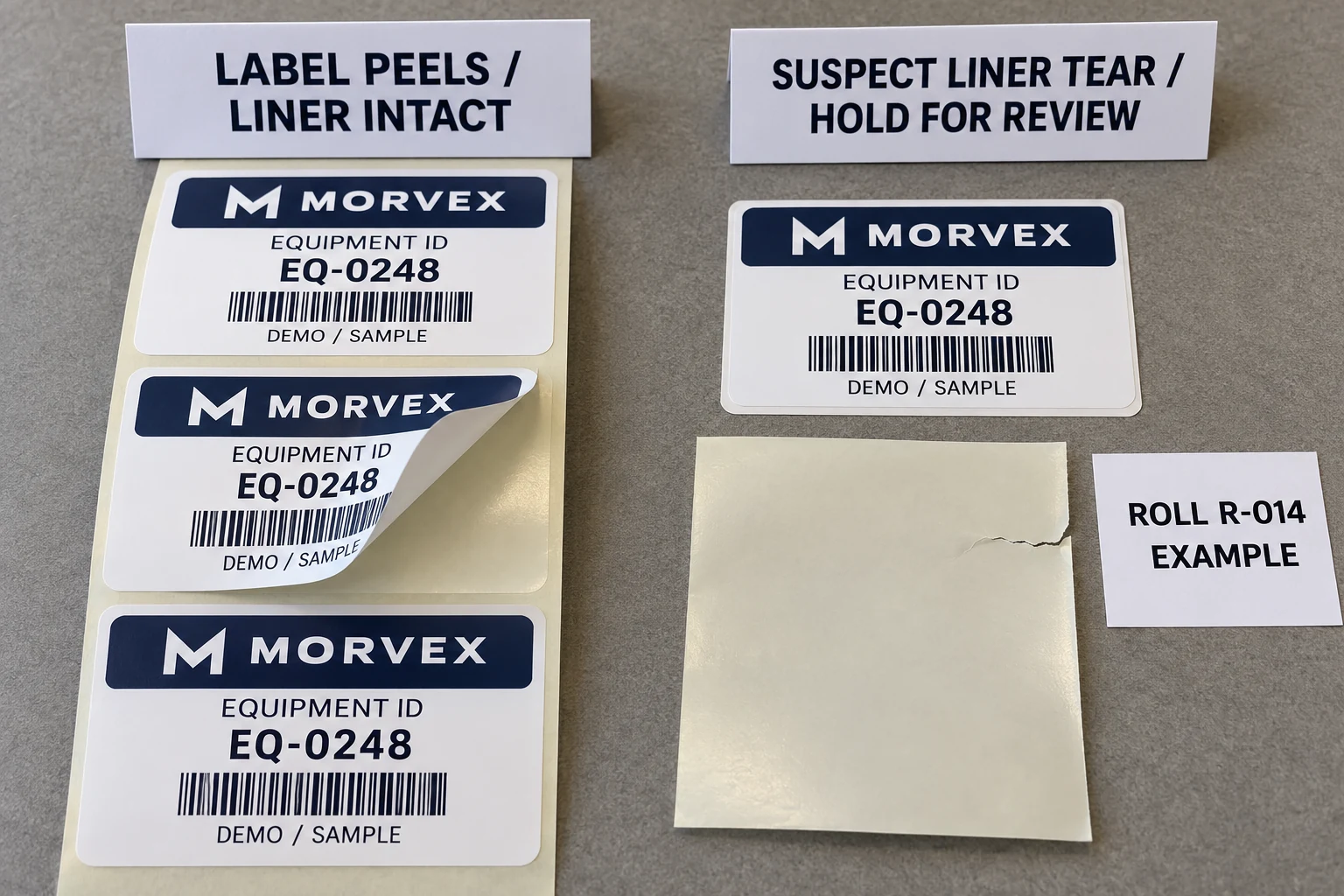
Record what is visible: an edge nick, a tear, an apparent cut line, an exposed adhesive area or another specific condition. State where it appears on the accessible sample and whether the carton, core or exposed roll edges show related handling damage. Photograph the face and backing with enough context to identify the sample.
A label's finished outline and damage to its liner are different observations. Compare the supplied construction with the approved drawing and reference sample. Do not assume that every visible mark is an unintended cut, or that the presence of a tear proves which production or handling stage caused it.
cab's recommendations for automated labeling materials distinguish complete cutting of the adhesive layer from damage to the silicone layer. The same guidance discusses liner behavior around its peel plate and other material-related processing issues. These are manufacturer requirements for its equipment context, not a universal visual test or a claim that any particular CYJ roll has passed them.
The useful question for the supplier is therefore precise: does the observed condition conform to the agreed finished-roll construction and intended equipment requirements? A report saying only bad die cutting starts by asserting an unconfirmed cause.
Keep the sample connected to the actual roll
Preserve the external roll or carton identifier, SKU, artwork revision, batch reference and receipt information. If a small accessible sample is removed under the site's procedure, keep its source reference with it. A photograph of an anonymous piece of backing is difficult to compare with a production or packing record.
Do not unroll an entire shipment merely to create evidence. Follow the agreed inspection method and the equipment owner's safe handling instructions. The fact that an accessible section looks sound does not establish the condition of every internal position; a suspect section also does not establish how much of the order is affected.
Ask the supplier what relevant construction and production information it can provide. Keep the original condition and any later test observations separate. If someone has already tried the roll, record that fact rather than presenting the remaining sample as an untouched delivery.
Use a hold-and-review record that supports a decision
A temporary hold is a status in the buyer's receiving process, not a statement that the supplier has accepted fault. Give the record enough detail to support a controlled next step.
| Record field | A useful entry contains |
|---|---|
| Supplied identity | Roll, carton, SKU, artwork revision and batch where available |
| Observed condition | Plain description, sample location and dated photographs |
| Intended application | Manual handling or named printer/applicator and approved media reference |
| Immediate status | Where the suspect roll is kept and who is reviewing it |
| Disposition | Recorded release, further evaluation or another agreed resolution, with the responsible approver |
The table is a proposed purchasing record, not a mandatory inspection standard. Actual acceptance criteria and any further sampling belong in the buyer-supplier agreement and equipment instructions.
Match the review to the process that will use the roll
For machine-fed labels, involve the equipment owner before proposing a trial. The relevant questions concern the approved media, safe evaluation method and what evidence the owner needs to permit use. Do not improvise a splice, repair tape, tension change or operating procedure from this article.
For a manually applied job, the handling demands can differ. That does not automatically make an unexplained liner condition acceptable. The buyer still needs a decision about whether the specific material can be used as intended and how any affected supply is identified. Avoid turning manual application into a blanket escape from the agreed specification.
A known-condition replacement sample may help the parties compare observations under an approved procedure. Conversely, if the original observation is confirmed as a feature of the agreed construction and the required checks support release, changing the entire label design may add work without solving a real problem. Both outcomes need a documented basis.
The liner and release-coating guide addresses how to specify the supporting web in the first place. This receiving record deals with a particular supplied condition after that specification has been agreed.
Close the review without losing the trace
Record what was examined, the conclusion's scope and which rolls the disposition covers. A successful observation on one sample is not an undocumented approval for every carton carrying a similar design. If a supplier provides replacement stock, retain the connection to the original order and the approved label version.
Keep the quality disposition distinct from commercial quantity reconciliation. If a separate receiving agreement determines excluded or replacement quantities, refer to it rather than inventing a standard allowance. The liner review should say what is known about the supplied condition and who permitted the next action.
For industrial barcode and QR labels, readable print, correct data and usable media remain separate checks. I would keep the sample's roll identifier in the first message to the supplier. It gives the review somewhere specific to start.
Preparing a roll-condition review? Prepare the receiving brief with the order and roll references, face-and-backing photos, observed condition, approved label dimensions, intended application equipment or manual process, and the quantity under review. Use the contact page to organize those requirements, then share supporting files through the existing email or WhatsApp path.