Labels Inside Electrical Enclosures: Let the Drawing Set the Placement
Published
The label fits on the inside of the enclosure door in the artwork mockup. The purchaser is ready to approve it, but the equipment drawing has not been checked and the proposed construction is described only as durable film. Physical room for a sticker is not the complete placement requirement.
Obtain engineering approval for the full label construction and its exact position on the relevant equipment version. Keep identification separate from electrical insulation, and preserve the manufacturer's instructions and required markings. The print supplier should receive an approved zone, not decide one from an enclosure photograph.
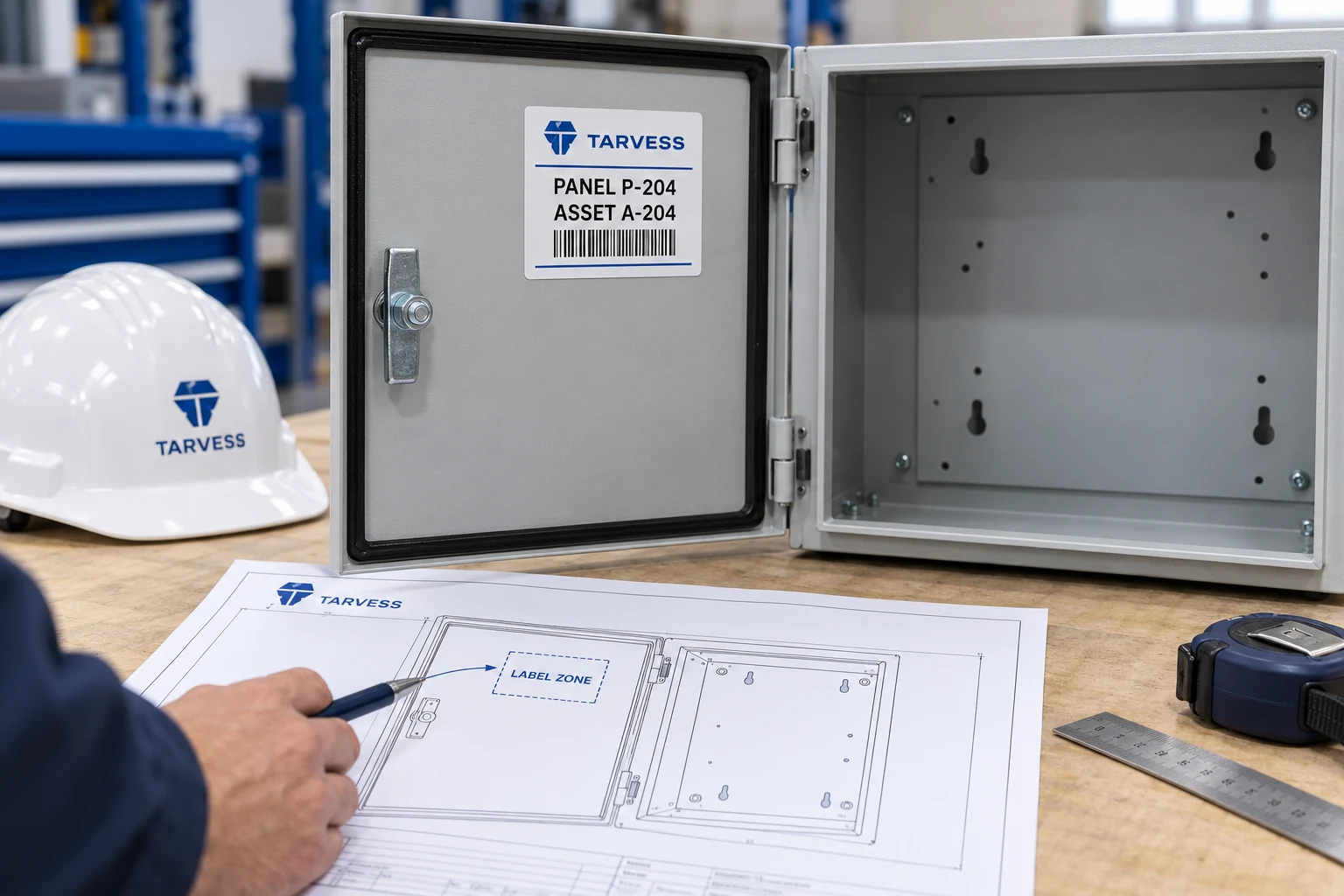
Ask which equipment version is being labeled
Identify the enclosure, assembly or controlled drawing reference. Similar cabinets can have different internal arrangements. A placement accepted on one version should not silently apply to every panel with the same outside dimensions.
Use a marked drawing or authorized image to identify the proposed label position and orientation. Include nearby features that matter to the review. The technical owner should specify any keep-clear areas and acceptance requirements; this guide supplies no generic clearance distance.
For U.S. workplace context, OSHA 1910.303 addresses equipment suitability and use in accordance with applicable listing or labeling instructions. That does not qualify a particular added label. The equipment's responsible technical owner must assess the actual change.
Do not call an ordinary film electrical insulation
A printed identification label has a defined communication task. If the equipment design requires an insulating component, that component needs its own engineering specification and qualification. Do not assume a label can provide that function because it is nonmetallic or appears to cover a gap.
Likewise, a material recognition document should be reviewed for its actual scope. It is not blanket approval for every position inside an enclosure. The UL 969 document guide helps buyers keep a named label system and its stated conditions connected.
Provide the proposed construction details to the technical reviewer, including the printed face, protective layer and adhesive where specified. The reviewer needs the complete proposed part, not only a generic family name or a photograph of a similar sticker.
Turn the placement review into a usable record
| Review field | What the owner confirms | Purchasing consequence |
|---|---|---|
| Equipment scope | Exact assembly and drawing revision | Avoid applying approval to another version |
| Label function | Identification, instruction or other approved task | Prevent an unintended insulation claim |
| Approved zone | Position and orientation on the drawing | Give the supplier a defined placement reference |
| Keep-clear requirements | Owner-defined features and limits | Constrain the artwork and finished dimensions |
| Construction | Complete proposed label reference | Review relevant material changes |
| Installation method | Authorized application stage and procedure | Avoid an improvised field installation |
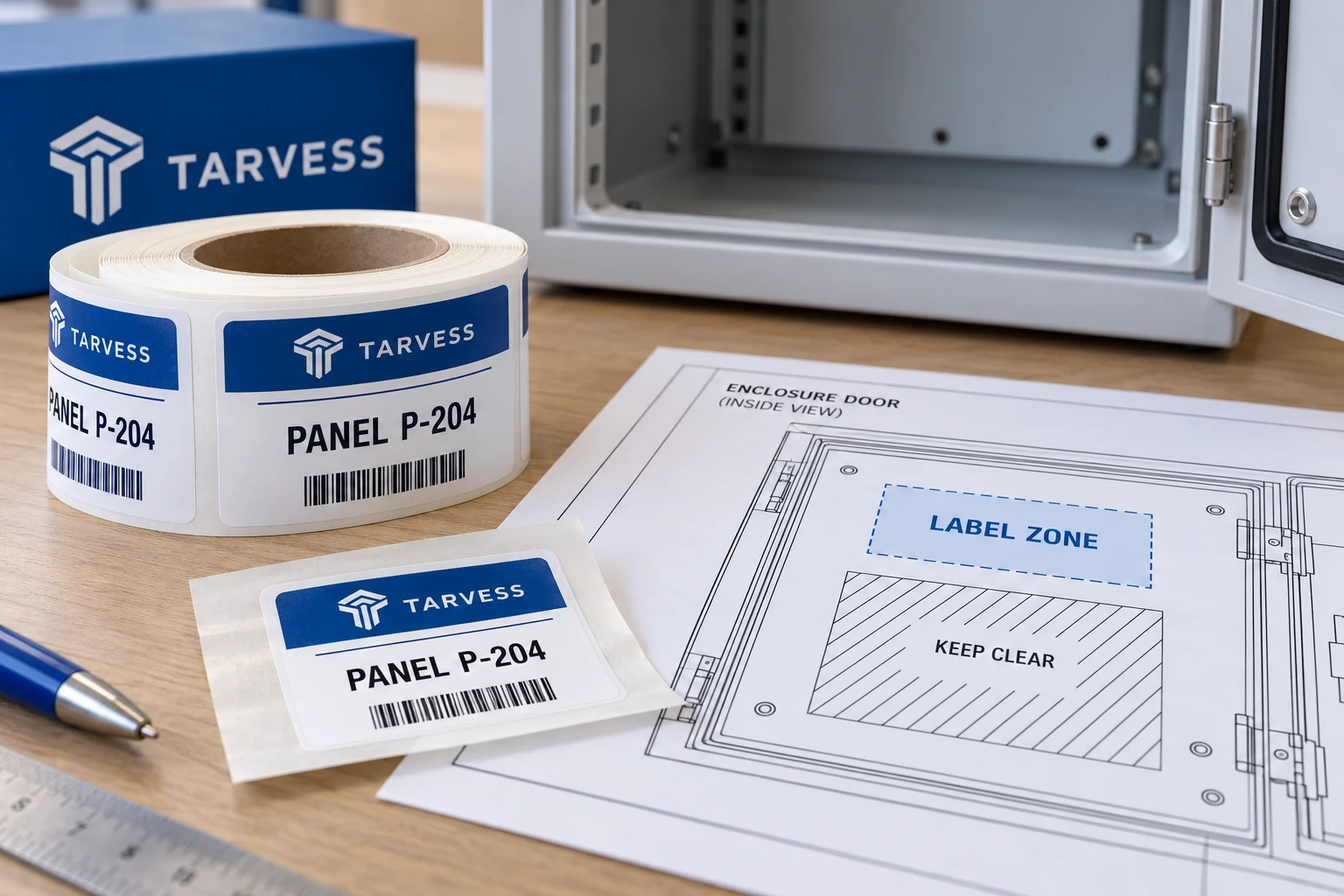
Keep the approved content with this record. A placement approval does not determine the correctness of a rating value, unit or warning. The product-data and safety owners still need to approve their respective information.
Review access and movement as well as the closed view
The technical owner should consider the equipment's intended states and access requirements. A flat image of a closed door may not reveal a conflict encountered during normal authorized servicing or assembly. Purchasing should request the relevant approved review, not conduct an improvised inspection on live equipment.
Use a suitable non-operational mockup or the owner's safe process for any physical sample review. Do not open energized equipment or move internal parts merely to see whether a label fits. The label project follows the equipment's safety procedures.
Record what was actually reviewed. A sample positioned on an empty enclosure does not establish suitability for a fully populated assembly unless the owner determines that it represents the requirement. Keep any remaining limitation visible in the release scope.
Preserve original information and traceability
Do not cover a manufacturer's plate, required warning or other marking without an authorized replacement process. If the new label repeats technical data, identify the approved source and distinguish the added information from the original marking.
Check readability at the intended access point. A label can be in an approved material zone while still being difficult for the intended user to read. Coordinate the information hierarchy with the placement constraints rather than shrinking everything after the location has been fixed.
If no suitable internal location exists, an approved external position or another documentation route may be preferable for supplemental information. The equipment owner must decide whether that alternative serves the task and any applicable requirements.
Make changes trigger the right review
Keep the placement drawing, construction and equipment revision with the order. If the enclosure layout, label size or construction changes, ask the technical owner whether the previous approval still applies. An identical logo does not establish an unchanged installation.
If the current approved label remains suitable and only an unrelated purchasing reference changes, retaining it may avoid unnecessary requalification. Scope the change accurately instead of either reapproving everything or assuming every change is harmless.
For electronics and electrical labels, prepare an enclosure-placement brief with the authorized drawing, approved zone, complete construction requirements, exact wording, finished dimensions, application stage and quantity. Organize the requirements on the contact page and send supporting files through email or WhatsApp. The drawing and responsible approval should tell the printer where the label belongs.