UL Solutions: Marking and Labeling Systems
Primary explanation of categories and Conditions of Acceptability.
View detailsResource Guide
A material datasheet helps, but it is not approval for the exact printed label on an enclosure. When a purchase order names UL 969, ask what construction and end-use conditions the documents actually cover.
Published 2026-10-16
Digital proof before production. Material and adhesive options are discussed according to your application requirements.
UL Solutions separates finished marking systems, printing materials and base materials into distinct component categories. Recognition is tied to a construction and Conditions of Acceptability, which can include application surface, temperature and exposure. A recognized face stock alone does not automatically cover every ink, overlaminate, print method and enclosure finish. Component recognition also does not certify the whole electrical product. Ask the seller for the exact relevant UL file or Product iQ record when the buyer specification requires it.
Primary explanation of categories and Conditions of Acceptability.
View detailsOfficial distinction from complete end-product certification.
View detailsImagine a fictional OEM requesting a rating label for a painted cabinet. The reply says, "the film is UL material." This is a composite procurement example, not a claim about this factory or a real supplier. It leaves open which film, adhesive, ink, surface and category the proposed printed label uses. Do not approve a certification statement from that sentence. Have the product compliance owner compare the documented system with the applicable end-product procedure.
UL says Conditions of Acceptability may specify surfaces, temperature, exposures and even print color or size limits. Its FAQ explains that recognition must cover the particular end-use application; otherwise another evaluation may be needed. This makes the actual enclosure finish and print process purchase inputs, not afterthoughts. Do not copy a UL mark into sample artwork or advertise approval before the responsible owner confirms authorization.
Official buyer questions on recognized materials and end-use suitability.
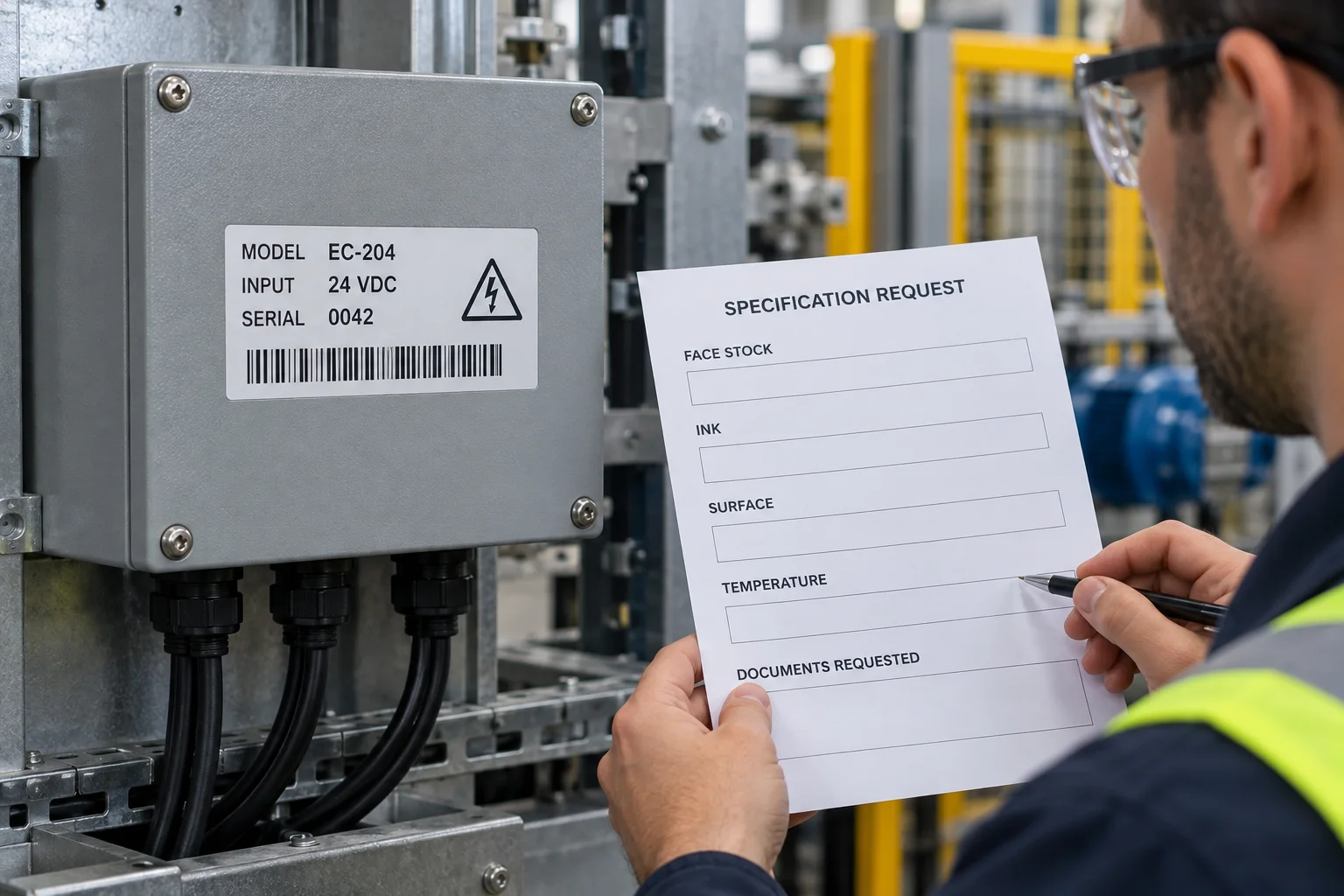
View detailsThe artwork owner approves model, voltage, serial and warning content. The material or system reviewer checks the documentary scope. The end-product compliance owner decides whether the assembled product meets its requirements. A label printer can reproduce supplied ratings; it cannot infer equipment ratings from a photograph or issue product certification. The staged image on this page carries fictional data and no certification mark.
Keep the buyer requirement, category or file number if applicable, permitted face stock, print system, overlaminate, adhesive, surface and conditions in a purchase file. Compare the offered roll with a finished sample on the actual enclosure. Check legibility and installation under the owner process, but do not call a local sample check certification. Record artwork and construction revisions separately so a later ink or laminate change is visible.
Provide the exact marking requirement from the product owner, application surface, indoor or outdoor use, temperature and cleaning exposure, approved rating text, variable serial rule, dimensions, quantity and any required documentation reference. Ask whether the offer is based on a recognized finished label, printing material or component material, and request the supporting record. If none is verified, discuss an uncertified sample honestly rather than promising compliance.
FAQ
Not by itself. Check the category, complete construction, print method and Conditions of Acceptability for the intended use.
No. End-product certification is a separate determination.