Equipment Labels and Protective Film: Approve the Final Surface
Published
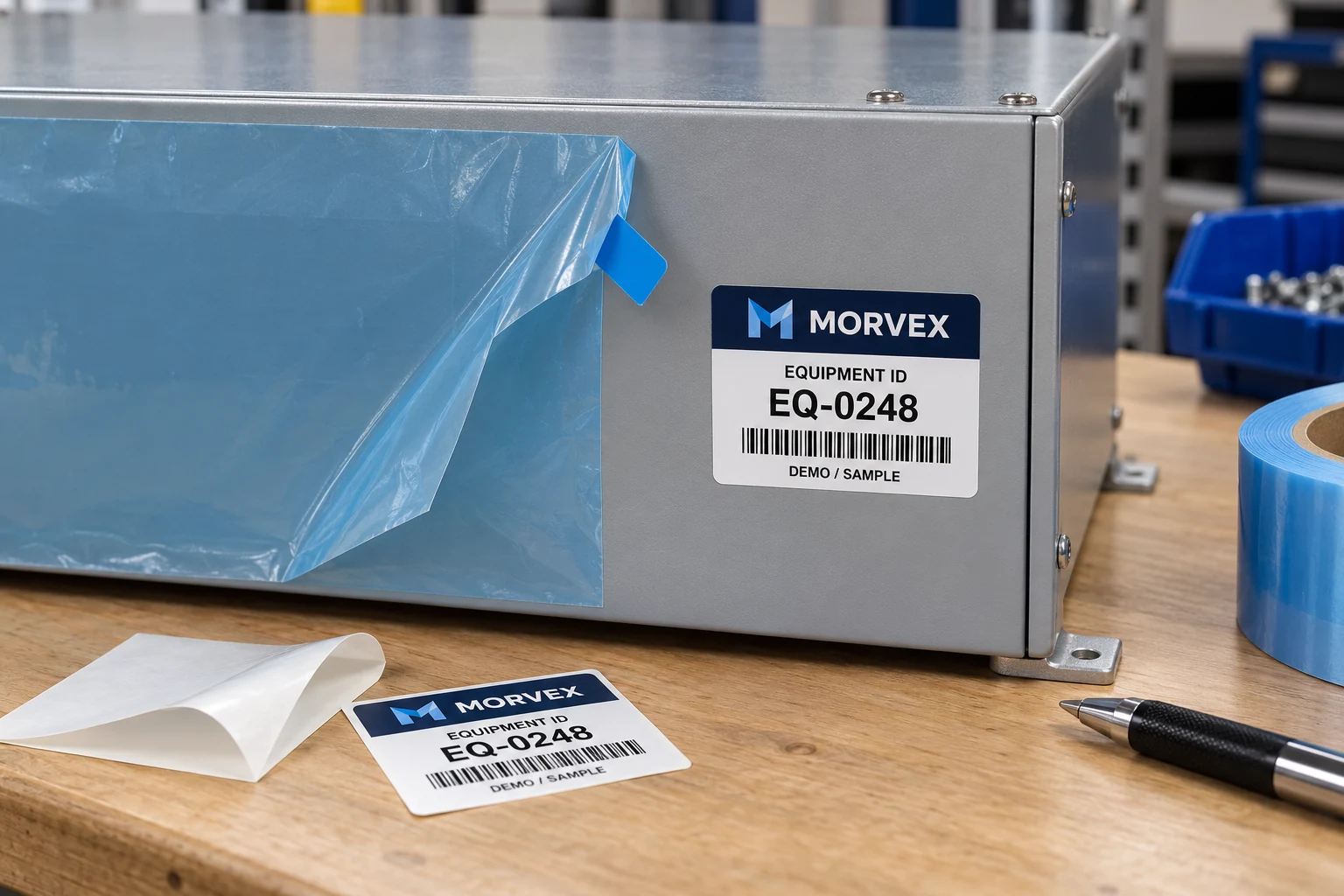
The equipment is nearly ready to ship. Its panel still wears a protective film, and the finished ID labels are waiting at the assembly bench. Applying the label now feels like one less job for the next shift. But if that film comes off during installation, the permanent ID may leave with it.
That is a hypothetical assembly situation, not a reported customer incident. The purchasing problem is practical: the label order may specify metal, while the application process presents a removable layer over the metal. Before comparing adhesives, establish which surface is supposed to carry the ID through the equipment's working life.
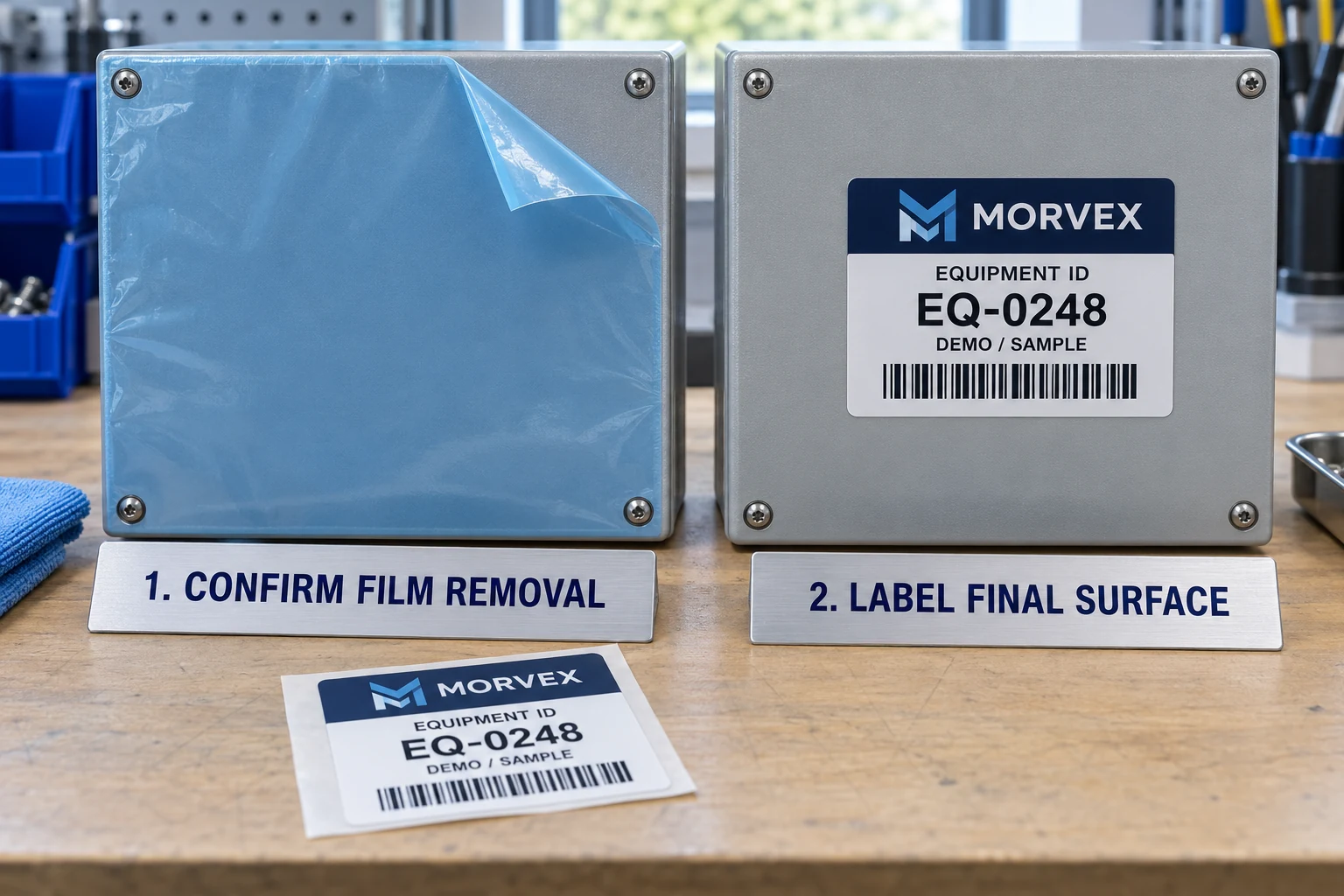
For equipment labels near temporary protective film, agree the final application surface, the film-removal responsibility and the point at which the part becomes ready for labeling. A tidy artwork proof cannot approve that sequence.
Name the layer that is meant to remain
Do not identify a layer solely by its color or transparency. A temporary transit film, an intended permanent coating and a protective layer belonging to the label itself perform different jobs. Ask the equipment or panel owner to identify the construction and the layer that may be removed under the approved process.
Nitto's SPV A product information describes a family of surface-protection tapes intended for processing, storage and transportation, with easy-peel behavior. That is an example of a deliberately removable protection product. It is not evidence that every blue film on a machine has the same purpose, or that a particular label construction is suitable for it.
Photograph the proposed label position before and after the owner's permitted film removal. Keep the part number and surface description with both views. If nobody can confirm whether the layer stays, record the application decision as unresolved rather than choosing a stronger adhesive from appearance alone.
Make application readiness a visible handoff
Purchasing needs the process owner to answer a question that does not normally appear in a PDF proof: when will the actual surface be available?
If the equipment builder removes the film before final inspection, the permanent label can be planned for that controlled stage, subject to surface preparation and sample approval. If an installer removes it after delivery, decide whether the builder can provide an approved exposed label area or whether application must occur later through a controlled handoff.
Do not casually peel a patch from a finished product without the owner's permission. Surface protection may be part of its handling plan, and removal or cleaning can affect the finish. The right decision belongs with the equipment process, not with a print operator guessing from a photo.
Use a short application-release record. The example below proposes fields; it is not a standard or an existing CYJ inspection service.
| Field | What the responsible team confirms |
|---|---|
| Part and final surface | Actual panel or housing reference, finish and approved location |
| Temporary layer | Which layer is removed, under whose instructions and by whom |
| Ready-for-label stage | The process checkpoint after permitted removal and preparation |
| Label reference | Approved artwork, stable equipment ID and finished label construction |
| Release check | Who confirms the surface is ready and records the applied ID |
Separate temporary shipping identification from the permanent ID
Sometimes a unit must remain protected until it reaches its destination. That need deserves its own solution rather than an exception hidden inside the permanent-label order.
A controlled traveler or packaging identifier may carry the information required during transit. It should be distinguishable from the permanent equipment label and linked to the correct unit through the owner's records. Do not infer that two copies of one graphic have two clearly understood purposes.
If the permanent label is supplied loose for later application, name the person or team receiving it, preserve its association with the unit and record installation completion. A loose sticker in a carton is not proof that the equipment has been identified. Consider whether exposed-area application before dispatch offers a simpler, controlled route.
The simpler option can win. Where an approved final label area is already available before packing, applying and recording the ID there may avoid a later installation handoff. Where the protected area must remain untouched, forcing early application can create a task that has to be repeated.
Review the revealed surface before approving the label
Removing a temporary layer does not, by itself, approve the revealed surface for bonding. Confirm the finish, any residue, preparation method and conditions under which the label will be applied. Obtain instructions applicable to the chosen construction and the equipment finish.
3M's explanation of surface preparation discusses how contamination can reduce adhesive contact. Its general principles do not authorize a particular solvent, abrasion step or preparation method on your finished equipment. Avoid turning a general educational article into a universal cleaning recipe.
Approve a finished-size sample on the actual prepared surface. Check placement, edge contact, required text and the intended identification workflow under agreed conditions. A sample bonded to the temporary film answers a different question from a sample on the final panel.
For the finish itself, the existing powder-coated metal label guide covers coating texture and placement. This decision happens earlier: establish which layer will actually remain under the label.
Put the sequence into the buying brief
State whether the quoted label is permanent equipment identification or temporary handling information. Include the final substrate and finish, a marked position photo, the relevant process stage, artwork, data and quantity. Keep the surface-readiness record with the approved sample so a repeat order does not quietly move the label back onto the wrong layer.
I would settle that handoff before asking whether a different adhesive costs more. If the ID is attached to a layer intended to leave, additional adhesive strength does not resolve which object the label follows.
Preparing this type of equipment-label order? Prepare a surface and application brief with before-and-after position photos, the confirmed final finish, film-removal responsibility, intended application stage, label dimensions, approved ID sample and quantity. Use the contact page's requirements prompt, then send supporting files through your chosen email or WhatsApp conversation so the equipment-label specification can be discussed against the actual process.