Recyclable Industrial Labels? Separate the Printed Label, Liner and Collection Route
Published
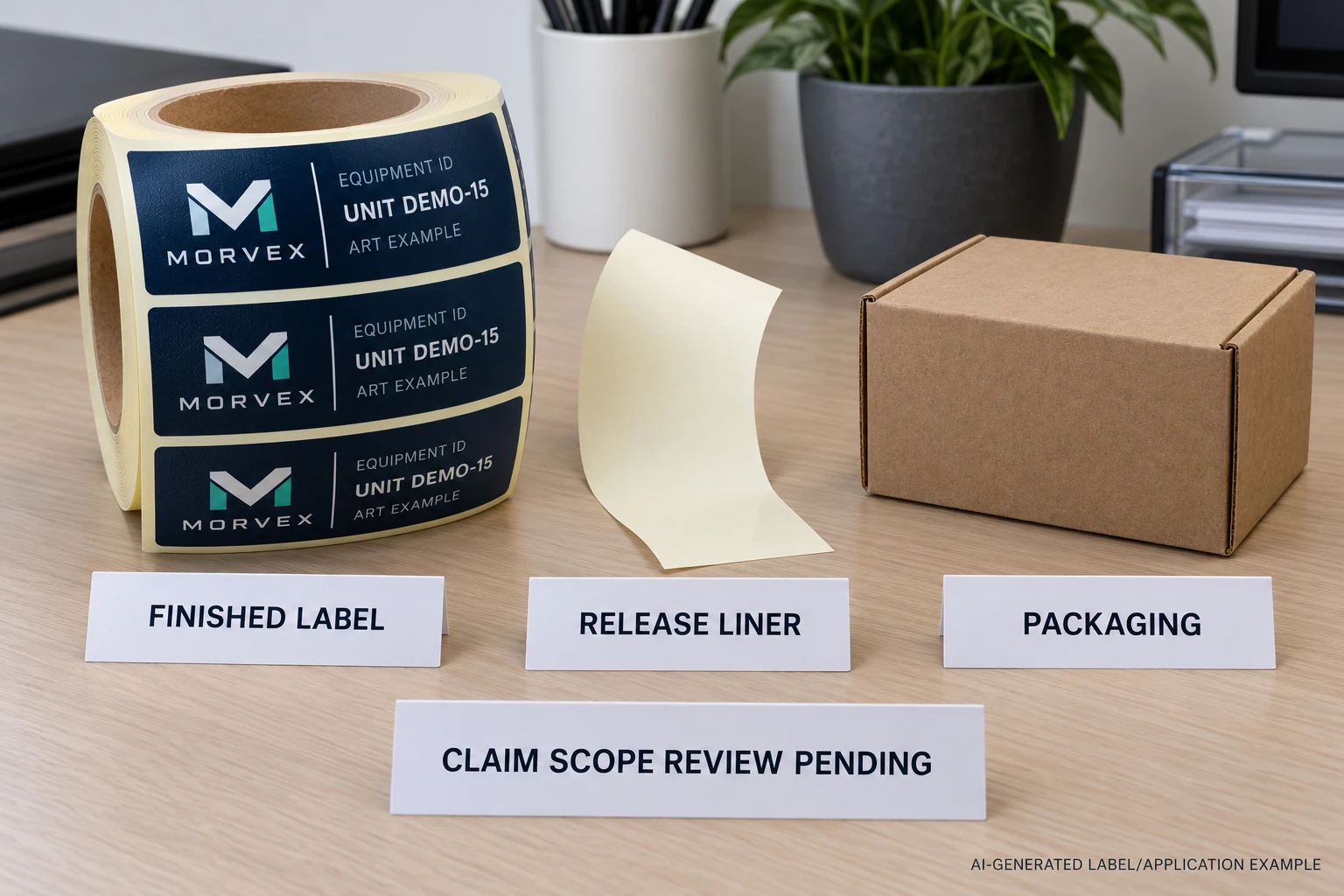
The quotation says recyclable. The supporting note names the release liner. The artwork team proposes adding a green symbol to the finished label, although nobody has checked whether the evidence covers that label or the buyer's actual waste route.
Separate the components before approving the claim. A printed label, its release liner and its shipping carton can become different waste streams. Evidence about one does not automatically establish a claim for the others.
This is a procurement evidence review, not a declaration that a CYJ construction is recyclable. Identify the exact proposed wording, the construction it describes and the established collection or recovery route that supports it. Keep the claim unresolved when the evidence is unresolved.
Name what the claim is about
Ask the person making the claim to identify its subject: finished printed label, liner, packaging or a defined combination. Retain the exact wording and the place it will appear. A short environmental symbol can imply a broader message than the small technical note supporting it.
The FTC Green Guides describe the Commission's views on environmental marketing claims and expressly include business-to-business transactions. They are guidance, not a product certification. A supplier document should therefore be assessed for the claim it actually supports rather than treated as permission to add a generic badge.
Do not confuse recycled content with recyclability. One concerns material incorporated into an item; the other concerns its recovery after use. Obtain evidence for the claim being proposed instead of transferring a favorable phrase from one category to another.
Review the finished construction and its route
The current recyclable-claims guidance in 16 CFR 260.12 addresses established recycling programs, qualification of component claims and the availability of appropriate facilities. It also discusses items whose components or other attributes limit acceptance. A material name alone does not answer those questions.
Ask which exact construction the evidence covers and how the relevant waste stream will be collected and processed. For a site-specific arrangement, obtain confirmation from the responsible site and recovery provider. Do not infer acceptance from a symbol on a nearby collection bin.
The label may remain attached to another object, while its liner becomes waste during application. Describe those actual states. A loose component's evidence is not automatically evidence for the assembled item at the end of its use.
Keep a component-to-evidence register
Use a small record that separates what is known from what is merely proposed:
| Component or stream | Evidence to request | Claim status |
|---|---|---|
| Finished label | Exact printed construction and applicable recovery assessment | Unresolved until supported |
| Release liner | Identified liner and confirmed collection/processing route | Assess separately |
| Shipping packaging | Actual packaging component and relevant evidence | Assess separately |
| Public or buyer-facing wording | Exact scope, limitations and responsible approval | Hold pending review |
These entries are review prompts, not findings about any supplied product. Replace them with the actual project references and retain the person responsible for each conclusion. A claim register should expose missing evidence, rather than convert every row into a positive statement.
The industrial materials guide helps define the proposed construction. This review then asks a different question: what environmental wording does the available evidence support for that construction in its relevant waste state?
Treat the liner as a distinct working material
The liner carries the labels through converting and application before becoming a separate stream. Its release function is covered in the liner and release-coating guide. Good dispensing performance does not establish its recyclability, and a liner recovery arrangement does not establish the finished label's environmental claim.
Record how used liner is accumulated, kept separate and offered to the applicable provider. Ask that provider what it actually accepts and under which conditions. Do not publish a universal disposal instruction from an arrangement that applies only to one identified site or material.
If the proposed collection route is unavailable to a buyer, preserve that limitation. An attractive material option can still need another handling plan. The purchasing decision should include the actual process required, rather than assuming that a positive material description creates a working collection system.
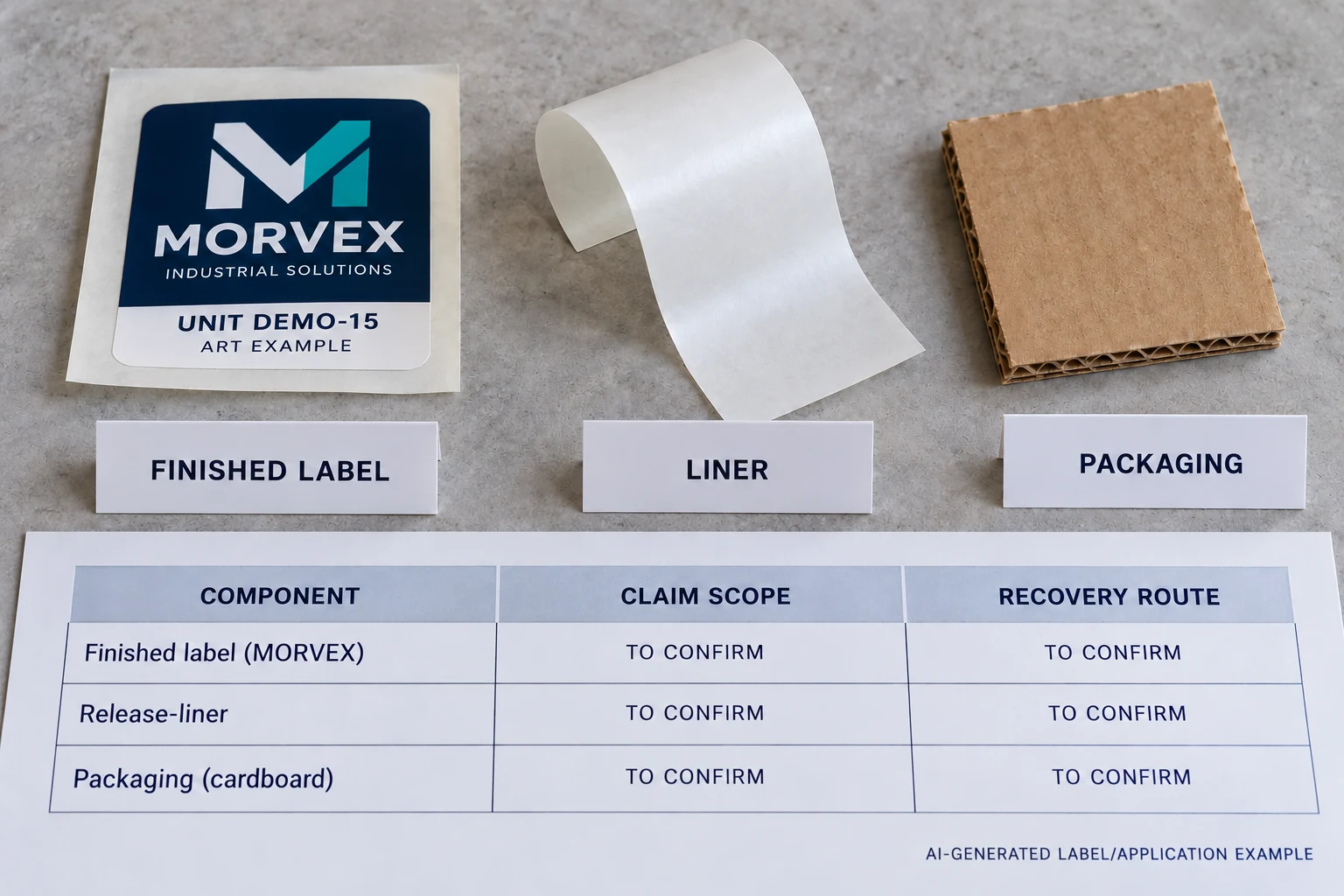
Compare options without inventing an environmental winner
Suppose one proposed supply has evidence for a limited liner collection arrangement, while another has not yet supplied comparable information. The first has a defined evidence advantage for that stream. It does not follow that its entire finished label is universally recyclable or has a lower overall environmental impact.
Ask for comparable scope and keep unknowns visible. Do not add performance, carbon or lifecycle conclusions that the evidence does not address. A narrower substantiated statement is more useful than an unsupported broad claim, but its wording still needs the responsible review.
A buyer may also retain neutral artwork while evaluating a proposed material or collection route. That avoids making a public claim before the evidence is ready. The purchase discussion can continue with the exact construction and evidence gaps stated, without a decorative green promise.
Keep claim approval separate from print approval
The artwork reviewer can check whether the released wording is reproduced correctly. The responsible environmental or claims reviewer must establish the basis and permitted scope of that wording. A print proof does not perform that substantiation task.
If the construction, provider or collection arrangement changes, identify the evidence affected and return the claim for review. A previous approved sentence should not persist automatically after its supporting conditions change.
For custom industrial labels, I would ask for a component-specific claim record before adding a symbol. It turns an ambiguous purchasing adjective into a defined evidence question.
Reviewing a proposed environmental statement? Prepare a construction-and-claim brief with the exact proposed wording, label and liner references, supporting documents, actual collection route, surface and use conditions, artwork, dimensions and quantity. Organize the requirements on the contact page, then send supporting material through the existing email or WhatsApp path for a project-specific discussion.