Equipment & Machinery Labels
For machine ID, operating information, panel and maintenance-label projects.
View detailsResource Guide
An oily machine surface changes the label conversation before material, adhesive or artwork is selected. Start with the actual surface condition and application sequence.
Published 2026-09-25
Digital proof before production. Material and adhesive options are discussed according to your application requirements.
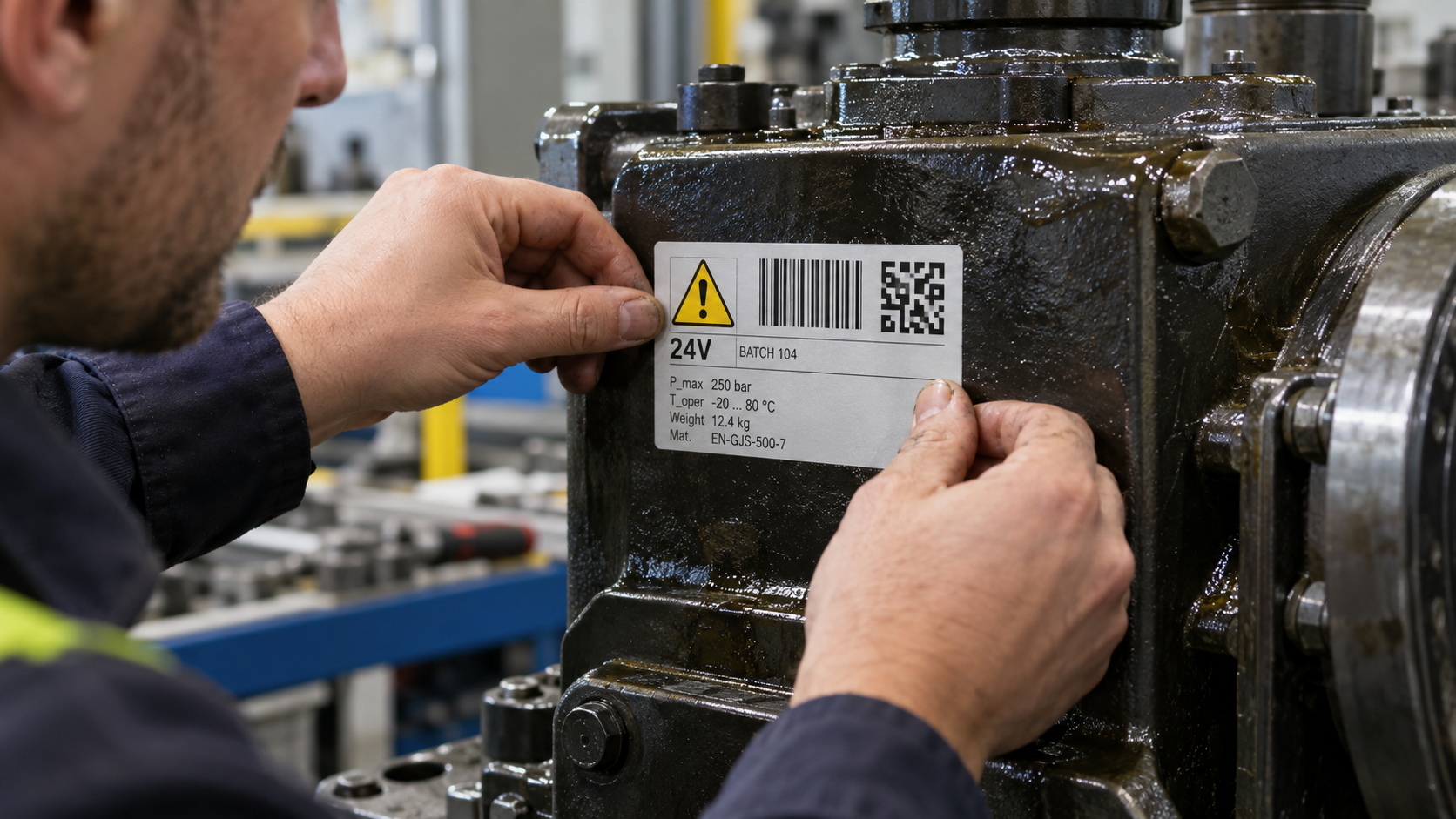
A machine can be described as steel, painted metal or powder-coated equipment. That is useful, but it is not the whole brief when oil or residue is involved. The factory needs to know whether the label area is wiped, how soon it is labeled after cleaning, whether oil returns during use and which information must remain readable. A label is not chosen in a vacuum; it is applied during a particular shift, by a particular person, to a surface in a particular condition.
In a composite maintenance project, a buyer sends a clean equipment drawing and asks for a durable machine label. The drawing shows a flat steel panel. The application photo tells a different story: the panel sits beside a lubricated fitting and is handled with gloves. The artwork is not the problem, and neither team is being difficult. The useful change is to describe the real wipe-down process, the likely residue and the label position before treating an adhesive as the answer.
A cleaned surface and an oil-exposed service environment are different conditions. State how the surface is prepared immediately before labeling, then describe what happens after application. If the label carries a warning icon, electrical data, a serial field or a barcode, identify which content is critical. That helps the proof reserve the right visual hierarchy while the material discussion stays tied to the real equipment.
A digital proof can confirm content, layout and placement direction. It cannot prove how a selected construction behaves on every oily or contaminated surface. For a new machine surface or a critical ID field, discuss a representative sample using the actual surface condition and application method. The decision becomes much clearer when the buyer brings the workshop photo into the same conversation as the artwork.
FAQ
The suitable direction depends on the actual residue, cleaning sequence, surface material, application method and selected construction. Share photos and process details for review.
Yes. State whether oil is present during application, after application or both, and identify the label fields that must remain readable.
No. A proof confirms artwork direction. Physical performance should be discussed against the selected construction and representative application conditions.