Avery Dennison: Know the End-User Substrate
Manufacturer guidance on how substrate choice informs adhesive selection; confirm the chosen label stock separately.
View detailsResource Guide
A smooth-looking aluminum sample is not the whole job. The approved label needs to meet the exact anodized finish, cleaning routine, placement and data that operators will handle.
Published 2026-10-02
Digital proof before production. Material and adhesive options are discussed according to your application requirements.
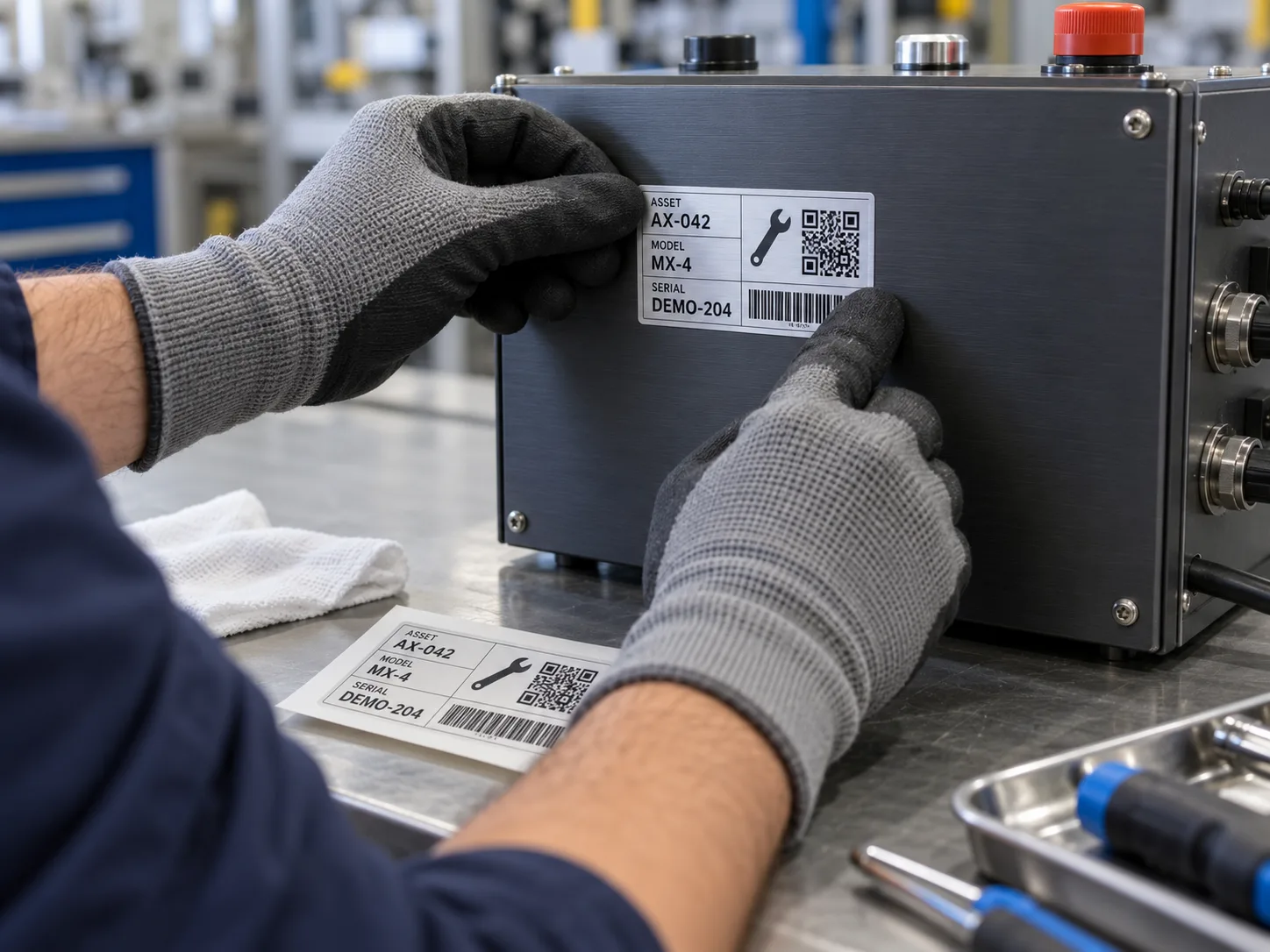
Anodized aluminum may arrive with different textures, sealants, dyes, residues and handling histories. Do not order by the word aluminum alone. Send a representative finished panel, or at least close photos and the panel specification, to the converter. Avery Dennison advises selecting an adhesive with the actual end-user substrate in mind; its performance-tape guidance is useful context, not a guarantee for a particular pressure-sensitive label construction. The chosen face stock, ink, adhesive and application process need a project-specific review.
Manufacturer guidance on how substrate choice informs adhesive selection; confirm the chosen label stock separately.
View detailsImagine a buyer ordering silver asset labels for a black anodized machine housing. The PDF looks excellent, but the first sample is placed over a fine-grain patch beside a knob, and its edge catches the operator glove. This is a composite scenario, not a reported field failure. Moving the label to a flat protected zone may matter more than changing the color. Review the actual panel after coating and assembly, not only a flat sheet cut from unfinished stock.
A label can stick at first and still be difficult to read under shop lights. Dark anodizing can make clear-film text disappear unless the data area has an appropriate opaque backing. A brushed finish can affect barcode contrast or the way small text is perceived. Put a finished-size sample on the actual panel, check the code with the production scanner, look from the operator position and inspect after the buyer normal cleaning routine. No single desk test proves the intended service life. Let the buyer specify any test method and acceptance criteria before bulk printing.
An equipment ID sticker may be a purchasing or service marker; an electrical rating plate or safety warning can have different ownership and approval requirements. If the old marking is missing, have the manufacturer or responsible equipment owner recover the approved data. The printer should not infer voltage, capacity or serial information from a similar unit. Keep the custom asset label clear of controls, original plates and required warnings.
Share the actual panel finish, labels per machine, dimensions, artwork, serialized-data file, cleaning method, intended service period, placement photo, quantity and format. State whether the buyer will apply labels in-house or the equipment assembler will do it. Ask for a proof and sample on the real finish before discussing a universal adhesive claim. The most useful quote names the construction being evaluated and what still requires buyer confirmation.
FAQ
Do not assume so. Review the exact finished panel, label construction and application conditions with representative samples.
Only from current, owner-approved source data. A visual copy from a similar machine is not a reliable equipment record.