Masking an Equipment Label Before Painting: Plan the Removal Too
Published
The equipment ID must remain readable after repainting, so the team proposes covering it with a temporary mask. The mask boundary looks simple on a photo. The unresolved questions are what the covering will experience, how it will be removed and what condition the protected label must be in afterward.
Approve the masking and removal plan with the coating and equipment owners before selecting a temporary material. Keep the existing label's identity and condition recorded. A mask that blocks paint during one step is not automatically suitable for the whole process or harmless to the label beneath it.
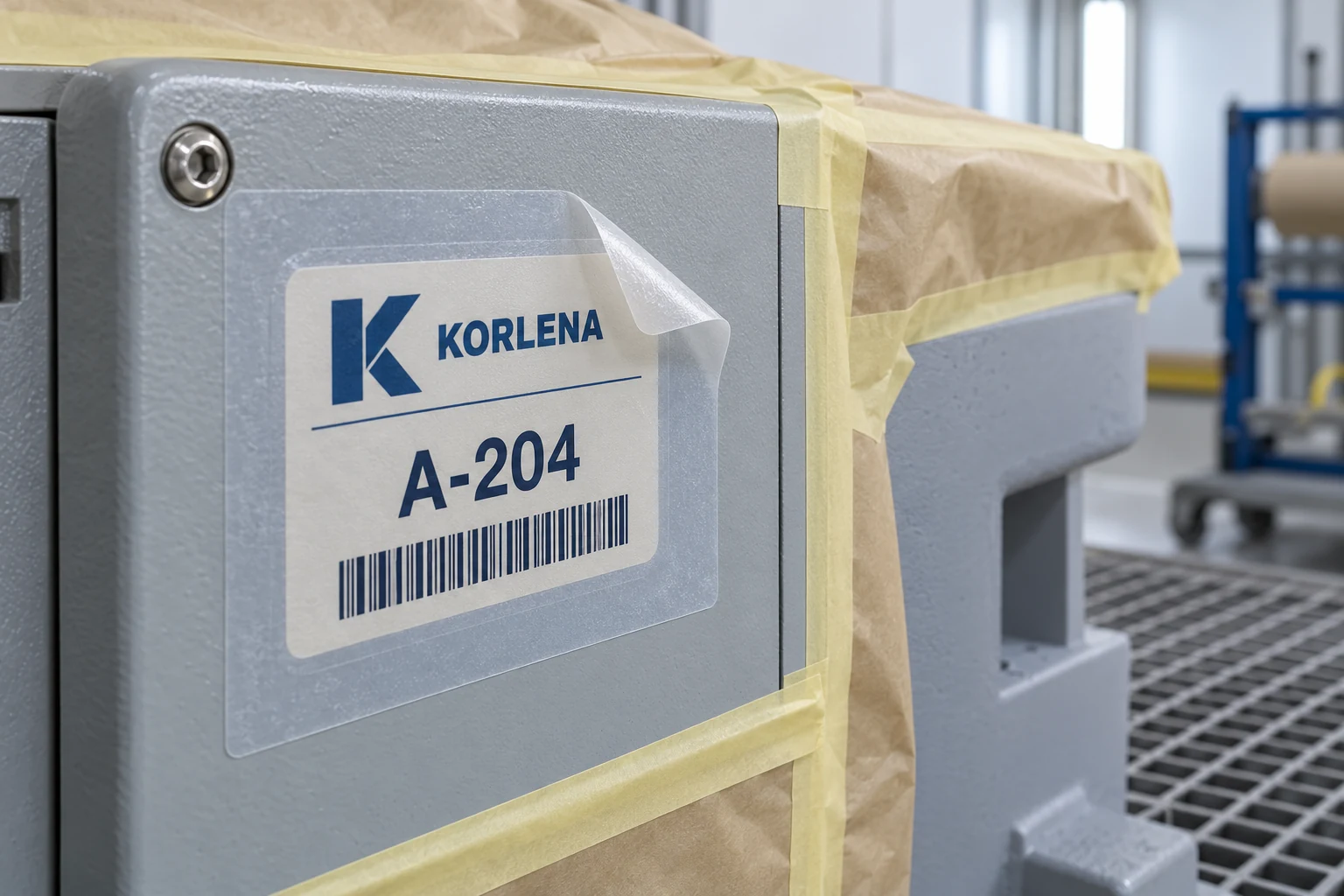
Establish what must be preserved
Photograph the existing label and record the controlled asset identity before surface work. Distinguish the internal asset tag from manufacturer plates, warnings and other markings. Each may have different protection or replacement requirements.
Ask the responsible owner whether the existing label is intended to remain or whether an authorized replacement will be applied after finishing. Masking is not necessarily the best route when the old label is already unreadable or unsuitable. Do not use a covering to preserve a defect that the project should resolve.
The after-repainting guide covers re-identification on a finished surface. This article addresses the earlier decision to protect an existing label through the coating process and inspect it after removal.
Describe the process the mask will encounter
Obtain the coating process details relevant to the proposed mask: preparation steps, contact materials, temperature history, duration and removal stage. Use the actual process documentation rather than an internal oven temperature copied without context.
The coating owner should approve the mask's compatibility and application method. The label supplier can discuss a requested temporary printed or protective component within its confirmed scope, but should not invent a paint-process qualification from a generic removable-film description.
Do not prescribe a universal temperature limit, solvent or removal time. The appropriate choice depends on the exact masking product, underlying label and process. Ask for current product-specific information and a representative review where required.
Draw the boundary and the removal access
Mark the area that needs protection and the surrounding finished surface requirements. Identify whether the mask covers the entire label, a plate or a larger approved zone. Keep any edge relationship that matters to the coating finish under the owner's control.
Plan how the authorized worker will start removal without improvising a sharp tool against the printed information. A practical access feature must still be compatible with the coating process. Have the responsible team approve it rather than adding an exposed tab casually.
| Planning field | What to confirm | Review evidence |
|---|---|---|
| Existing marking | Identity, role and current condition | Pre-process photo and record |
| Protected boundary | Owner-approved coverage | Marked drawing or image |
| Process exposure | Relevant actual conditions | Coating-process reference |
| Removal stage | Authorized timing and method | Product and process instructions |
| Final inspection | Readability, condition and surface observations | Post-removal record |
| Exception | What happens if the original label is damaged | Approved replacement or hold route |
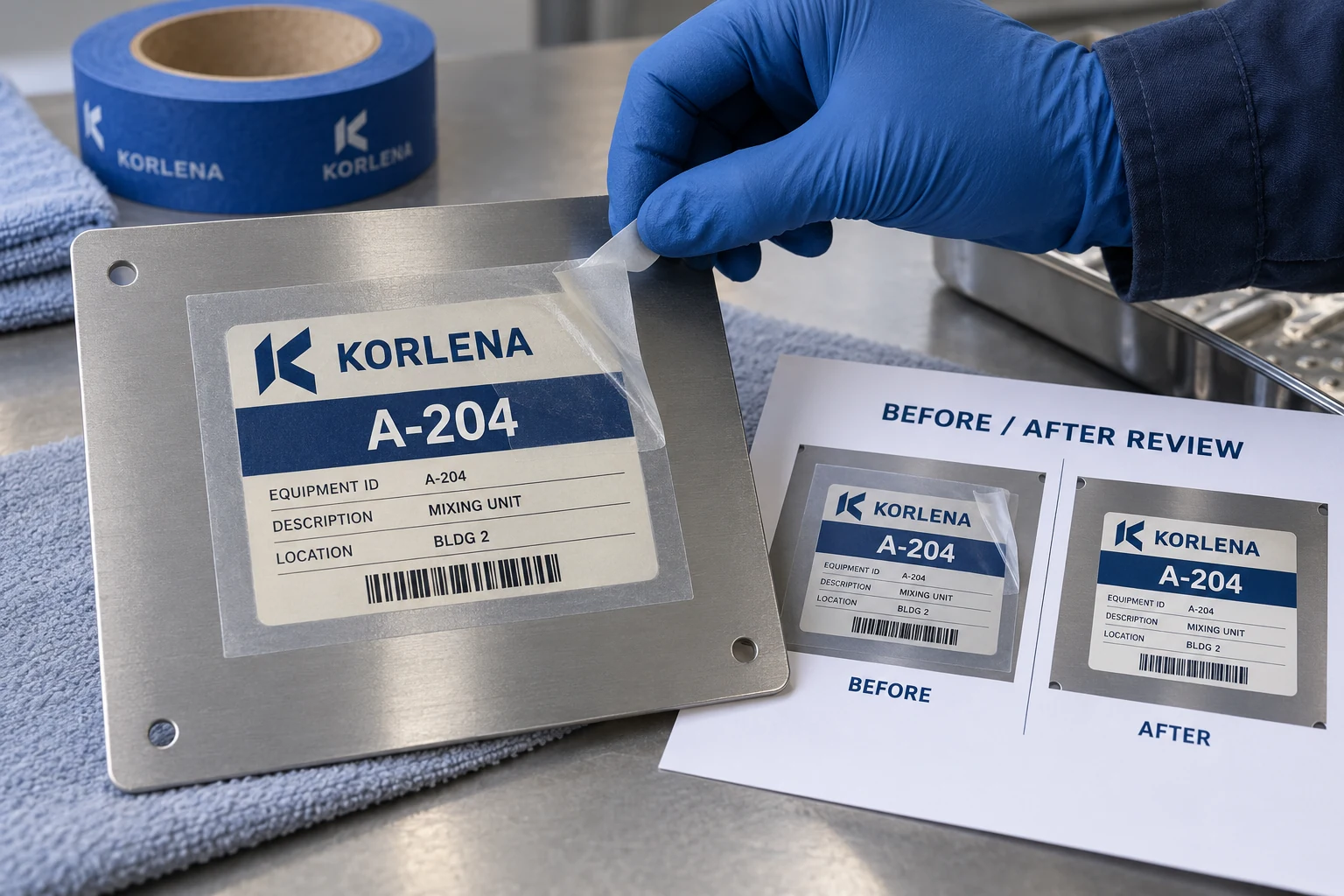
This record helps purchasing specify the task. It does not authorize changes to required equipment markings or to the site's coating procedure.
Inspect after removal, before closing the job
Review the protected label after the mask is removed under the approved method. Compare its readable identity with the pre-process record. Note any visible residue, print damage, edge change or coating intrusion without assuming the cause from appearance alone.
If the label includes a code used operationally, perform the agreed capture check on the actual post-process label. A protected outline does not prove the encoded information remains usable. Keep any formal quality or compliance checks separate where the owner requires them.
Inspect the surrounding finish according to the coating owner's criteria. The mask's success involves both the protected information and the intended finished surface. A readable label with an unacceptable coating boundary may still require an owner decision.
Compare masking with controlled replacement
If the existing label is sound and an approved mask works through the process, preserving it may avoid unnecessary reprinting and reassignment work. Retain the process reference so a repeat job does not depend on memory.
If the original label cannot be protected reliably, a controlled replacement after finishing may be more appropriate. Record the identity first, preserve required original markings through the authorized route, and approve the new label on the actual finished surface.
If the task concerns temporary transit film rather than a paint mask, use the protective-film application guide. A removable shipping layer and a process mask have different jobs and should not share an assumed specification merely because both peel away.
Keep the brief specific enough to quote honestly
State whether the requested supply is an equipment label, temporary mask, printed process identifier or replacement set. Ask the supplier to confirm its actual offering and review scope. Do not treat a general label capability as a promise to supply a qualified masking system.
For equipment-label requirements, prepare a protection-and-removal brief with the existing label photos, approved boundary, process exposure, removal instructions, final acceptance needs, dimensions and quantity. Organize the requirements on the contact page and send supporting files through email or WhatsApp. Plan the state of the label after the mask leaves, as carefully as the moment the mask is applied.