3M Polypropylene Label Material Data
An example of a construction-specific label material sheet addressing different substrate types.
View detailsResource Guide
A neat sample on a flat desk does not settle adhesion on a molded PP or PE housing. Identify the actual plastic and test the finished label where it will live.
Published 2026-09-27
Digital proof before production. Material and adhesive options are discussed according to your application requirements.
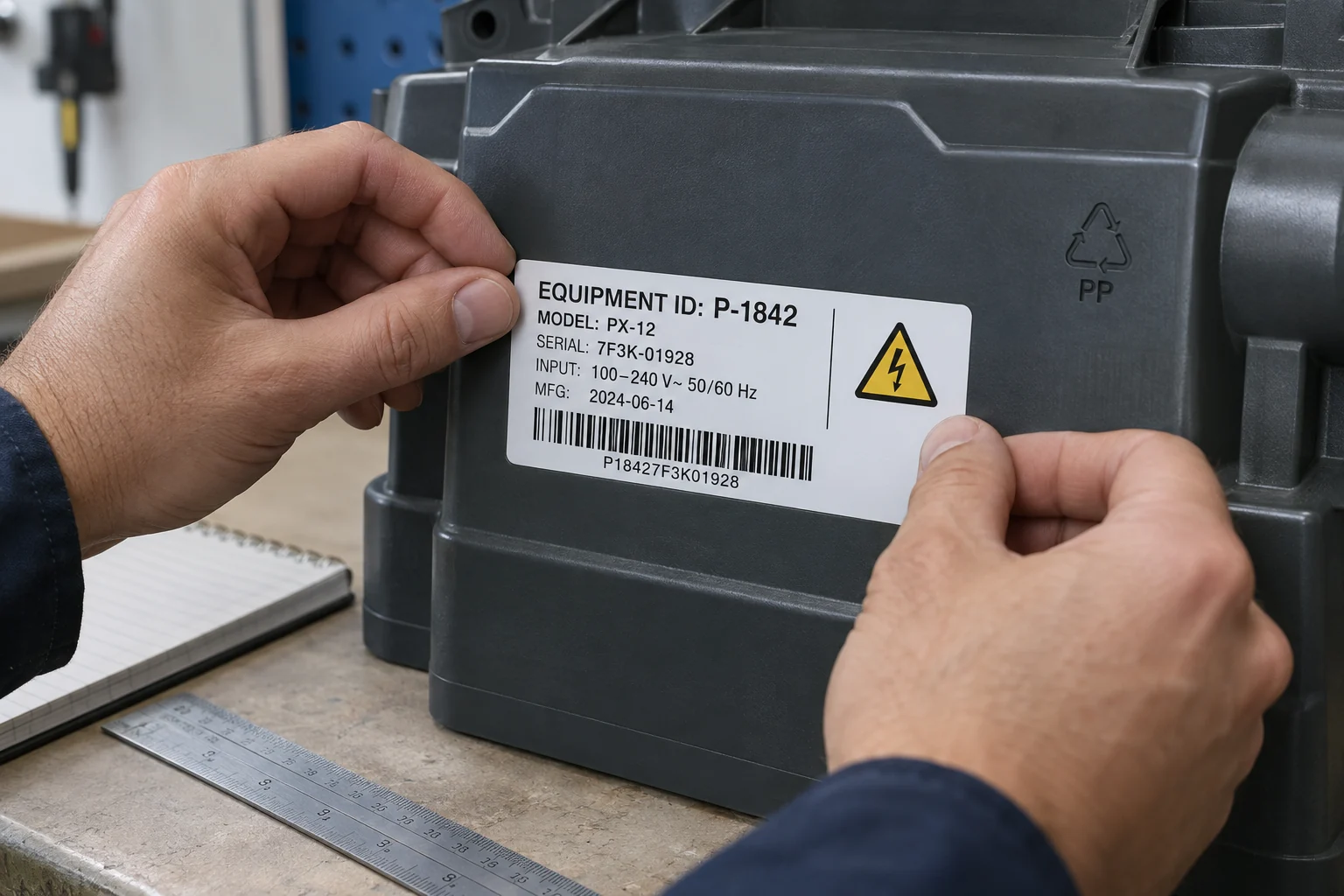
For a PP or PE housing, specify the actual resin or a molded material mark, whether the surface is textured or treated, and the exact placement area. Then discuss a label face stock and adhesive construction for that surface and conduct a representative application trial. Do not infer adhesion from a sample on metal, glass or another plastic. If the housing includes a smooth recessed area, that position may be easier to label than a heavily textured curved wall.
Imagine a purchasing team approving a smart white equipment ID label on a painted sample panel. The assembly line receives dark molded cases. The label spans a shallow rib, and an edge begins to stand up after handling. This is an illustrative scenario, not a reported failure. The purchase order said plastic but did not identify PP, the rib, or the handling sequence. The missing detail was not a fancier barcode. It was the surface the adhesive actually had to meet.
PP and PE are commonly treated as lower-surface-energy plastics, but a material name alone is not a bond specification. Grades, molded texture, release agents, coatings and cleaning steps matter. A 3M technical sheet linked below describes one specific label construction intended for low- and high-surface-energy substrates; it is an example of product-specific information, not a performance claim for any label on this site.
A more aggressive adhesive may be worth trialing, but it is not automatically the lowest-risk answer. A flat sheltered panel can let a simpler construction work where a textured edge cannot. A recessed molded ID area or a mechanical nameplate may also win when the design permits. Conversely, a removable service label has a different purpose from a permanent serial plate. Agree what must stay, what may be changed and who approves the location before paying for a complex construction.
Compare candidate finished-size labels on representative housings, after the real preparation procedure. Record application position, surface condition, time after molding if relevant, and the handling or exposure sequence. Inspect edge contact, readable print and code decoding at the agreed checkpoints. Ask the chosen supplier for its construction-specific instructions and acceptance criteria. A visual photo after one press is not proof of long-term suitability; nor is a paper data sheet a substitute for the actual housing.
Cover image is an AI-generated editorial illustration. Its equipment ID and electrical fields are fictional artwork, not tested product specifications.
FAQ
No universal construction can be assumed from the plastic name alone. Match the actual substrate and use conditions, then test a finished label on representative parts.
It might be possible, but the rib changes contact and edge stress. Show the exact location and compare a flatter placement before approving bulk supply.
It helps shortlist options. The final decision should include the specified construction and a trial reflecting the intended housing and process.