OSHA 29 CFR 1910.147
Primary US requirements for control of hazardous energy, locks and tagout devices.
View detailsResource Guide
A fixed label can help a technician find the right disconnect. It cannot say who applied a lock, when the equipment is controlled or whether energy isolation has been verified.
Published 2026-10-04
Digital proof before production. Material and adhesive options are discussed according to your application requirements.
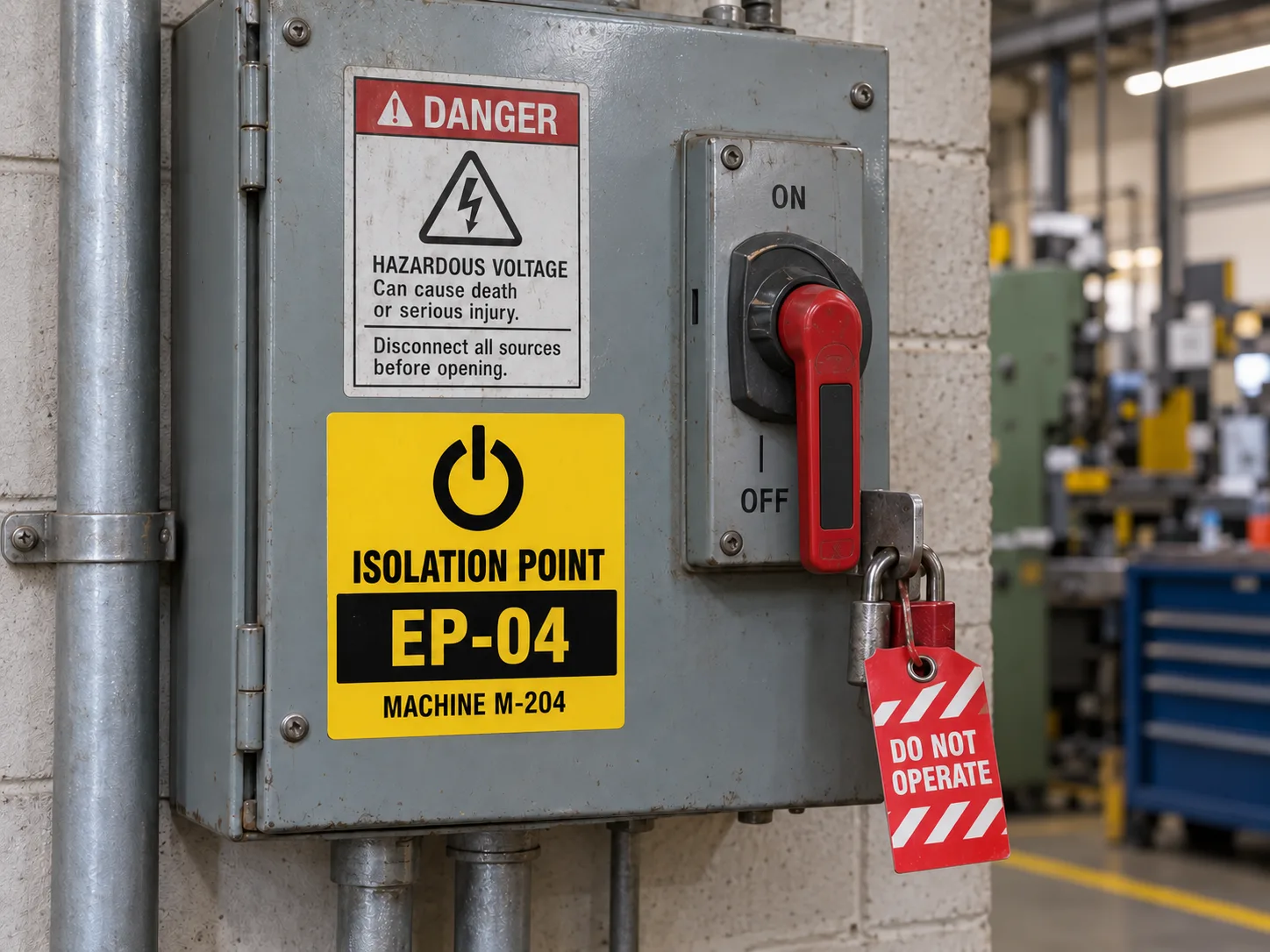
A permanent adhesive identifier may show the buyer-approved isolation point ID and the machine it serves. An active lockout or tagout device is applied under the employer energy-control procedure by an authorized person. In the United States, OSHA 29 CFR 1910.147 defines requirements for such devices, including identification of the applying employee and the function of a tagout device. A printed location sticker is not that device and does not establish compliance or a safe state.
Primary US requirements for control of hazardous energy, locks and tagout devices.
View detailsImagine two neighboring disconnect cabinets in a plant. The drawings call them EP-04 and EP-05; both are painted gray and both serve similar machines. This is a composite scenario, not a site audit. A permanent EP-04 label can reduce ambiguity at the cabinet, but an authorized employee must still follow the applicable procedure, identify all relevant energy sources and verify isolation. The printed label is a wayfinding reference, not permission to work.
Ask the employer for an approved matrix connecting each isolation point ID to the exact machine, location and document revision. Do not invent the relationship from photographs. Proof every label against that matrix and physically walk the intended locations before approval. Leave the switch position, original warnings, plate and lock attachment unobstructed. If the machine or disconnect is renumbered, the owner must update both the label and its underlying procedure.
Cabinets may be painted, textured, oily, damp or exposed to cleaning. State the actual surface, application temperature, cleaning and expected readable life. Use an applied sample to evaluate edge hold and contrast in the plant light. A bright color is not evidence of regulatory approval. The employer sets the identification convention and approves the wording; the supplier prints the selected construction.
Provide the approved point list, installed-view photographs, dimensions, quantity, color convention, surface description, variable IDs and the person who signs off the matrix. If the request is for actual lockout/tagout devices rather than fixed adhesive point labels, say so explicitly and source them through a qualified safety procurement process. Do not treat these two products as interchangeable.
FAQ
No. The fixed sticker identifies a location. An active tagout device has a separate role and requirements under the employer procedure and applicable law.
The plant owner should approve the controlled point matrix. The printer can reproduce and check its approved data.