Low-Outgassing Labels: A Material Database Entry Is Only the Start
Published
An engineer asks for an identification label inside a vacuum assembly. Procurement finds a material name in an outgassing database and sends that name to a printer. The returned proposal adds ink and a protective finish. The reference looked reassuring, but it no longer answers the complete construction being purchased.
Match the evidence to the actual exposed label assembly and have the responsible materials engineer define acceptance. A database listing for one component is useful evidence to investigate. It is not approval of every printed label that contains that component, and it is not a statement that CYJ can supply a qualified construction.
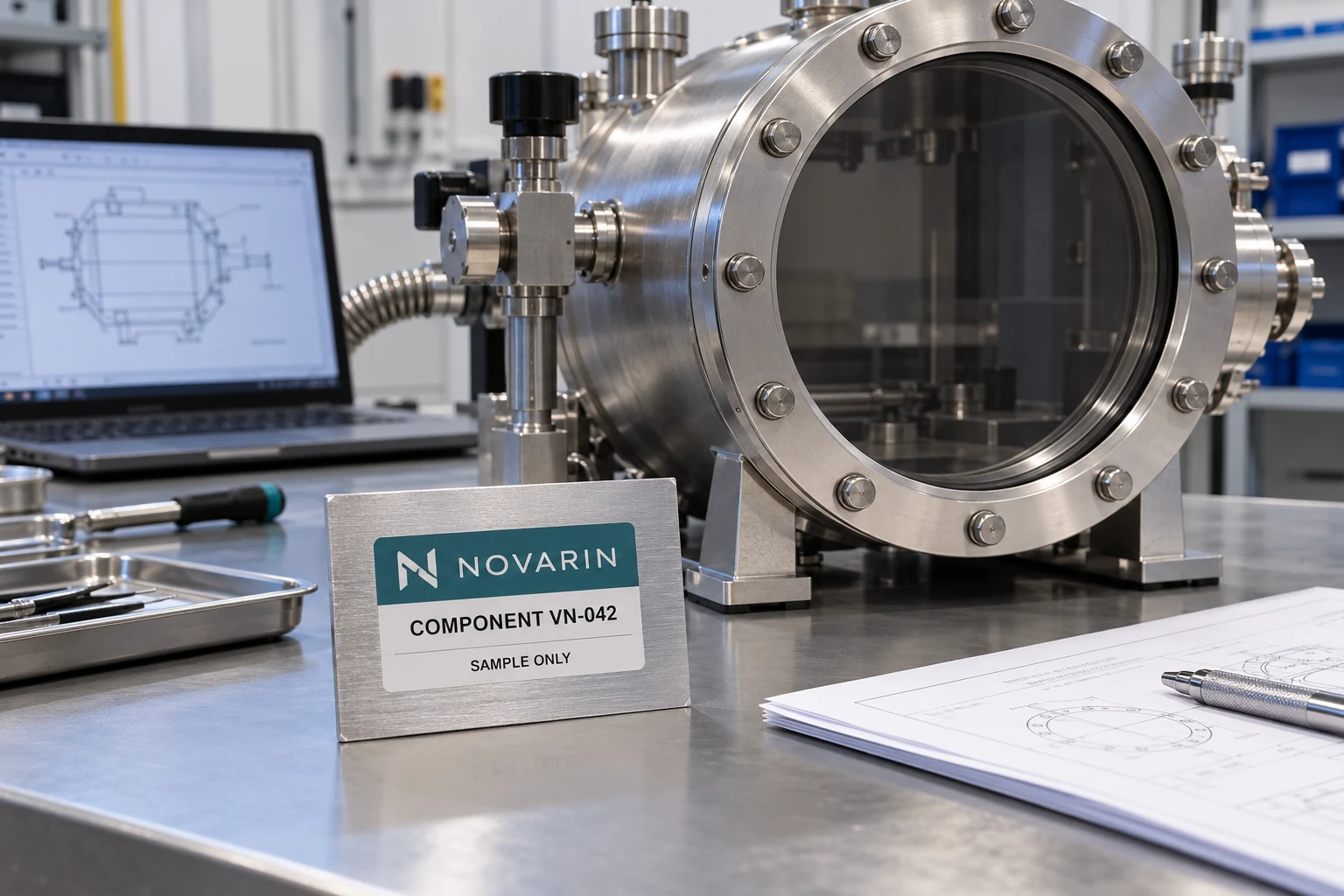
First decide whether the label needs to be inside
Identify the reading task. Does an operator need to identify the assembly before loading, during maintenance outside the chamber or while the component remains in the controlled volume? Those are different placement requirements. Do not introduce an internal adhesive label if an approved external identifier can perform the entire task.
Discuss the location with the equipment and materials owners. An outside label cannot replace required identification inside a system when that identification is essential. Conversely, adding a specialist construction merely because the equipment contains a vacuum chamber can create an unnecessary qualification problem.
Record the actual exposure boundary and the information that must remain accessible. This is the first purchasing decision. It determines whether the team is selecting an ordinary external equipment label or investigating a material assembly for a controlled environment.
Identify every part of the proposed finished construction
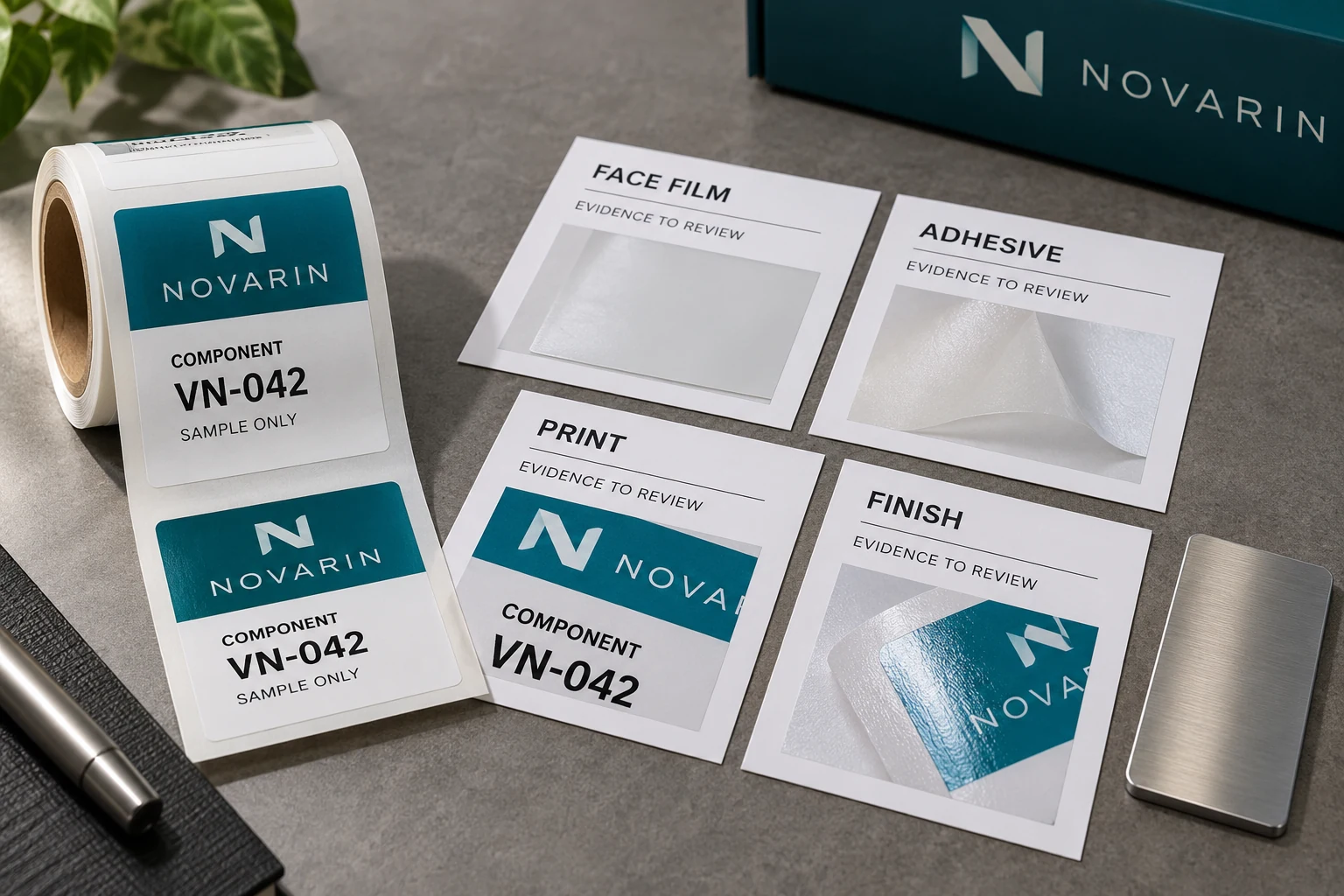
Request an identifiable construction description. Include the face stock, adhesive, printing system and any coating, laminate or other retained layer. Identify which parts remain after application and which are removed. A release liner normally leaves the installed label, but its handling and any relevant transfer concerns still belong with the responsible engineer's process review.
Do not ask a print supplier to infer the engineering requirement from the phrase low outgassing. Provide the intended application, applicable project criteria and what evidence the reviewer requires. If proprietary formulation details are unavailable, the parties still need a traceable way to identify the proposed material and the evidence scope.
The industrial material-selection guide helps describe general surfaces and environments. This decision goes further: the review concerns what the specified construction may release under defined conditions and whether the available evidence applies to the exposed assembly.
Read the database limitation before the result
ESA's outgassing database notice explicitly says that a listing does not mean a material is ESA approved. It also notes that results can differ with factors such as mixture, curing or formulation changes. Its public notice is enough to reject an automatic approval claim; it does not supply a test result for the label being discussed here.
Obtain the original record or report through an authorized source and let the qualified reviewer assess its applicability. Keep the material designation, preparation, test conditions, report identity and date attached to the numerical result. A copied value without that context is difficult to use responsibly.
Do not treat a familiar acronym or a low reported number as a universal release threshold. The responsible project must define its acceptance requirements. This article does not prescribe vacuum test conditions, bakeout settings or pass limits, and it does not turn an aerospace database entry into approval for another application.
Build an applicability matrix
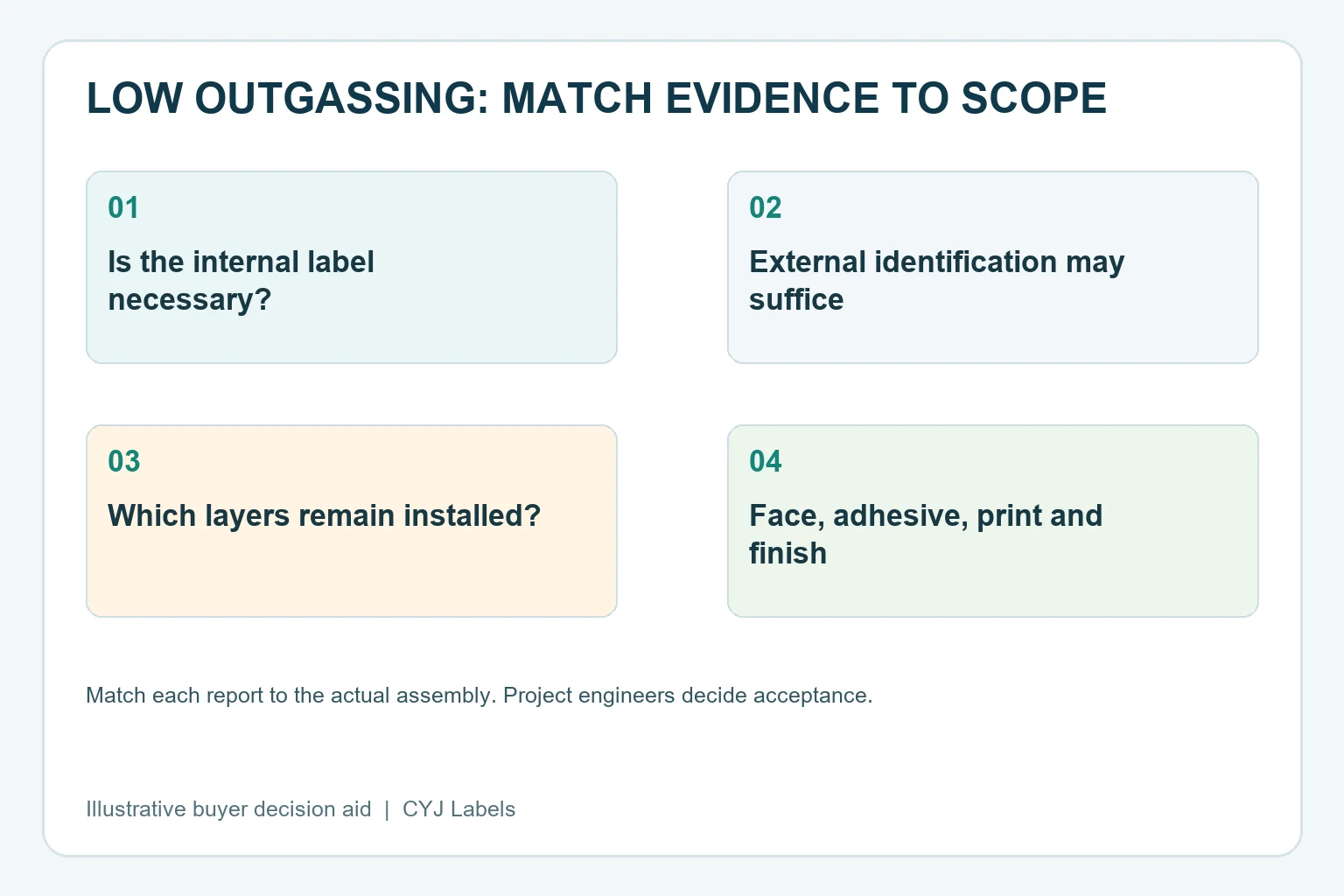
Use a proposed worksheet like this before requesting production. Its purpose is to expose unanswered questions, not to replace a materials review.
| Item under review | Evidence reference | Applicability question |
|---|---|---|
| Adhesive | Named material and report | Same formulation, preparation and exposed condition? |
| Face stock | Identifiable film or other material | Same construction and relevant preparation? |
| Ink or print system | Specified retained print | Included in available evidence or still unresolved? |
| Protective finish | Named coating or laminate | Covered by the evaluated assembly? |
| Installed sample | Drawing and application process | Does it represent the actual exposed configuration? |
| Acceptance | Project requirement and reviewer | Who authorizes use, and for what scope? |
Leave a missing evidence field visibly unresolved. Do not fill it with a supplier's general statement about industrial durability. If the intended construction changes during quoting, return the changed layer to the reviewer rather than assuming the earlier decision transfers.
A shipment statement cannot repair a qualification gap
A supplier may be able to identify what was supplied and reference an agreed specification. That can support traceability. It does not create measured evidence for an untested assembly or establish that a component-level report covers additional print and finish layers.
The certificate-of-conformance guide separates a shipment statement from test evidence. Apply that distinction here. Request the document that answers the actual question, and do not ask for a stronger certificate heading when the missing item is an engineering judgment about the construction.
Where evaluation is needed, the project owner should arrange the appropriate qualified review or test and define the sample configuration. Keep the sample and report linked to the proposed supply. Do not perform an improvised chamber experiment from a general purchasing article or advertise a successful result that has not been obtained.
Keep an alternative open
If internal adhesive identification adds a disproportionate qualification burden, the design owner may consider an external identifier or another approved marking method. A mechanical plate or direct mark is not automatically suitable either; each alternative has its own design and material requirements.
The useful comparison is which route performs the identification task with supportable evidence. For a genuinely controlled internal application, a specialist qualified supplier may be the appropriate route. For an external cabinet reference, an ordinary construction meeting the actual surface and service requirement may be sufficient.
For a custom industrial label discussion, prepare an evidence-scope brief with the proposed location, identification task, construction references, applicable project requirements, available reports, artwork, dimensions and quantities. Use the contact page to organize the brief and send supporting files through email or WhatsApp. Confirm capability and the engineering acceptance path before requesting a production commitment.