Label Order Certificates of Conformance: Tie the Statement to the Supply
Published
The purchase order says “certificate required.” The supplier sends a document with a familiar company name and a general assurance about quality. Receiving still cannot tell whether it refers to this label item, this artwork revision or this shipment. The document exists; the decision it was supposed to support remains open.
Before ordering, agree what the conformance statement must identify and what it actually attests. Link it to the supplied item and approved specification through usable order and shipment references. Keep supplier statements, measured test results and third-party recognition separate. More formal-looking paper cannot fill a gap in that evidence.
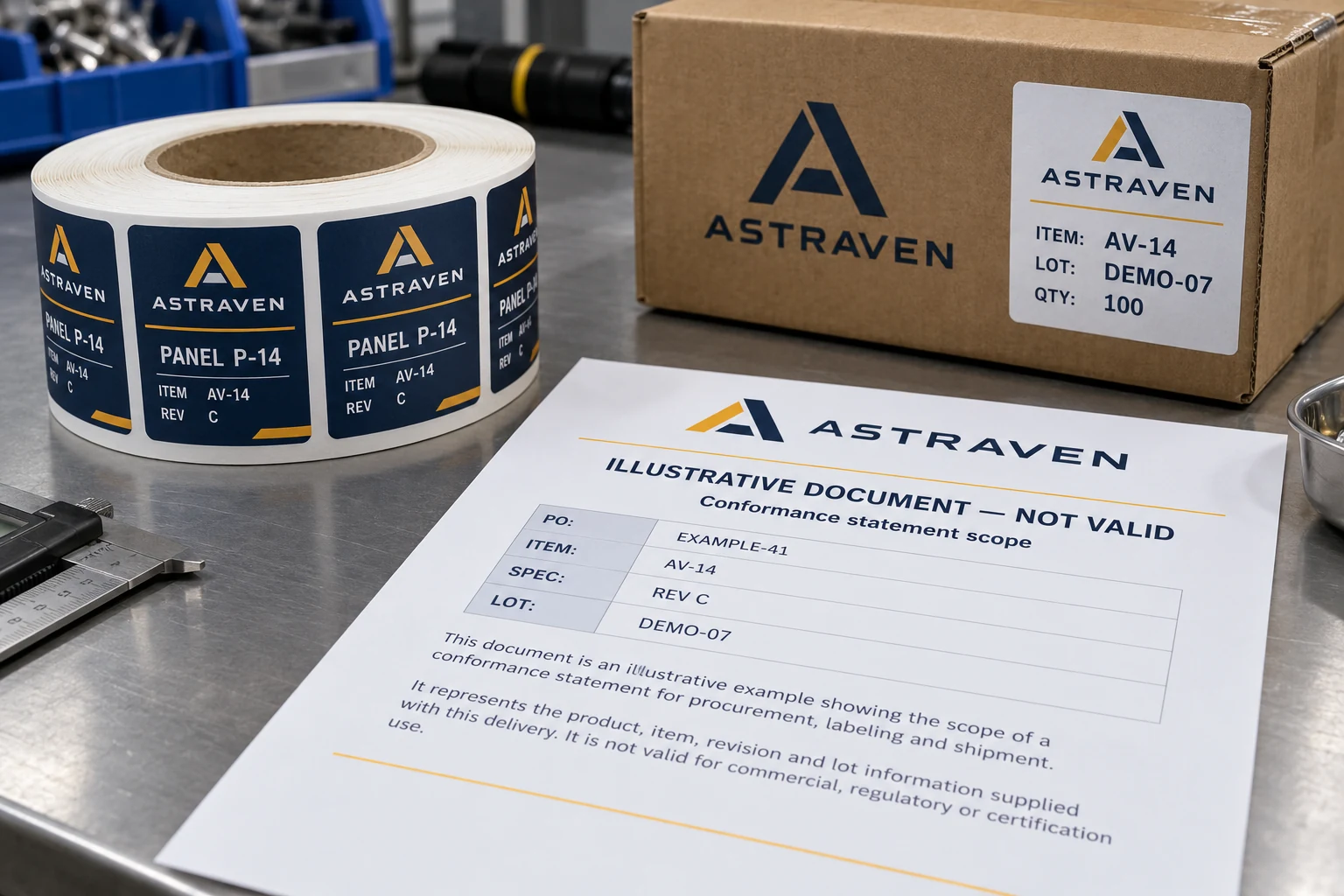
Decide what the document must identify
Start with the buyer's reason for requesting the document. Is quality checking that the supplied labels were made to a named specification? Is receiving reconciling an item and lot with the order? Is an end customer asking for a particular statement? Each purpose needs a clear scope, and some may require evidence that a supplier statement alone cannot provide.
Do not assume “CoC” means the same template or assurance to both parties. Ask for the proposed document scope early enough to resolve it before the order depends on it. The following field map is an editorial procurement aid, not a mandatory certificate format or a promise that a particular supplier provides one.
| Field or reference | Question it should answer | Illustrative value only |
|---|---|---|
| Issuer and statement scope | Who is making which statement? | Named supplier and agreed wording |
| Purchase or delivery reference | Which transaction can the reviewer reconcile? | PO EXAMPLE-41 |
| Label item | Which supplied design or item is covered? | AV-14 |
| Specification reference | Which approved requirements are being referenced? | Defined label specification, REV C |
| Shipment or lot link | How is the statement linked to the physical supply? | Delivery reference and DEMO-07, if agreed |
| Quantity scope | Does the scope match the supplied quantity and unit? | Defined labels, rolls or shipment scope |
| Issue and authorization details | Can the buyer identify and query the issued statement? | Agreed document reference and responsible issuer |
Not every order needs every field. A lot reference is useful only when both sides can connect it to the actual supply. A revision entry is useful only when it identifies a defined document. Agree the necessary chain rather than adding empty boxes to a template.
Separate a statement from measured evidence
A supplier declaration of conformance is not the same thing as a report showing measured results for a named sample and method. If the unresolved question is resistance to a cleaning chemical, ask what relevant construction-specific evidence or trial is available. A general sentence about meeting requirements cannot establish an observation that was never made.
Third-party recognition is another question. It has its own product, construction and use-condition scope. A shipment statement should not be treated as proof that any material carrying the supplier's name has that recognition. For that separate review, use the UL 969 label-system document guide.
Physical sample approval also remains separate. The custom-label sample checklist helps retain the approved artwork and construction decisions. A later statement should point to the agreed requirements where appropriate; it does not replace checking that the requirements were suitable for the application.
Agree the scope before releasing the purchase order
Give the supplier the specification reference and the proposed document requirement during the enquiry. Ask whether that statement can be supplied, what it will cover, and whether another document better answers the buyer's actual question. Do not assume availability, certification status, extra testing or a particular approval process.
The content of the statement deserves the same care as its heading. “Conforms to specification REV C” is difficult to interpret if the order includes several unrelated drawings marked C. Identify the specification by a reference that both sides can retrieve. Where the buyer's requirement changes, confirm which revision applies to the supply before the statement is issued.
Also agree the point at which the document is needed and where the reviewer will obtain it. A receiving team cannot rely on a document that nobody has arranged to deliver. This is a coordination requirement for the order, not a claim about standard CYJ services or a guaranteed document delivery time.
Reconcile the paperwork at receipt
Check the document against the purchase and delivery records, then against the physical item identification. Record any mismatch precisely: item reference missing, revision ambiguous, quantity unit different, or shipment link unresolved. That makes the next request answerable. “Certificate wrong” often sends both sides back into a general discussion.
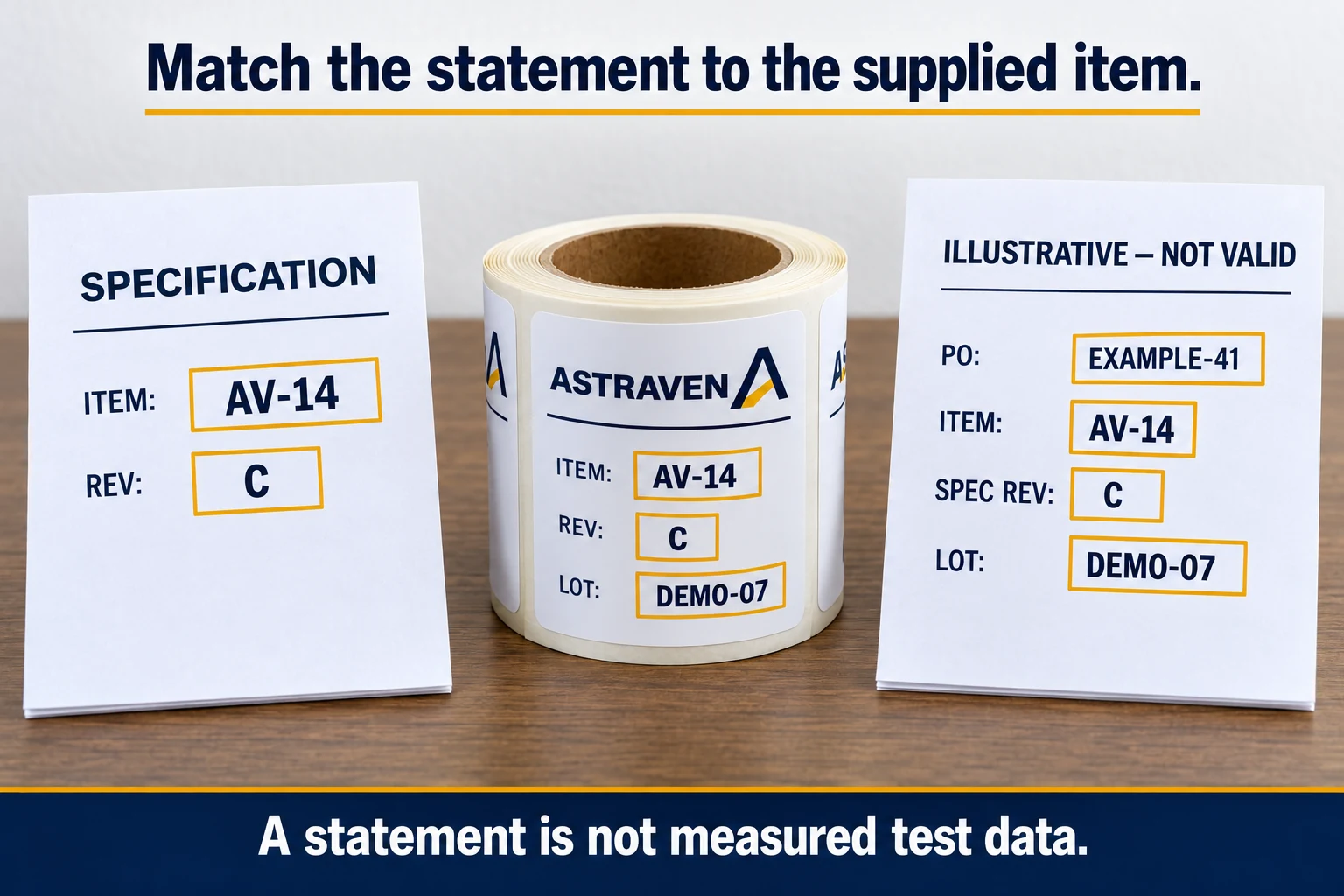
If a document mismatch affects the buyer's release decision, preserve the supply identity and refer it to the designated quality or procurement owner. Do not rewrite the supplier's statement locally to make the paperwork match. The issuer should resolve its own document, and the responsible buyer decides the receiving disposition under the applicable process.
An actual product discrepancy needs its own investigation. A corrected document does not repair an incorrect label. Equally, correct product appearance does not resolve a missing requirement for traceable documentation when that requirement was part of the agreed order.
When less paperwork is the better choice
AWT Labels & Packaging has questioned indiscriminate requests for material conformance certificates. That manufacturer's 2023 opinion is useful counterweight to the assumption that every additional document improves quality. It does not mean a buyer should ignore an agreed or necessary evidence requirement.
For a simple order with no external certificate requirement, a well-defined approved specification, identifiable supply and an agreed receiving record may answer the decision more directly. Where a statement is necessary, request a usable one. Where measured evidence is necessary, do not substitute a ceremonial assurance. The comparison is about the decision supported, not the number of pages collected.
For a custom industrial label enquiry, prepare the item and specification references, dimensions, artwork revision, quantity and the precise documentation question. Use Prepare My Requirements on the contact page and its email or WhatsApp path to ask what can be supplied and agreed for that order. Keep the request specific enough that the eventual reviewer can reconcile the answer.