Changing a Tire Brand? Review the GTIN Before Reusing the Barcode
Published
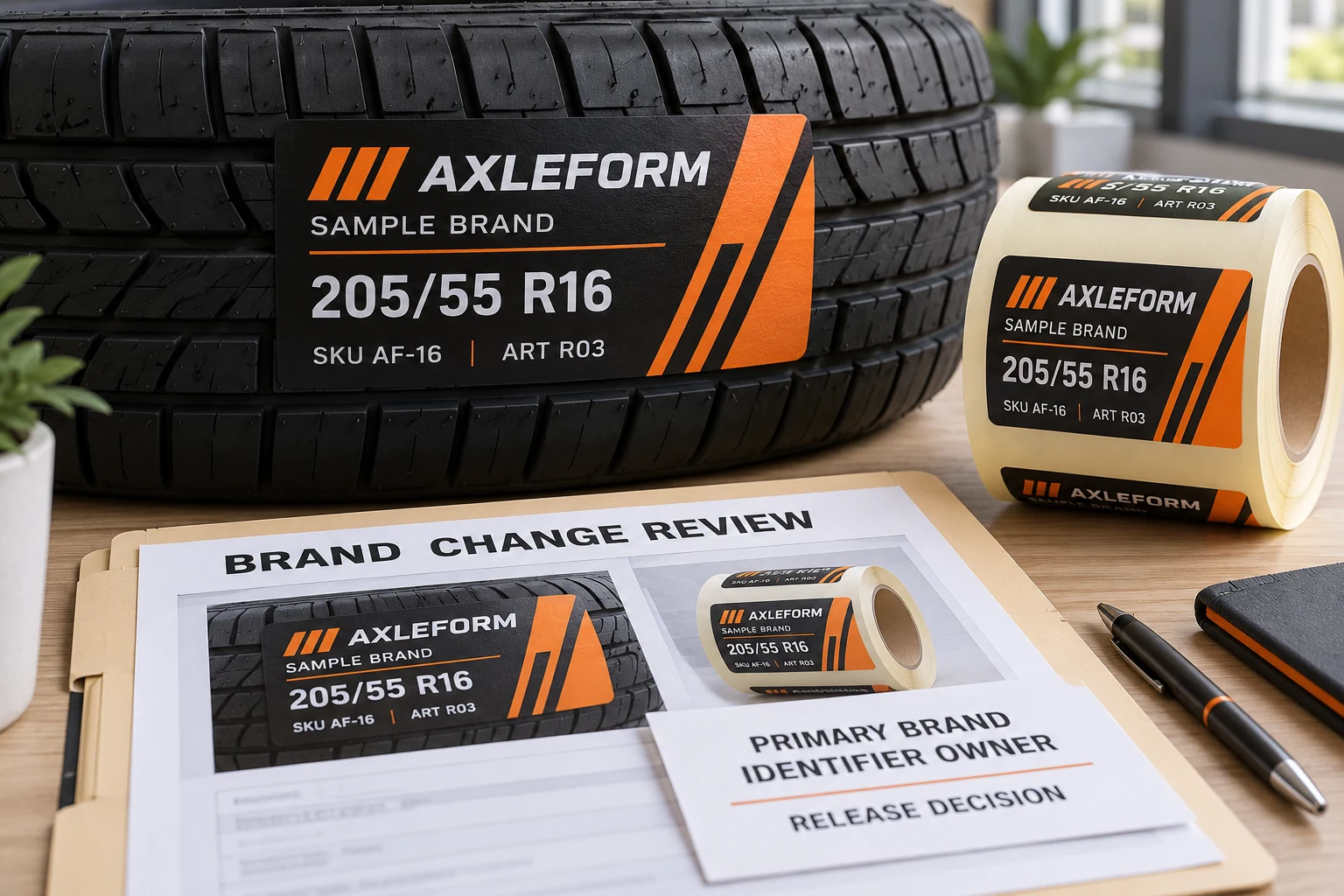
The tire size stays the same. The label dimensions stay the same. The buyer asks the designer to replace the main brand and leave the old barcode where it is. From the artwork desk, that can look like a small revision.
For a project using GS1 trade-item identification, the barcode decision needs its own review. A change to the primary brand is not automatically the same as correcting a spelling mistake or refreshing an artwork file. The identifier owner should classify the change before procurement approves another print run.
This guide describes a hypothetical private-label purchasing decision. It does not assign numbers, establish ownership of a trademark or decide which tire-market declarations are required. Its purpose is to keep the printed brand and the approved product identifier connected.
Find out what is actually changing
Ask for the current product identity and the proposed one, not only two logo files. Which brand appears as the primary brand on the trade item? Is that brand being replaced, or is the designer correcting an error in the existing name? Who is responsible for the product's GS1 identifier record?
GS1 US guidance on changing product information distinguishes ordinary corrections from changes governed by GTIN management rules. It cites the requirement for a new GTIN when the primary brand appearing on the trade item changes. A field being editable in a product-data tool does not, by itself, approve keeping the old identity.
Apply that guidance within its scope. A buyer's internal warehouse SKU is not automatically a GTIN. A cosmetic artwork adjustment is not automatically a primary-brand replacement. Have the responsible identifier owner resolve the classification, using the applicable GS1 rules and its member organization's guidance where needed.
Give the owner a comparison it can approve
The designer needs a clear answer before generating another symbol. Prepare a before-and-after record showing the existing primary brand, proposed primary brand, relevant product references and identifier decision. Keep the owner and approval date with the record.
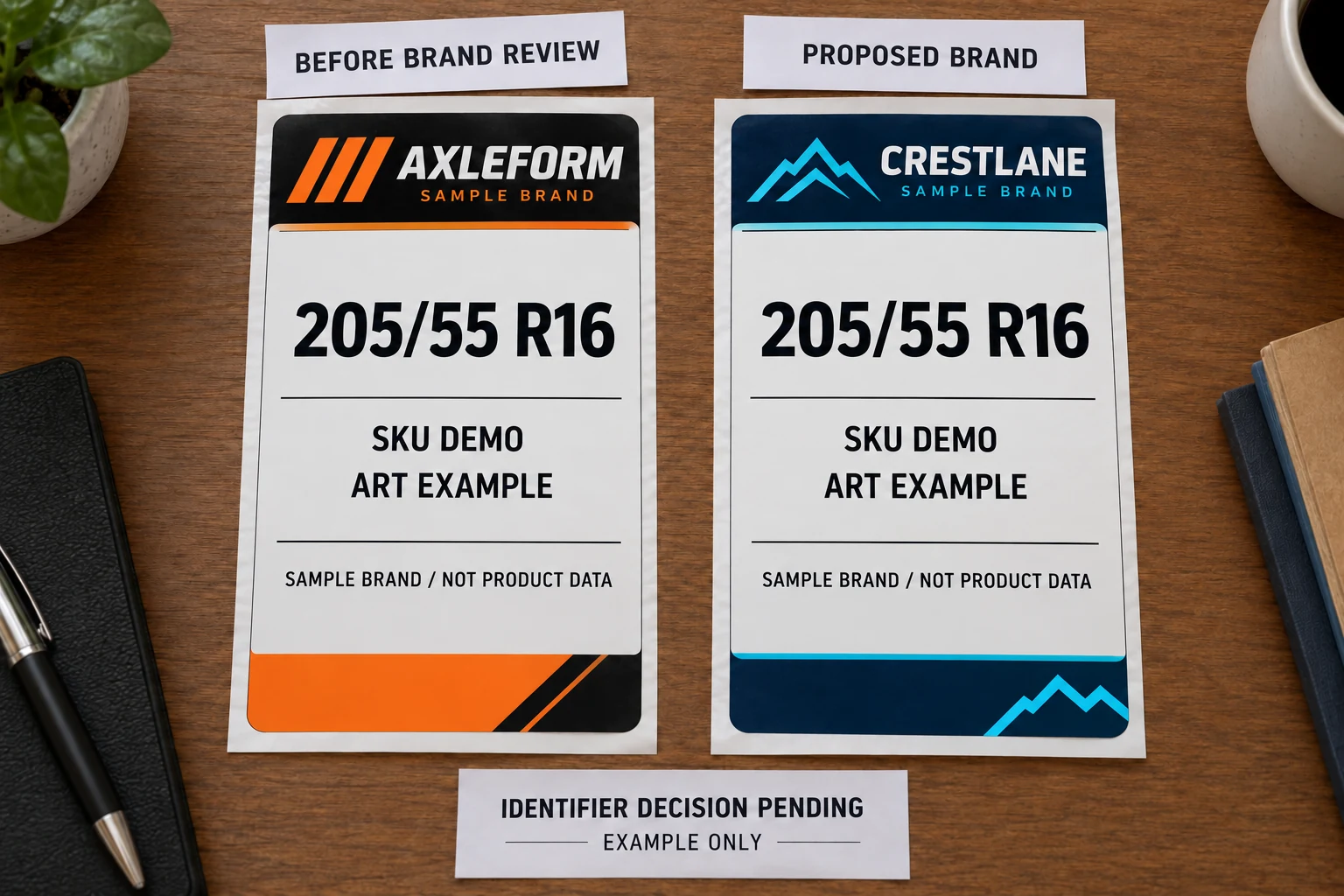
For an illustration, suppose fictional AXLEFORM artwork is proposed to become fictional CRESTLANE artwork for a trade item. The names are teaching examples, not an actual brand transfer. The same tire-size text on both designs does not establish that the old GTIN can be retained. Nor does the graphic designer get authority to invent a replacement number.
| Review field | What the buyer should obtain |
|---|---|
| Current identity | Current primary brand, approved product reference and existing GTIN record where applicable |
| Proposed change | Before-and-after artwork and a plain description of what changes |
| Responsible owner | Person or function authorized to classify and approve the identifier decision |
| Resulting identifier | Approved retained or newly assigned GTIN, with the basis recorded by its owner |
| Release and transition | Artwork revision, affected stock and the point at which the new approved identity is used |
The table is a proposed approval record, not a replacement for GS1 allocation rules or brand agreements. Leave the resulting number pending until the authorized owner supplies it. A purchase deadline does not turn an unresolved identifier into a printer's decision.
Keep the identifier decision separate from drawing the bars
A barcode image represents data using a selected carrier. Reusing the image also reuses its encoded content, whether or not the text below it is edited. Once the identifier owner has supplied the approved value, the label proof should show the correct symbol and its corresponding readable information.
Do not repair a brand-to-GTIN disagreement by changing only the readable digits, renaming the artwork or covering the old brand panel. Compare the actual encoded value and visible product information with the approved record. A successful scan establishes that a device read something; it does not establish that the identifier belongs to the proposed product identity.
The tire-label data-ownership guide explains the broader responsibility split. Here the specific unresolved decision is continuity or change of the GS1 identifier when the primary brand changes. Keeping that decision explicit gives the printer a defined deliverable.
Plan how the approved identity reaches physical stock
An approved number and a new PDF are only part of the handoff. Identify which printed rolls, tire stock and product records belong to each approved identity. Ask the responsible product and commercial owners to define the transition rather than allowing the packing bench to choose between similar-looking versions.
Keep the old and new artwork references distinct. State the approved product mapping and the stock to which each release applies. If an order includes packaging or trading-partner records affected by the change, have their owners confirm the corresponding updates within the applicable identifier scheme. This guide does not prescribe a packaging-hierarchy allocation or approve relabeling existing tires.
For any remaining old printed rolls, record a disposition under the buyer's approved process. Do not mix them into a new-brand shipment simply because the size and adhesive are unchanged. Conversely, do not assume all existing stock must be relabeled without an owner decision about its proper use.
Recognize the changes that can remain corrections
A genuine typographical correction can differ from replacing the primary brand. The useful alternative is an owner-approved correction route, with its scope recorded. It avoids turning every artwork revision into an unsupported claim that a new GTIN is necessary.
The same care applies to a supporting distributor reference or a minor logo adjustment: describe the real change and obtain the classification. Do not generalize from the word rebrand in an email. The label supplier should reproduce an approved decision, not interpret a business relationship from the artwork alone.
The private-label tire-label guide remains the place to organize logo rights, tire fields and the overall print brief. This additional review closes the specific identity question before that brief becomes released stock.
For tire barcode labels, I would ask for the identifier-owner decision beside the new artwork reference. It makes the approval smaller and clearer: the designer owns the graphic change, the identifier owner approves the product mapping, and purchasing releases the defined version.
Preparing a private-label brand change? Prepare a brand-and-identifier brief with current and proposed artwork, the primary-brand change description, approved GTIN decision where applicable, tire SKUs, affected stock, quantity, dimensions and application surface. Organize the requirements on the contact page, then share the approved files through the existing email or WhatsApp path for a project-specific printing discussion.