Reflective Equipment Labels or Glow-in-the-Dark Labels? Define the Light First
Published
The maintenance team can find the cabinet in daylight. At the evening inspection, its asset number disappears into a dim service bay. Purchasing receives two suggestions: a reflective label and a glow-in-the-dark label. Both sound like visibility improvements, but they depend on different lighting conditions.
Define how light will reach the label and where the reader will stand before selecting a construction. A reflective sample photographed with a flash does not demonstrate visibility without illumination. A glowing sample does not establish how long the information will remain useful after the area's lights change. The buying decision starts with the actual identification task, rather than whichever material looks brighter in a catalog.
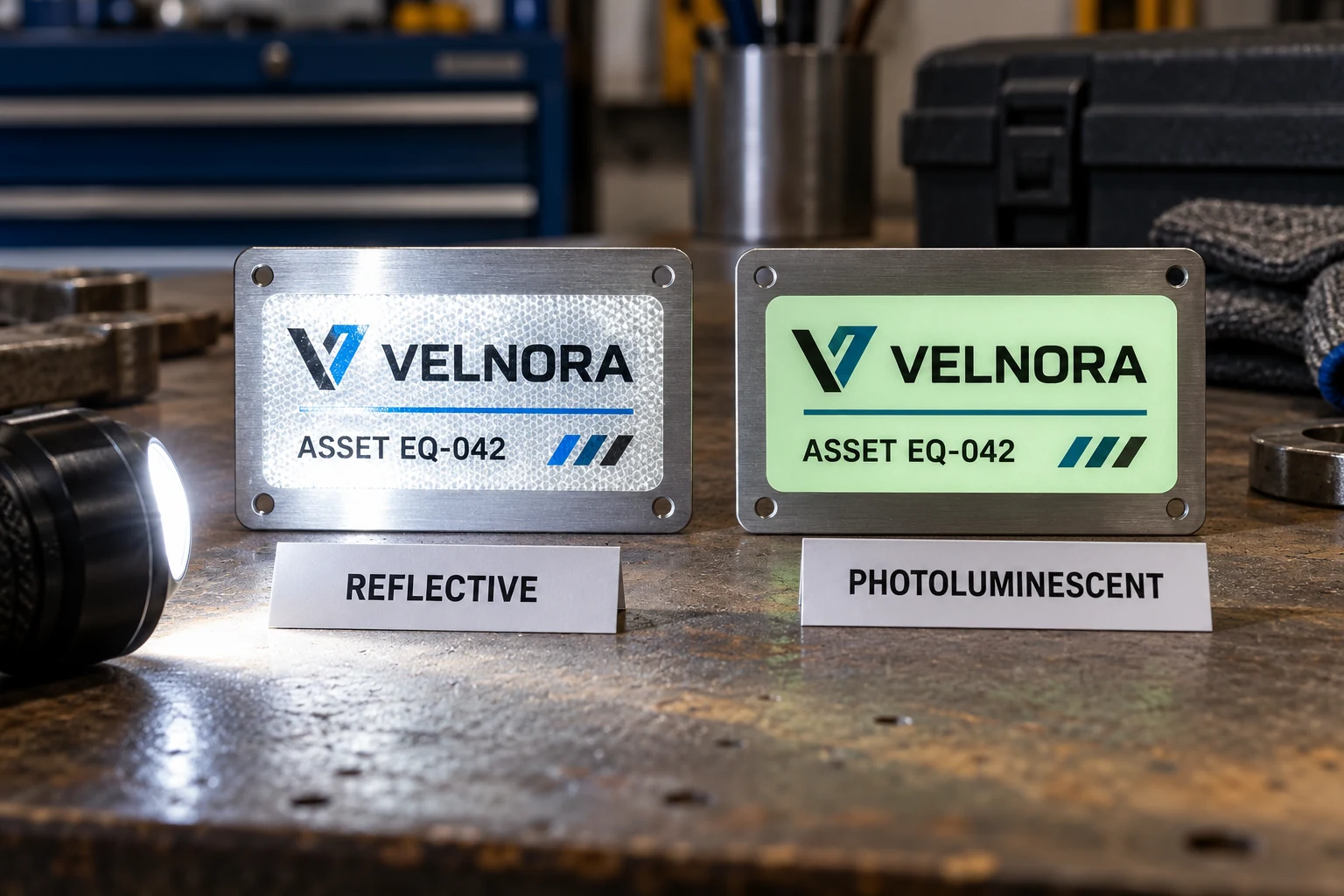
Two mechanisms, two questions
3M's explanation of retroreflection describes light being returned toward its original source. It also distinguishes phosphorescent materials that need prior light exposure. That explanation concerns visibility technology; it does not qualify a custom equipment label or establish a performance level for a proposed CYJ construction.
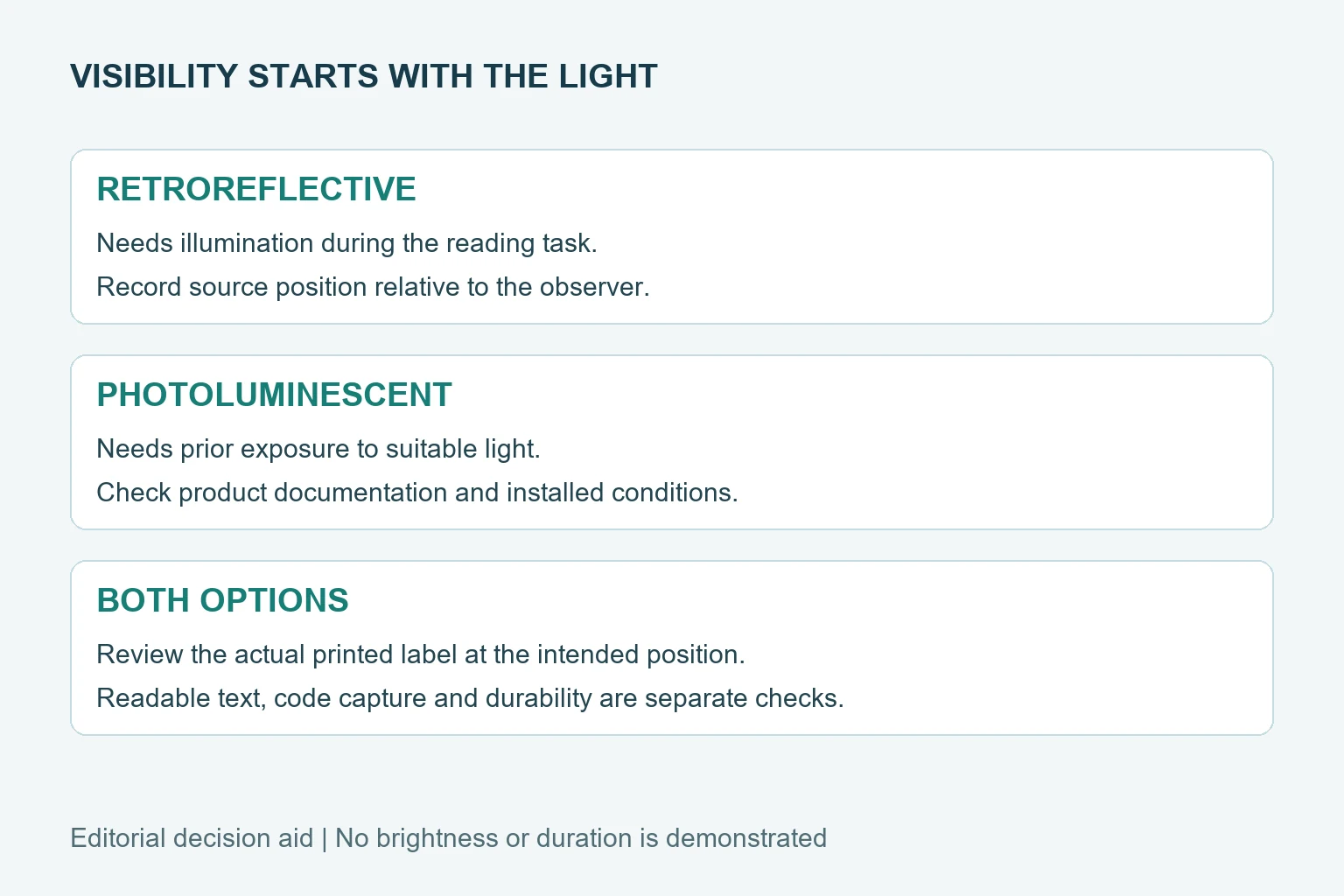
For a retroreflective option, ask what will illuminate the label during the identification task. A torch carried by the reader, a vehicle light and a lamp mounted elsewhere do not create the same source-and-observer arrangement. For a photoluminescent option, ask which preceding illumination conditions the product documentation requires and whether they occur at the installed location.
Do not reduce either question to a universal number of hours. Obtain the proposed material's applicable documentation and have the responsible reviewer define an appropriate evaluation. This article addresses equipment identification. It does not design emergency escape markings or establish compliance with a safety-sign standard.
Record the reading task before requesting samples
Describe the person, the information and the normal approach. Does the worker need to locate a large asset number from the aisle, read a small serial line beside the cabinet, or capture a code with a handheld device? Those are different outcomes, even when they share one label.
Photograph the proposed position with the surrounding obstructions visible. Record the viewing direction and approximate working distance. Note doors, recesses, cable trays or stored equipment that may interrupt either the illumination or the view. A photo taken straight ahead with the panel open can conceal the problem that occurs during a normal inspection.
The outdoor equipment-label checklist helps specify exposure and handling. This review adds a separate requirement: the mechanism that makes the information visible in the actual lighting sequence. Outdoor durability alone does not answer that question.
Compare visibility with readable information
A bright rectangle is not the same as a readable asset number. The size and color of the printed information, the selected material and the final protective finish all belong in the comparison. Request a complete printed example with representative approved content rather than approving an unprinted swatch as the finished label.
Use a record like this with the responsible equipment owner:
| Review item | Reflective candidate | Photoluminescent candidate |
|---|---|---|
| Identification task | Exact information and reading position | Same task and position |
| Light conditions | Source during reading and its relation to the observer | Prior illumination and later reading conditions |
| Material evidence | Identifiable product and applicable instructions | Identifiable product and applicable instructions |
| Printed construction | Actual text, colors and finish | Actual text, colors and finish |
| Observation | What was readable and under which conditions | What was readable and under which conditions |
| Decision | Reviewer, scope and unresolved questions | Reviewer, scope and unresolved questions |
The worksheet does not prescribe a test method or pass threshold. Its purpose is to stop the team from comparing a flash photograph of one specimen with a staged dark-room image of another and calling the brighter picture a winner.
A torch demonstration needs its own context
An illustrative maintenance task might involve a worker approaching an equipment panel with a permitted handheld light. A retroreflective identification label may be worth evaluating for that arrangement. If the viewing position moves away from the illumination source, repeat the relevant comparison rather than assuming the original appearance remains unchanged.
Another installation may remain unlit for a long interval, with no assured preceding illumination at the label. A glow-in-the-dark proposal then has an evidence gap to resolve. The product's stated behavior under defined conditions cannot simply be copied into that installation without checking applicability.
These examples are proposed procurement situations, not customer results. If the reading task involves an area where particular lights or devices require authorization, use the equipment owner's permitted process. A label-buying article cannot authorize a device for that location.
Keep barcode capture as a separate acceptance question
Human visibility and machine capture deserve separate records. A label that helps a person find the cabinet may still need a conventional high-contrast data area and its own code review. A camera recognizing a sample once does not qualify the complete printed construction for every working condition.
The glossy barcode glare guide addresses reflections that interfere with capture. Here, reflection is being considered as a deliberate human-visibility feature. Do not assume a visibility benefit automatically translates into a barcode benefit. Give the technical owner the real code, reader and installed position to evaluate.
An ordinary label can still be the better purchase
If a high-contrast conventional label and the existing approved lighting let the worker read the required information reliably, a specialist material may add little practical value. A better location, a larger asset number or an approved lighting change can also be worth considering before replacing every label.
Where a specialist construction is justified, retain its exact reference, artwork, finish and the reviewed conditions with the reorder record. Do not let a later purchase substitute a generic reflective or luminous description for the construction that was evaluated. Attachment and environmental resistance still require their own application review.
Prepare a light-and-reading brief with the equipment position photo, required readable information, viewing distance, available illumination, any proposed code, surface, dimensions and quantity. Use the contact requirements page to organize the brief, then send supporting material through its email or WhatsApp route for an equipment label discussion. The useful outcome is a defined identification task and a reviewable sample request.