Data Matrix or QR for Small Parts Labels? Start With the Reader
Published
The available label panel is small, and someone proposes replacing the QR code with a different square symbol. It appears to fit better in a mockup. The receiving phone, scanner and software have not yet been checked against that proposed carrier and data format.
Choose the carrier from the approved payload, intended reader and final usable area together. A compact-looking symbol is useful only if the actual workflow can capture and interpret it. Do not assume every square code behaves the same way with every camera.
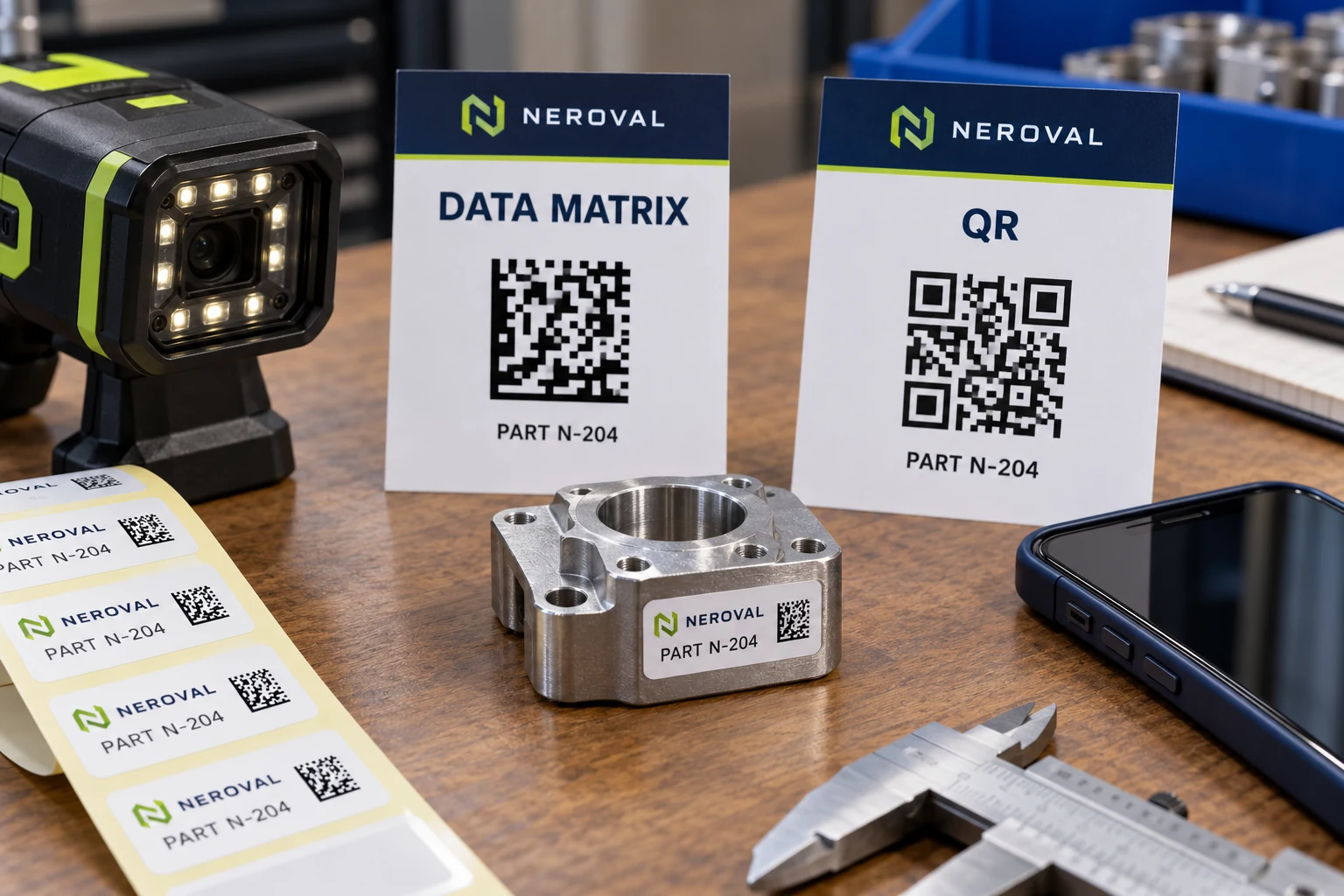
Name the reader and the result it must return
List the device or device family used at the operational point, along with the relevant application. Specify whether the scan should return an internal part ID, a structured standard value or a web destination. Those outcomes can require different interpretation even when the camera recognizes a symbol.
GS1's comparison of 2D options distinguishes carrier and syntax choices, including smartphone access differences. Its guidance is not permission to apply GS1 syntax to an arbitrary internal part number. The data owner should identify the actual scheme required by the buyer or trading partner.
If the job uses a dedicated industrial imager, obtain its relevant capability and configuration requirements. If it relies on ordinary phone cameras, review representative actual devices and the intended application rather than assuming a dedicated scanning app will always be installed.
Fix the payload before comparing size
Use the exact owner-approved data for the comparison. A short sample ID can produce a smaller symbol than the actual production payload. Comparing two graphics generated from different content does not establish which carrier fits the real job.
Keep any structured syntax under the responsible technical owner's control. Do not remove separators, shorten identifiers or substitute a web link merely to make the symbol smaller. Those changes can alter what the receiving workflow understands.
If the business can use a shorter controlled locator while keeping its system relationship intact, that is a legitimate architecture option for the owner to review. It is a separate decision from shrinking a graphic. Record who maintains the locator and how the correct part record is retrieved.
Measure the usable panel, including its surroundings
Identify the flat or otherwise approved label area on the actual part. Account for the space required around the proposed symbol, readable fallback and any essential text. The outside label dimensions do not all become available code area.
The quiet-zone guide covers protection of the clear area. Use the applicable carrier requirements rather than transferring one symbol's dimensions or margins to another. A tight fit achieved by cropping the surroundings is not a valid size comparison.
Include curvature, recesses and normal handling position in the review. A symbol that fits a drawing can still be awkward to aim at on the part. Consider whether an approved alternative position or a separate identification surface better serves the actual task.
Compare candidates in one controlled record
| Comparison field | Keep consistent | Evidence to obtain |
|---|---|---|
| Approved data | Same intended information and scheme | Owner-approved source reference |
| Carrier | Explicit candidate definition | Applicable generation requirements |
| Physical output | Final dimensions and construction | Representative printed samples |
| Reader | Intended device and application | Capture and interpretation observations |
| Placement | Actual approved part position | Applied-sample review |
| Fallback | Required readable identity | Manual identification when capture fails |
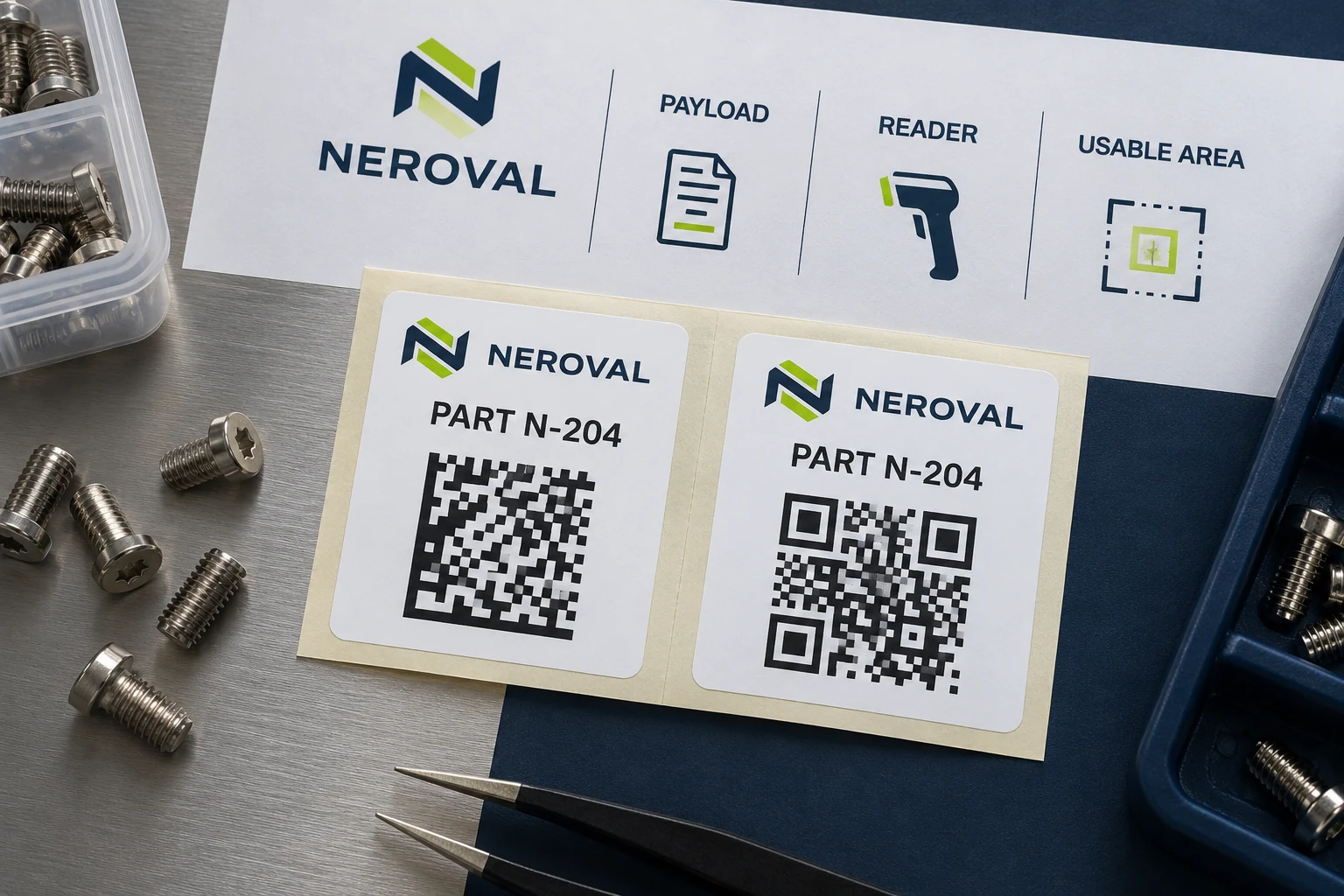
Do not declare a universal winner from a single phone demonstration. Record the devices, conditions and scope actually reviewed. If a buyer requires formal verification or a particular standard, include that requirement as a separate acceptance item.
Keep artwork generation and print quality in view
Generate each candidate appropriately from the approved source. Do not stretch an existing QR screenshot into the space intended for a different carrier. The barcode-source guide explains why visual resizing is a poor substitute for controlled generation.
Review the final printed sample at the intended size and on the relevant construction. A clear screen image does not qualify the printer's output. Capture the decoded value and compare the application result with the correct part record.
Keep a human-readable fallback where the requirement calls for it. If reducing the code leaves no readable identity and no practical exception route, the total label may become less useful even if the symbol itself fits. The buyer should decide that tradeoff explicitly.
Retaining the existing carrier may be the better purchase
If the current code works with the installed readers and meets the physical requirement, changing it can introduce application and training work without a corresponding benefit. Review whether a modest layout change or approved placement change solves the space issue first.
If a new carrier is justified, qualify the affected workflow and version mapping before ordering the full run. Do not assume old and new labels are interchangeable merely because both retrieve the same intended part in a test application.
For industrial barcode and QR labels, prepare a carrier-comparison brief with approved payloads, required scheme, reader and application details, actual part photos, usable area, fallback needs and quantity. Organize the requirements on the contact page and send supporting files through email or WhatsApp. The smallest useful code is the one the intended workflow can reliably use within its approved scope.