Asset & Serial Number Labels
For equipment ID, serial, QR, barcode and tracking workflows.
View detailsResource Guide
Tamper-evident asset labels need a defined job: show that a closure was opened, identify an item, support a handoff workflow or combine several of these tasks. Start with the event the label should make visible.
Published 2026-09-26
Digital proof before production. Material and adhesive options are discussed according to your application requirements.
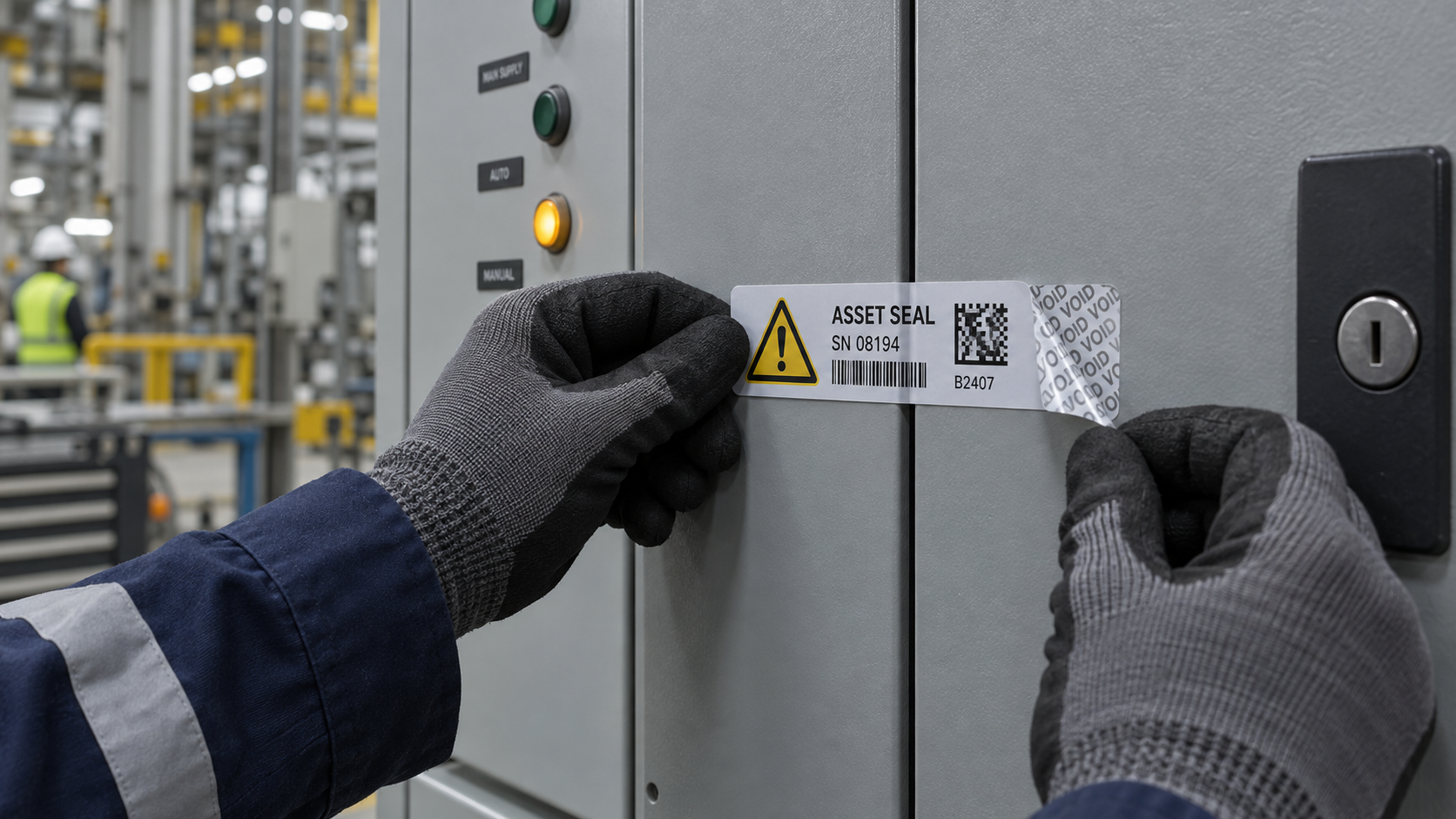
A security-style label may carry a serial, barcode, QR pattern, warning cue or a visible change when the seal is disturbed. These elements only matter when the buyer has defined how staff will use them. Is the seal placed across a cabinet seam, a tote closure or a maintenance access point? Who records the serial? What should a person do when the seal is broken? The print file follows that workflow.
In a composite equipment handoff, every enclosure receives a serial-number seal. The serial is recorded, but the label is applied beside the opening rather than across the closure. When the access door is later opened, the record still exists while the seal has not shown the event. The issue is not a missing code. The placement did not match the action the seal was meant to reveal.
A productive brief treats placement, visible evidence and data handling as one decision. Describe the closure, the operator action, the desired visual result if opened and what information belongs on the seal. Avoid treating a generic product image as a security specification.
The proof should show more than the face artwork. Review it beside a photo of the equipment door, tote flap or panel seam. Confirm that the serial remains readable, the label crosses the intended point and the application motion is practical. Physical controls and access procedures remain the buyer’s responsibility; a printed seal should be described honestly inside that wider process.
FAQ
No. A label can support a defined visual or identification workflow, but it is not a substitute for the buyer’s physical controls, procedures or security policy.
Yes. Define which field is human-readable, which is encoded and how the buyer records or checks the data.
Provide photos of the closure and intended seam, finished-size target, serial-data rule, quantity, application method and desired visible evidence after opening.