Tire Labels That Operators Can Start Peeling With Gloves On
Published
The label adheres in the sample review, but the operator struggles to lift its edge from the liner while wearing the gloves used at the packing bench. A stronger adhesive recommendation does not answer that problem. The difficult action occurs before the label reaches the tire.
Review the peel-start motion with the intended gloves, liner presentation and work position. Keep release handling separate from adhesion to rubber. The buyer needs a label that can be presented and applied through the actual process, without assuming that a convenient bare-handed sample proves the job.
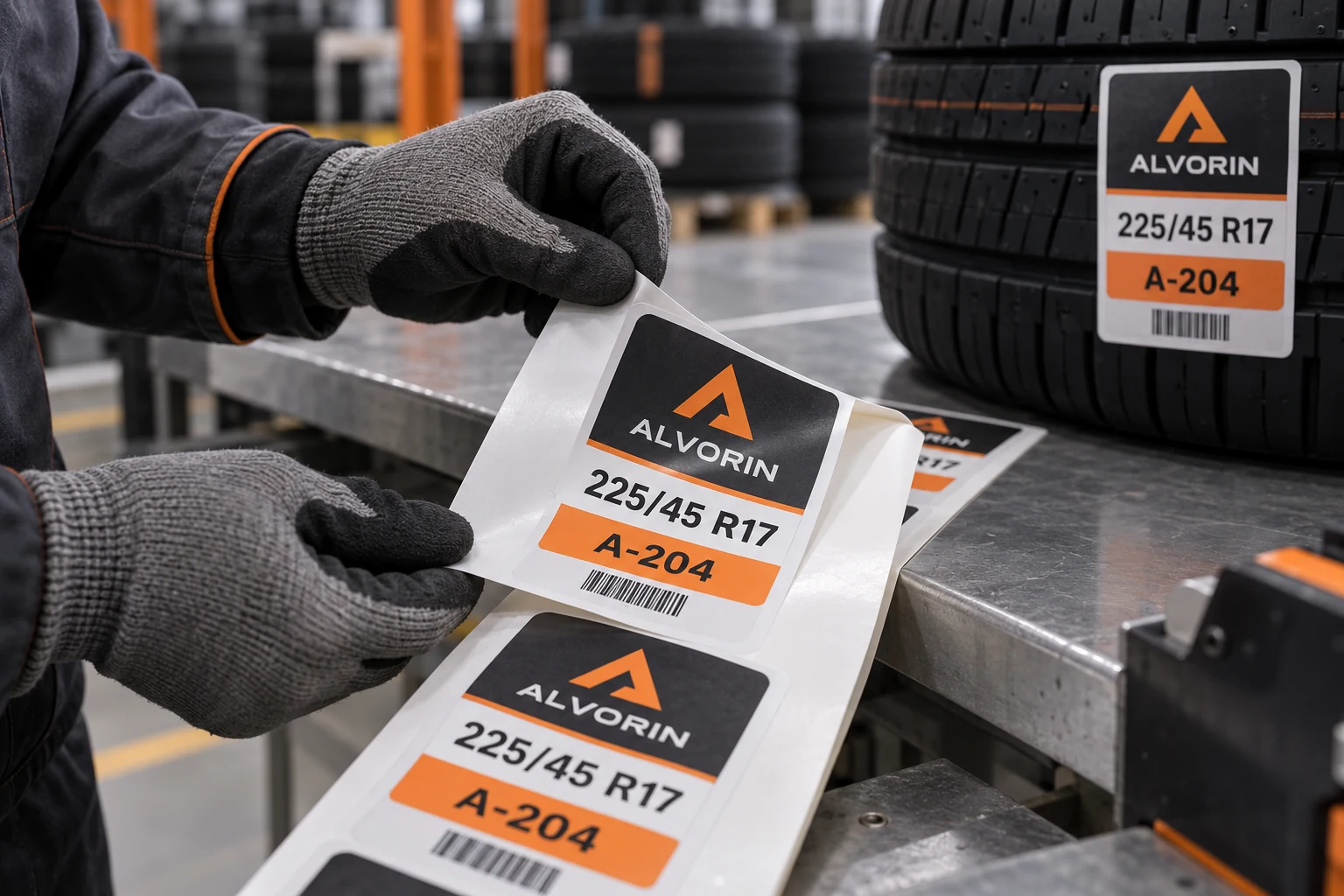
Watch where the motion stops
Ask an operator to demonstrate the approved handling method with a representative sample. Observe how the liner is supported, where peeling begins and whether the worker must bend the label, touch the adhesive or repeatedly search for an edge. Record those actions without assigning a material cause prematurely.
Use the gloves required by the actual workplace process. This guide does not recommend removing protective gloves to make labeling easier. The responsible workplace owner should decide what handling trial is appropriate and how it can be conducted safely.
A difficult peel can involve presentation, die-cut condition, liner behavior or the operator's access to the edge. The observation should tell the supplier what happens. It should not arrive as an unsupported instruction to reduce adhesive strength.
Specify the starting edge, not just roll or sheet
The roll-versus-sheet guide compares broader bench workflows. Within either format, the starting edge and liner support can still determine how easily the label is handled.
For a sheet, show how it lies on the bench and whether the worker can hold the liner while starting the label. For a roll or dispenser, show the presented edge and the intended pulling direction. Photograph the actual position rather than only the finished label face.
If the supplier proposes a changed liner margin, presentation or other peel aid, ask for a representative finished sample. Confirm that it remains compatible with packing, storage and any dispenser. A hand-friendly feature can introduce another constraint elsewhere in the workflow.
Compare the motion without inventing a speed claim
Use the same task and comparable conditions when reviewing alternatives. The aim is to identify a repeatable handling method, not to publish a universal productivity percentage from a few trial labels.
| Observation | What to record | Why it matters |
|---|---|---|
| Gloves and grip | Actual approved type and how liner is held | Makes the trial reproducible |
| Peel start | Intended edge and repeated attempts | Locates the difficult motion |
| Label condition | Folding, stretching or visible damage | Shows whether handling changes the sample |
| Adhesive contact | Unintended contact during peeling | Identifies a process issue to review |
| Application | Placement and readable fields after handling | Connects presentation to the final task |
| Unused stock | How the remainder is protected | Prevents convenience at the bench creating storage problems |
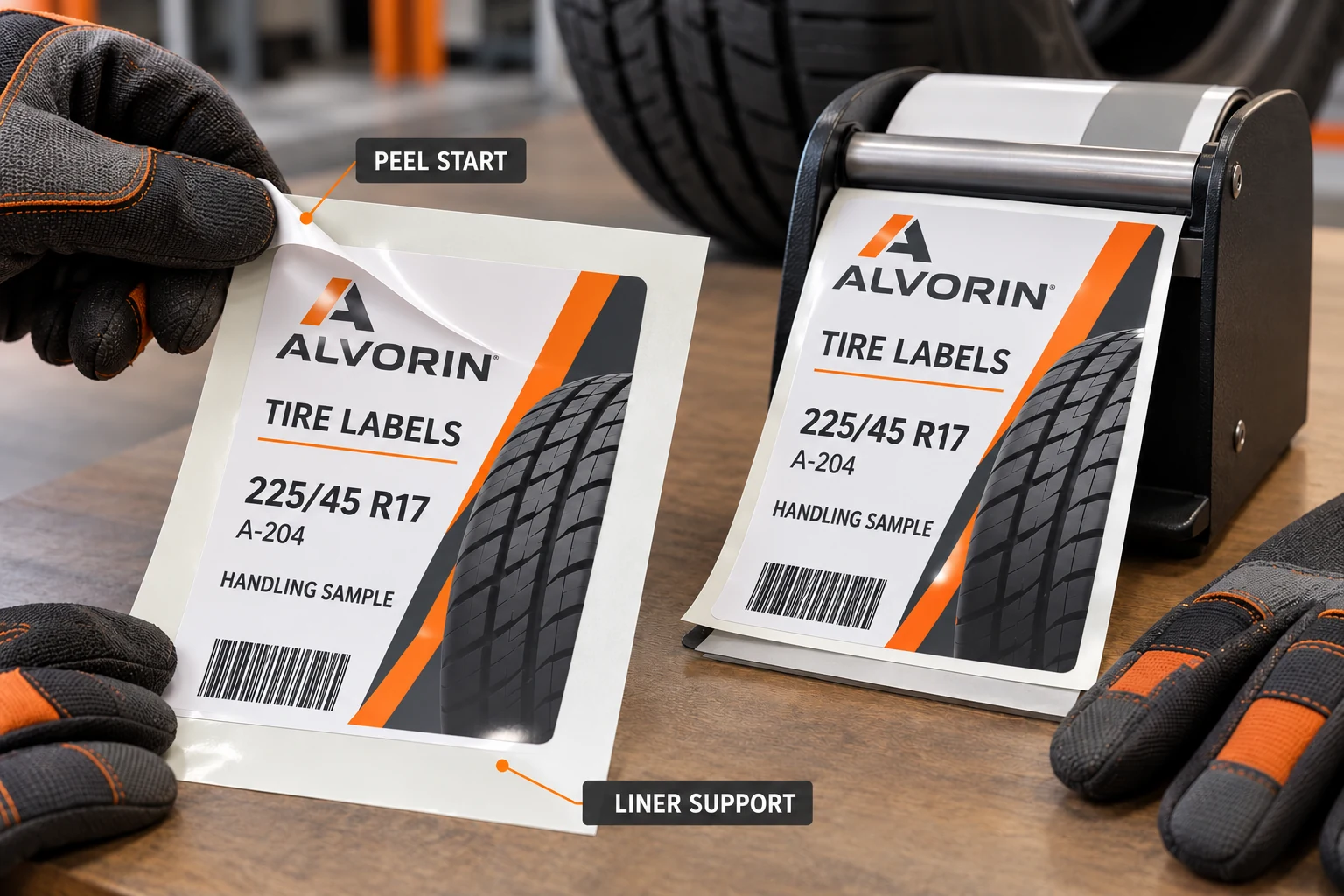
Keep an observation column open for the operator's explanation. A short, attributed comment from an actual trial can be useful. Do not invent a worker quotation to make the comparison sound more convincing.
Check the label after it leaves the liner
A proposed peel aid must not obscure the fact that the label still needs to perform on the intended tire. Use the agreed application process and assess the supplied construction separately. Successful release from the liner is not proof of adhesion, and good adhesion does not prove convenient release.
Review readable information and any code after application. If handling bends a code area or makes the operator place the label differently, the final reading task may change. Record that relationship before approving a format solely because it starts peeling easily.
The supplier should receive the whole observation, including what remained unchanged. If one presentation improves handling while both samples use the same approved construction, say so. If several variables changed together, do not claim the trial isolates one cause.
A dispenser or bench change may beat a new label
If the current label works when the liner is supported correctly, adjusting the approved presentation method may be more useful than redesigning the label. The process owner can assess a suitable dispenser or holding arrangement and verify its fit with the existing supply.
If the task involves frequent short mixed-SKU jobs, a simpler sheet presentation may be easier to control than adding equipment. Conversely, a repetitive single-version job may justify a controlled dispensing setup. These are conditional choices, not claims about universal speed or price.
Do not order a new construction merely because one loose sample was awkward to peel in an unrepresentative position. Equally, do not dismiss an operator's difficulty because a designer can lift the label with bare fingers. Recreate the intended motion and make the evidence visible.
Carry the accepted presentation into the order
Record the finished label size, liner arrangement, format, intended peel edge, packing method and representative sample reference. For roll supply, include the relevant winding and dispenser requirements. Preserve the handling observation alongside the usual artwork approval.
For tire tread labels, prepare a hand-peel brief with a short description or images of the gloved motion, current liner sample, bench arrangement, label dimensions, tire surface and quantity by SKU. Organize the requirements on the contact page and send supporting files through email or WhatsApp. The useful question is how the operator starts the actual label, not how easy a loose sample feels in an office.