Tire Label Roll Length vs Label Count: Put Pitch in the Quote
Published
One tire-label quotation lists meters of web. Another lists finished labels. Both use the same artwork, but the purchasing comparison still lacks a common unit. Dividing the web length by the visible label height can give the wrong answer when the gap and layout have been left out.
Use the approved repeat distance along the feed direction to estimate nominal label positions. Then confirm the actual supply and usable-count agreement separately. A roll-length calculation can help compare quantities; it does not prove how many acceptable labels will arrive.
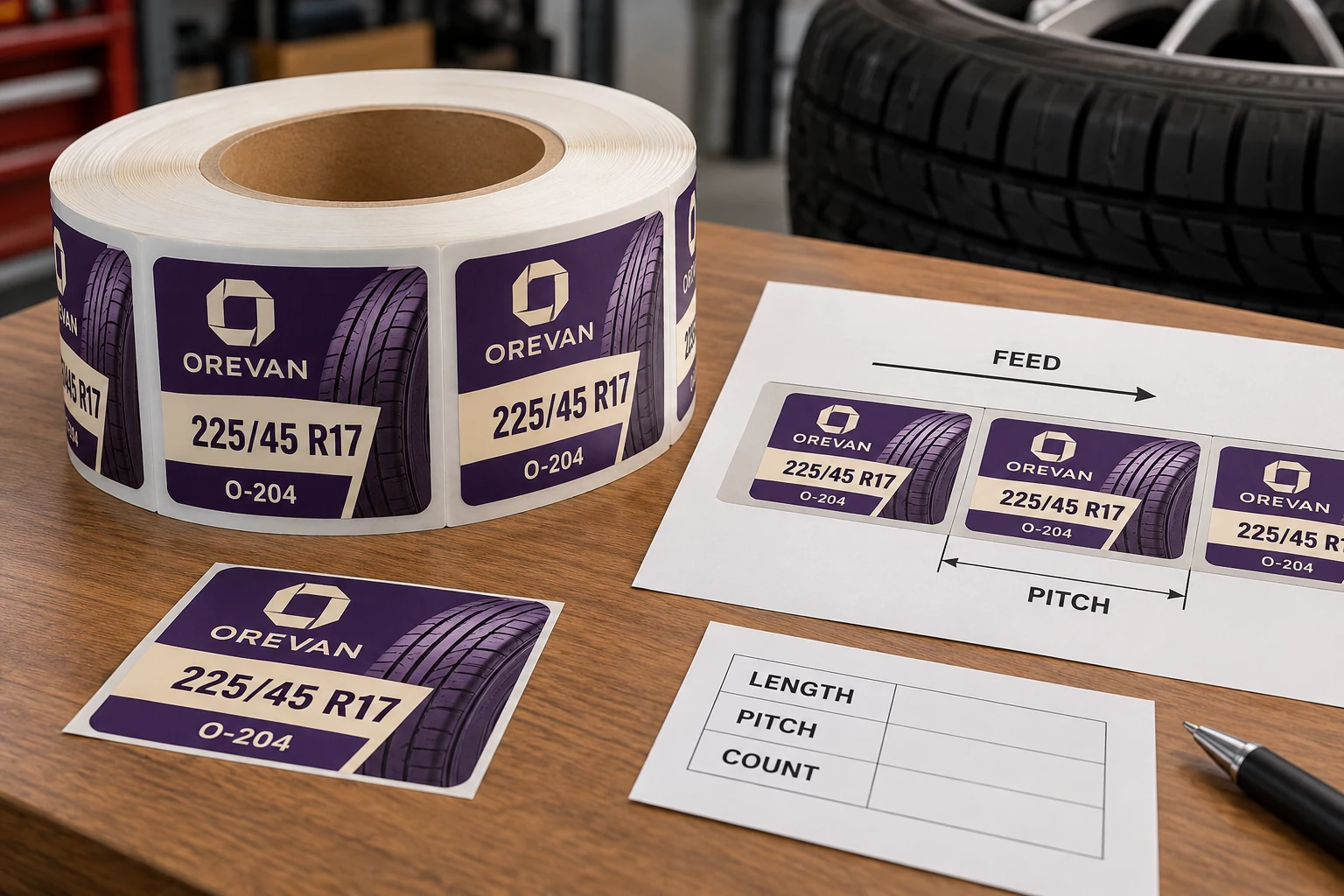
Ask what the quoted length measures
A supplier may describe the length of a finished roll, a production web or another defined supply unit. Confirm the basis before calculating. State whether the quote refers to one finished lane and whether leading, trailing or other non-label web is included.
Do not infer the answer from the word roll. A production layout can contain several lanes before slitting, while the delivered roll may contain only one. The price unit and the physical delivered unit must be connected explicitly.
The roll specification guide helps define the supplied format. This article addresses a narrower purchasing problem: converting a length-based quotation into a comparable nominal quantity without confusing the result with accepted usable output.
Use pitch along the feed direction
Pitch is the repeat distance from one corresponding label position to the next along the web. For a simple repeated layout, it includes the label's along-feed extent and the gap between repeats. The relevant dimension depends on orientation; it is not automatically the width shown first in the artwork file.
Obtain an approved media drawing showing the feed direction and repeat distance. The equipment or converting owner should confirm which dimension governs the proposed supply. A label turned across the web can change the calculation even when its finished face dimensions stay the same.
Use consistent units. Convert meters to millimeters before dividing by a pitch expressed in millimeters, or use another consistent unit system. Keep the conversion visible so a later reviewer does not have to infer where a factor of one thousand entered the comparison.
Work through a clearly hypothetical example
Suppose a single-lane example contains 100 meters of the relevant repeated web and has an approved pitch of 100 millimeters. Converting the length gives 100,000 millimeters. Dividing by the pitch gives 1,000 nominal repeat positions.
Those figures are illustrative arithmetic, not a CYJ production specification, quote or usable-yield claim. If the along-feed label extent is 95 millimeters and the gap is 5 millimeters, dividing by 95 alone would overstate the nominal count. The gap occupies web too.
If the defined length includes non-label sections, identify them before applying the simple division. If the quotient is not a whole number, do not silently round it into a guaranteed shipment quantity. Ask the supplier to state the actual finished-label count and the basis it will use for delivery reconciliation.
Put both quotations on one comparison sheet
| Comparison field | Length-based quotation | Count-based quotation |
|---|---|---|
| Price unit | Exact defined meter or roll basis | Exact defined label-count basis |
| Layout | Finished lane and feed orientation | Corresponding supplied format |
| Pitch | Approved along-feed repeat distance | Same physical specification where applicable |
| Nominal quantity | Transparent calculation with assumptions | Stated nominal physical quantity |
| Non-label web | Included or excluded by agreement | Handling of corresponding supply sections |
| Accepted quantity | Separate agreed reconciliation | Separate agreed reconciliation |
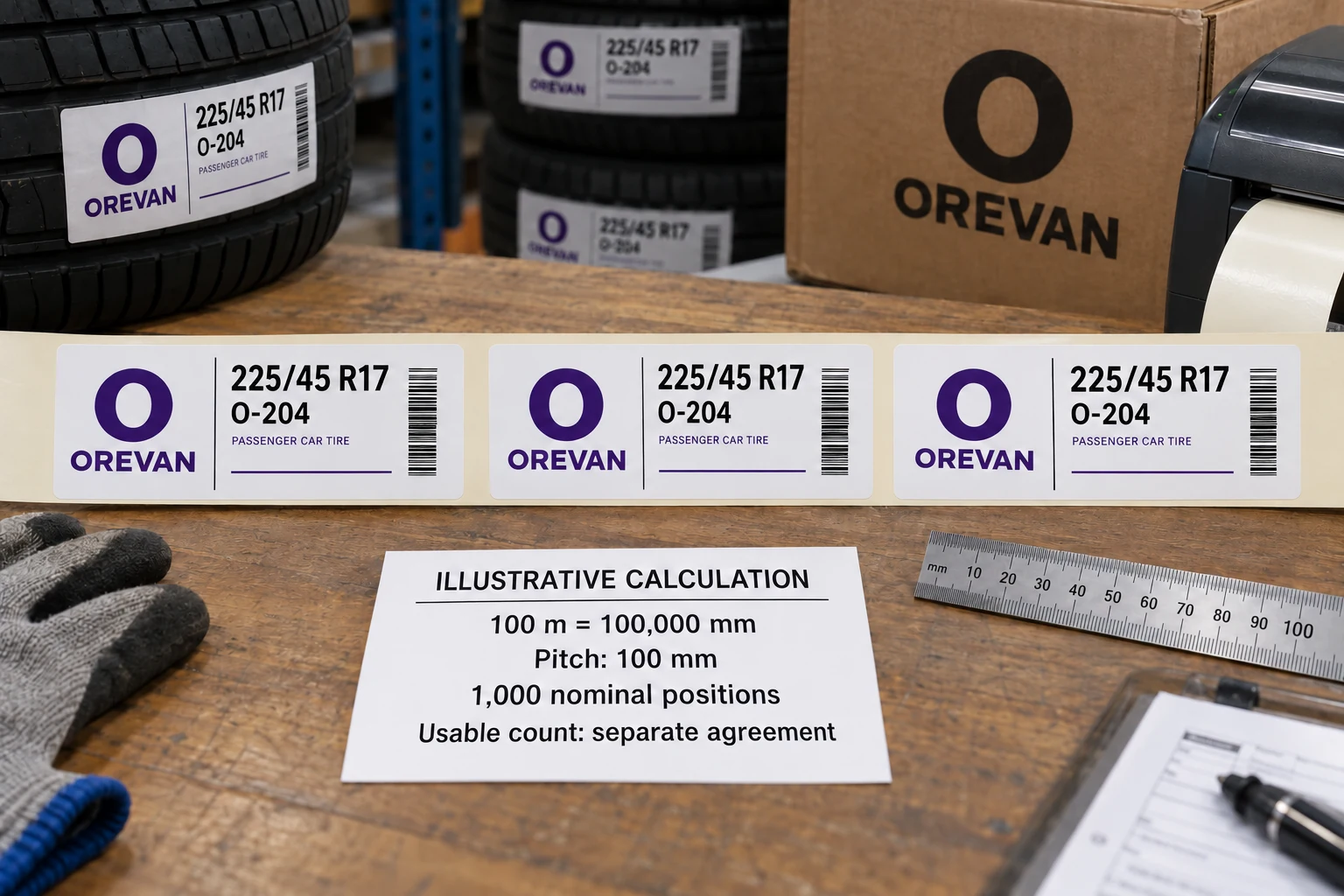
Keep construction, artwork versions and delivery scope comparable too. A quantity conversion cannot make two materially different supplies equivalent. Purchasing should identify the differences before treating the lower unit price as the better overall offer.
Nominal positions are not usable labels
A repeat position can exist without being an accepted finished label. The purchase agreement needs to distinguish the arithmetic layout quantity from the delivered count and any agreed treatment of damaged, missing or otherwise unusable pieces.
The splice and usable-quantity guide covers that separate reconciliation. Do not subtract a guessed universal waste percentage from the length calculation and describe the result as measured yield. Obtain the actual agreed counting and exception method.
At receipt, retain the roll and carton identifiers and compare the supplied quantity record with the order. If a discrepancy appears, preserve the relevant evidence and ask how the quantity was established. A quick outside-diameter estimate should not become the final acceptance method without an agreed basis.
Confirm the machine requirement before changing pitch
A shorter repeat can look attractive in a price-per-meter discussion. It may also change sensing, dispensing or presentation requirements. The equipment owner should confirm the proposed layout before purchasing accepts a different gap or feed orientation.
Do not alter pitch solely to make the quantity comparison convenient. If both quotes are based on the same approved finished format, comparing their stated physical counts may be simpler. The calculation is useful for exposing unit differences, not for forcing every supplier into a new web design.
Where the existing supply specification already states an accepted count per finished roll, retain it if it serves the process. Adding a length requirement can create another variable to reconcile without improving the buying decision.
Release a quantity basis another person can check
Keep the media drawing, unit conversion, lane definition and supplier's stated finished quantity with the purchase record. Identify the assumptions used for the nominal estimate and the separate acceptance rule. A future buyer can then compare a revised quote without rebuilding the arithmetic from a photograph.
For tire tread label supply, prepare a unit-and-pitch brief with the quotations, approved media drawing, feed direction, pitch, requested count by SKU, construction and roll requirements. Organize the requirements on the contact page and send supporting files through email or WhatsApp. Compare the same physical supply before comparing the number printed beside the price.