Tire Label Staining: Ask What the Rubber Barrier Actually Covers
Published
A tire label can remain firmly attached while its white face changes appearance. That leaves purchasing with an awkward question: was the adhesive approved, or was the complete label approved for this rubber and this period of contact? Ordering stronger glue answers only one of those questions.
When discoloration is the concern, separate rubber-related staining, adhesion and external print wear. Ask what barrier, if any, is included in the proposed construction, what the supplier's evidence covers, and how a representative sample will be reviewed on the intended tire. A barrier description is a reason to investigate a construction; it is not a promise about every tire or storage condition.
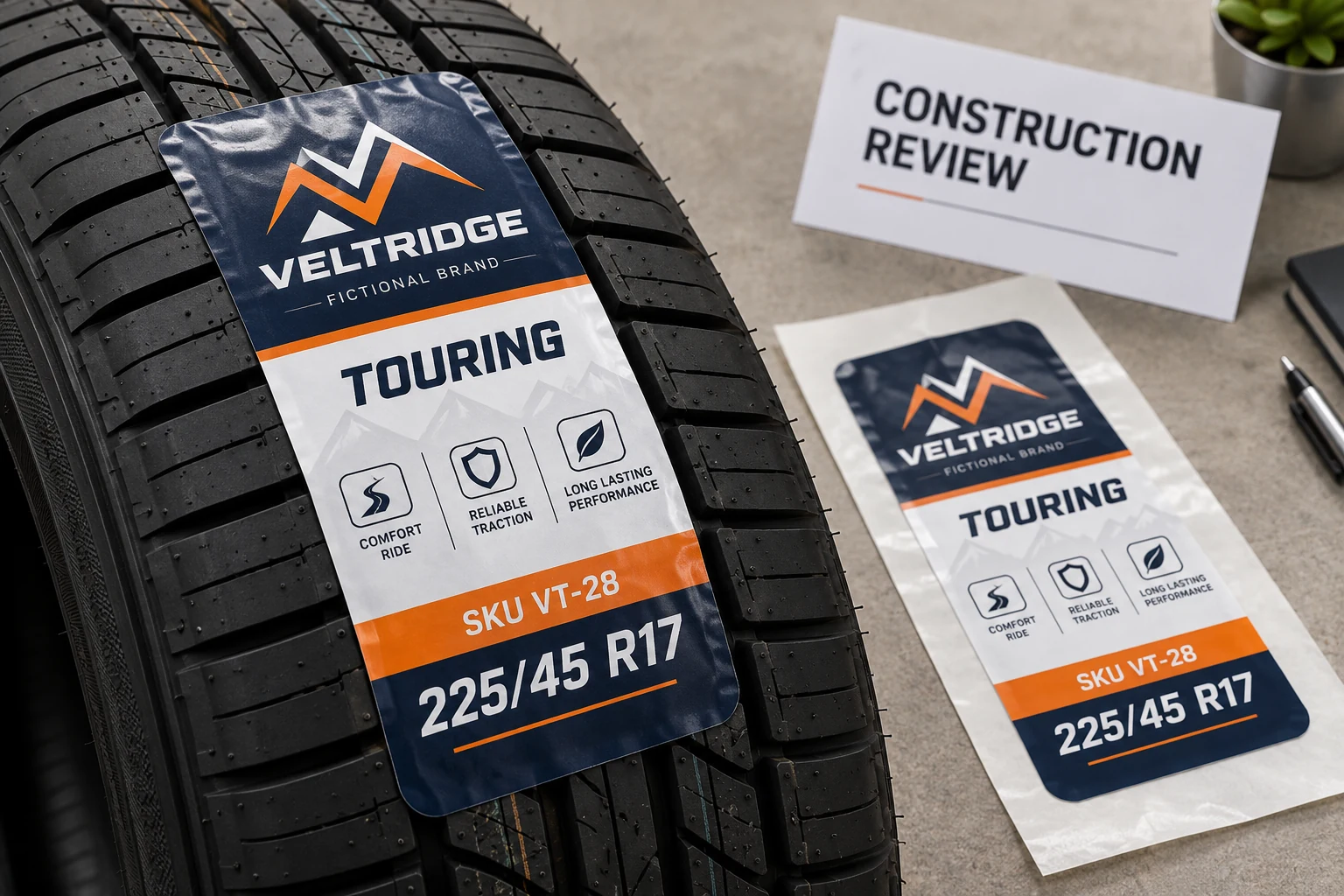
Keep three observations separate
Start with what is visible, without declaring a cause from a photograph. Is the face changing color? Is printed ink transferring onto something that touches it? Are the edges lifting? Record these separately even if they appear on the same sample. A buyer who describes every mark as “bad adhesion” can receive a revised adhesive while the original appearance problem remains unresolved.
UPM's tire-label materials overview discusses resistance to migration and staining in this application. That manufacturer context supports treating rubber interaction as a construction question. It does not establish that the label in your order contains a particular barrier or meets an untested service requirement.
Keep handling damage in its own record. If the mark occurs where another tire or a handling surface rubbed the label, use a controlled contact review such as the tire-label rub-transfer guide. If the label is lifting, investigate bond and application conditions. An appearance comparison should not silently become the acceptance test for both problems.
Ask what sits behind the face
“Anti-stain label” is too broad a purchase description by itself. Request the proposed construction reference and ask the supplier to identify the relevant layer or treatment, its intended function, and the limitations of the available evidence. Establish whether the claim concerns discoloration of the face, adhesive behavior, or another property.
The answer may be a construction-specific technical sheet, supporting observations, or a recommendation to try another material. It may also be that no suitable evidence is available yet. Keep that distinction visible in the RFQ. Do not turn a sales description into a statement that your own end-use trial has already passed.
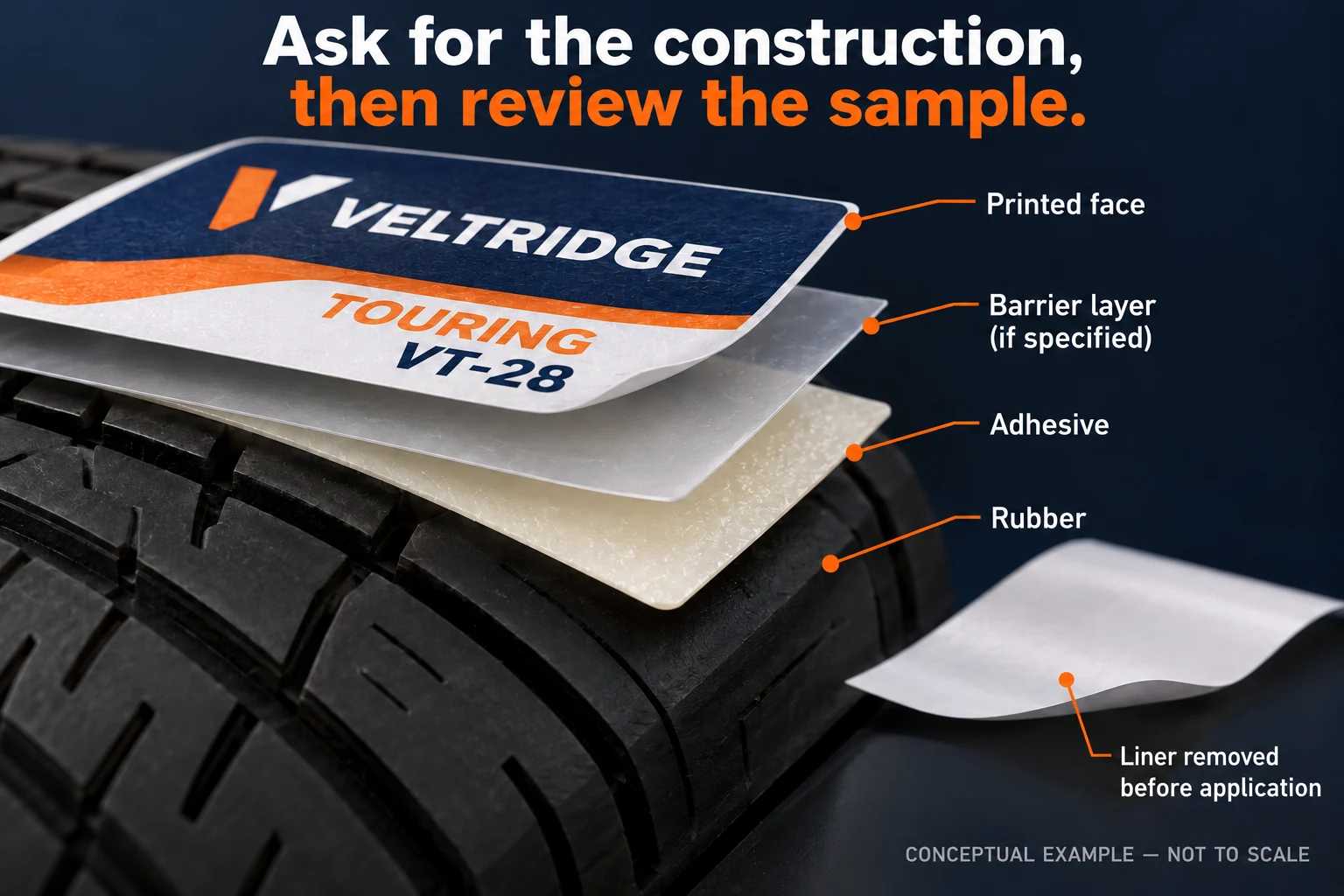
Ask how the proposed construction differs from the sample that raised the concern. A clearly identified change lets the reviewer evaluate the relevant question. A replacement described only as “better material” makes later comparison difficult because several variables may have changed together.
Make the comparison answer one question
Agree the observation plan before placing samples on tires. Use the actual tire type and intended label position where feasible. Identify the rubber sample, label construction, application date and conditions that are known. If more than one tire compound or surface finish is in scope, decide which must be represented rather than treating one convenient tire as the whole range.
Retain an identified, unused sample of the same label construction for comparison, stored under recorded conditions. Photograph the face at the beginning and at the agreed review points using reasonably consistent lighting and viewpoint. The retained sample is a reference for appearance; it does not automatically isolate every possible cause.
| Review entry | Record before contact | Record at the agreed review |
|---|---|---|
| Label identity | Construction and artwork revision | Same reference, with any substitution disclosed |
| Tire identity | Type and relevant known surface information | Sample still identifiable |
| Exposure | Intended location and known storage conditions | Actual conditions and departures from the plan |
| Face appearance | Baseline image and retained sample reference | Location and description of any change |
| Separate observations | Bond and handling review references | Lifting or surface damage recorded separately |
| Disposition | Named acceptance owner and agreed criteria | Accept, restrict, investigate or change the proposal |
Choose the review interval and acceptance criteria with the responsible buyer and supplier. There is no universal duration in this guide. A short observation cannot establish a longer storage life, and a harsher improvised exposure does not automatically represent the intended application.
Write down what the result does not prove
Suppose, as an illustrative example, two approved candidate constructions are compared on the same intended tire under the agreed conditions. One shows less visible change at the review point. That result can inform selection for that defined condition. It does not establish performance on every tire compound, in every climate, or for an unlimited time.
Equally, an unchanged face does not prove that the barcode remains usable or that the adhesive will release as required. Keep those acceptance questions separate. The review record should describe what was examined and by whom, with photographs or other actual evidence where available. Avoid a single “all tests passed” note when only appearance was observed.
The evidence owner should also explain any supplier document that covers a different construction or use condition. A recognizable material family name is not enough to show that the supplied combination is the one evaluated.
Choose the least disruptive response
If the issue is actually external scuffing, changing a rubber barrier may do little. A handling change or a separately evaluated protective face may be more relevant. If the concern arises only after an unusually long period of tire contact, a revised stock or application sequence may deserve discussion before changing the entire label design. Those alternatives need their own operational approval; they are not substitutes for required durability.
If rubber-related discoloration remains the relevant problem, compare a clearly specified alternative construction and its evidence. Keep any limitations attached to the approval so that purchasing does not reuse it for a materially different order without review.
For a tire tread label discussion, prepare photographs of the initial and changed appearance, tire and surface details, the current construction reference if known, label dimensions, expected contact and storage conditions, and quantity per design. Use Prepare My Requirements on the contact page and its email or WhatsApp path to request a scoped construction review. The first decision is what evidence is needed, before anyone promises a result.