Resource Guide
Barcode Verification vs Scan Test: What Did You Actually Check?
One scanner reading one sample is useful, but it does not prove every label meets a print-quality standard or that the encoded value is correct. Separate those three checks before approving a run.
Published 2026-09-30
Digital proof before production. Material and adhesive options are discussed according to your application requirements.
Quick Answer: Three Different Checks
A scan test asks whether a particular reader decodes a particular symbol in a particular setup. Print-quality verification grades a symbol using a defined method and suitable verifier. Data validation asks whether the decoded content matches the approved file and syntax. GS1 says printed barcode quality can be measured with a verifier compliant with ISO/IEC 15426. It also notes the relevant symbol-quality standard depends on barcode type. Neither a casual scan nor a quality grade confirms that a serial belongs to the correct product.
An Illustrative Approval Trap
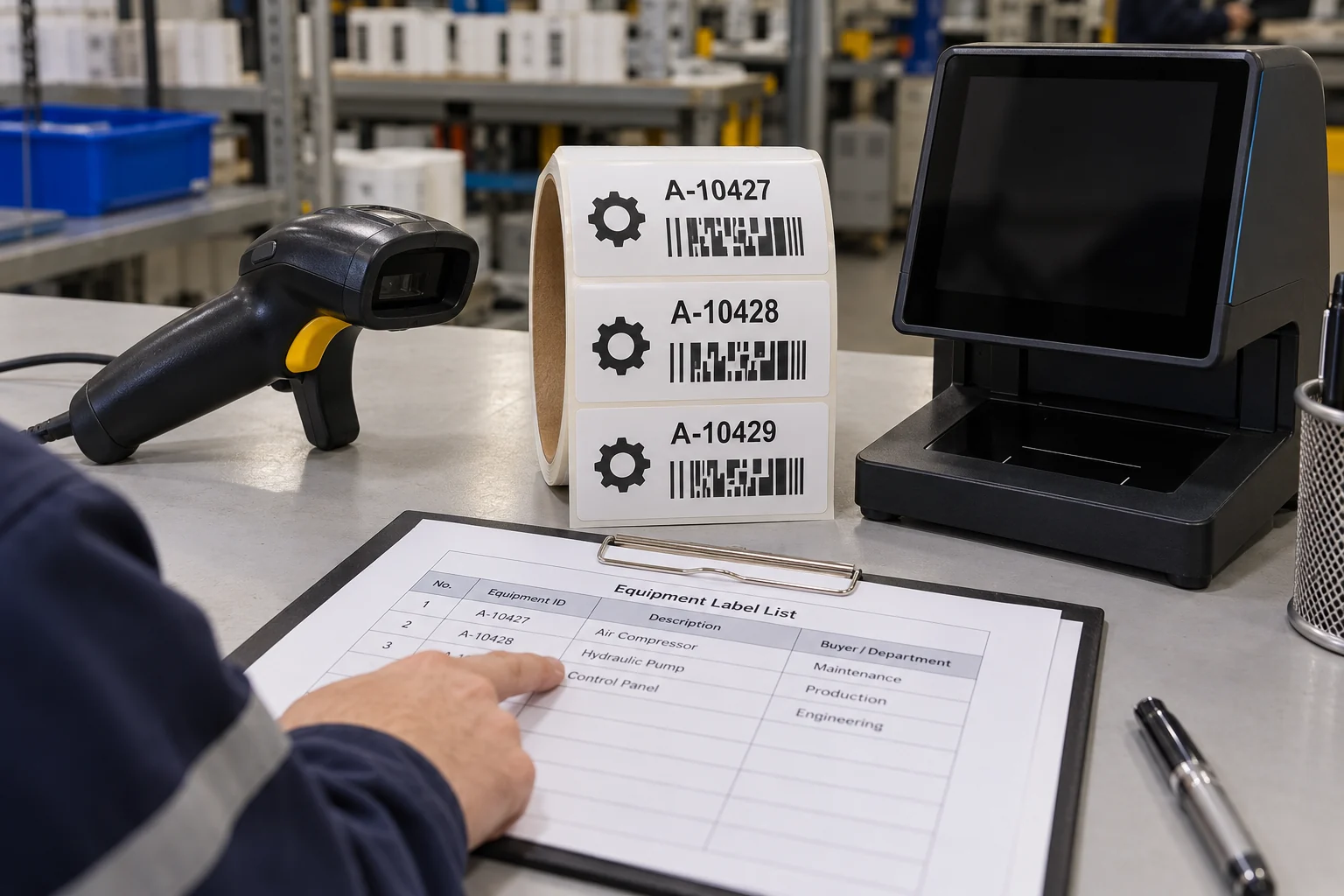
Imagine three asset labels on a desk. The buyer scans the first label with a phone and sees a short ID. The print operator then approves the run. Later, a fixed warehouse reader misses some labels at angle, and one batch carries a duplicated ID from the source file. This is a composite example, not a reported failure. A phone decode, a formal print-quality measurement and an identifier reconciliation would have answered different questions. Write each into the acceptance plan separately.
Define the Test by Use
State the code symbology, nominal size, print method, substrate, verifier method and any required grade if the receiving contract calls for one. For the operational scan, test finished labels with the actual field scanners, at realistic distance and on the applied surface. For data, compare encoded strings to the approved master file, including leading zeros, separators and unique values. A verifier cannot decide whether the business payload is the right asset number. A scanner cannot tell you how much print-quality margin remains before a different reader fails.
- READ: actual device and application geometry.
- GRADE: specified verifier method and documented acceptance threshold.
- PAYLOAD: exact decoded data against the approved record.
- SAMPLING: lot, run or position plan agreed with the buyer.
- REPRINT: invalidation and replacement rules for damaged codes.
Keep the Evidence Specific
If a buyer requests a verification report, agree which code type, print lot, sample positions and measurement settings it covers. Request a report tied to the actual printed construction and order, not a stock photograph or a certificate for another material. If the project only calls for an operational scan test, say so instead of calling it standards verification. This website does not claim to operate a certified verifier or to have tested the illustrated labels. The image is a fictional workflow illustration, not a measurement record.
What to Send with an RFQ
Supply artwork or data template, code type, encoded field definition, label size, surface, printer or application process, scanner models, volume and acceptance criteria. Name the owner of the source data and who signs off a reprint. Ask for a finished-size proof with human-readable text and a clearly documented check plan. A good supplier discussion should expose uncertainty early rather than promise that every code scans everywhere.
FAQ
Questions Buyers Ask
Does a successful phone scan prove ISO barcode quality?
No. It proves that one device decoded one sample under those conditions. Formal verification requires the specified verifier method.
Can a barcode verifier confirm the serial number is the right one?
A quality grade does not validate the business record. Compare decoded data against the approved source file.