Zebra: Direct Thermal and Thermal Transfer
Printer manufacturer comparison of methods, media and exposure.
View detailsResource Guide
A carton moving out this week and a pump expected to keep its ID for years should not automatically use the same print system. Start with the job and exposure, then select the printer, face stock and ribbon together.
Published 2026-10-01
Digital proof before production. Material and adhesive options are discussed according to your application requirements.
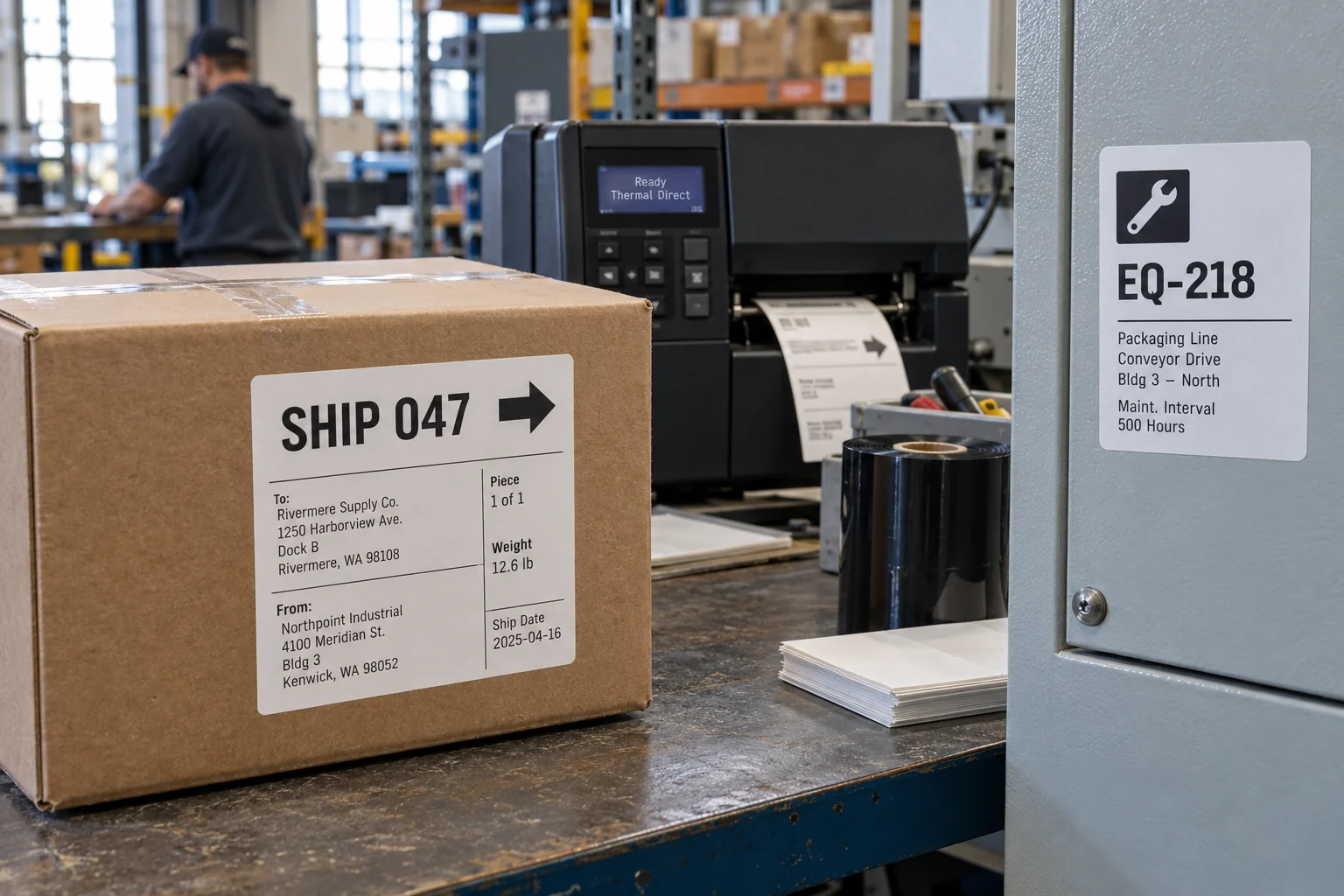
Direct thermal relies on heat-sensitive media and does not need a ribbon. Thermal transfer uses a ribbon to put the image onto suitable media. Zebra explains that direct-thermal labels are commonly suited to shorter-lived applications and may darken or lose readability with heat, light and abrasion; thermal transfer offers more durable options when ribbon and stock are matched. These are method-level distinctions, not a guarantee for any specific label this site supplies. Decide the required readable life and test the exact construction in its real handling conditions.
Printer manufacturer comparison of methods, media and exposure.
View detailsPicture a warehouse ordering one print format for both outbound cartons and reusable maintenance assets. A carton label is scanned once at dispatch; the asset ID sits near a machine that is cleaned every week. This is an illustrative purchasing situation, not a customer case. The low-friction choice for short-life logistics might be direct thermal, while a tested thermal-transfer film construction may better suit the longer-lived asset. Buying one large roll of the cheapest stock for both jobs can make the second job the expensive one when IDs have to be reprinted.
The printer model, printhead resolution, media coating and ribbon formulation affect the final symbol. On thermal transfer, a ribbon that looks sharp on paper may behave differently on polypropylene or polyester. On direct thermal, the sensitivity of the face stock matters. Confirm whether the finished label will see sunlight, a hot warehouse, cleaning fluid, fingerprints or abrasion. Barcode size and quiet zones must still suit the actual scanner. A material claim from a catalog for another construction does not validate the selected combination.
Direct thermal avoids ribbon purchase and changeover; thermal transfer adds a consumable and matching step. Compare those costs with failed scans, replacement visits and downtime in the buyer workflow. Do not assume a generic year count from a brochure applies to a different printer, coating or site. If the label is a short-term route marker, paying for a heavy-duty construction may bring no benefit. If it is a permanent equipment identifier, saving on print media may be false economy.
Send sample artwork and data, intended readable life, application substrate, printing location, existing printer model, scanner type, quantity, cleaning schedule and storage environment. Ask whether the supplier will provide preprinted labels, blank printable stock, or both. Request finished-size samples from the exact proposed print system and a recorded scan and handling check. The label supplier can propose compatible materials; the buyer must set the acceptance conditions.
FAQ
No. A short-life label may be suitable for direct thermal if its storage, handling and scan requirements are met.
No. Ribbon, face stock, adhesive, print settings and actual exposure must work as a system.