European Commission: Tyres
Official explanation of EPREL registration and tyre-label supply.
View detailsResource Guide
Two stickers can sit on the same tread and still have different owners. A regulated consumer label is not a place to improvise, while a warehouse SKU sticker can be tailored to the buyer workflow.
Published 2026-10-16
Digital proof before production. Material and adhesive options are discussed according to your application requirements.
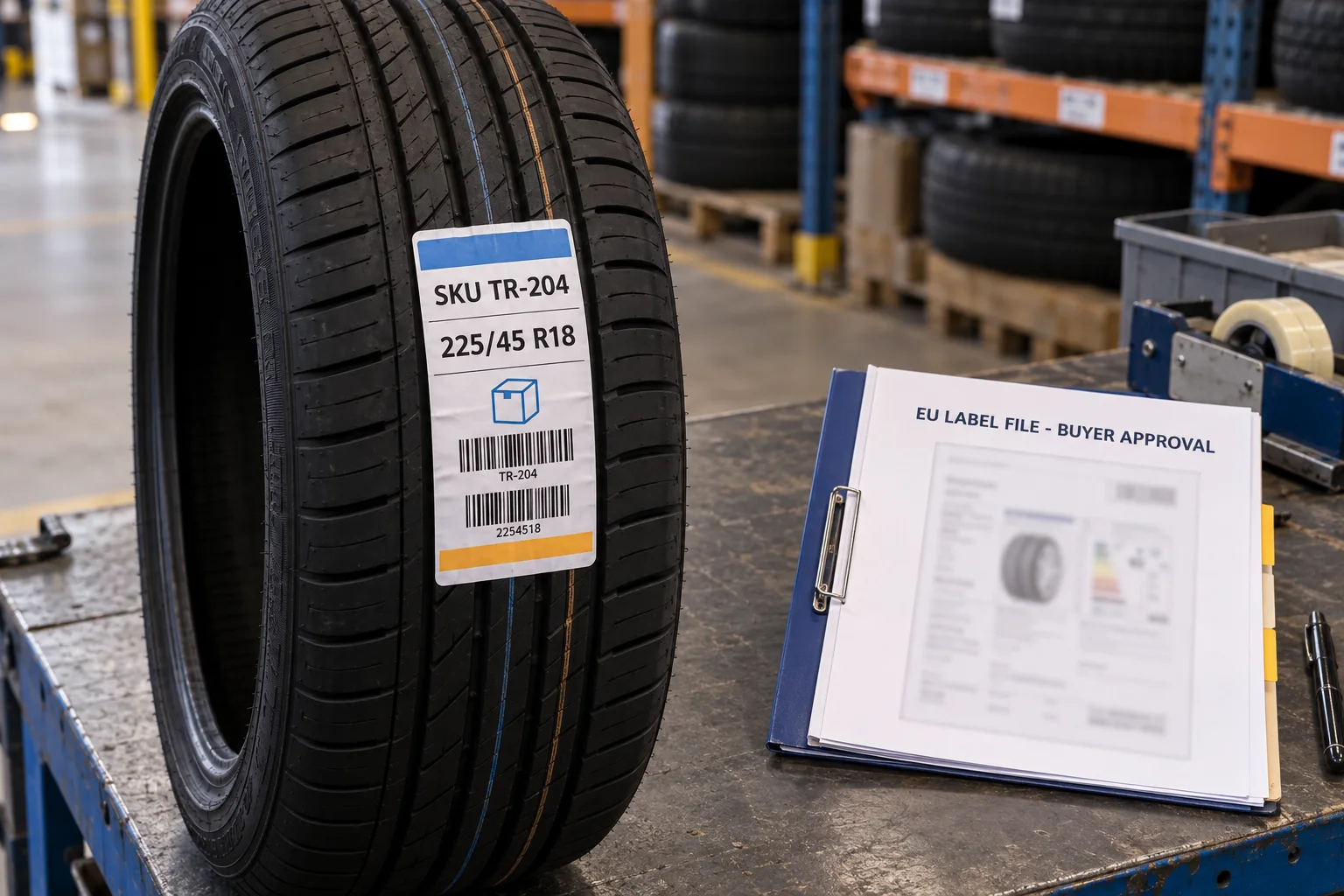
For tyres within the scope of Regulation (EU) 2020/740, the responsible supplier must provide the required tyre label and product information sheet. The European Commission says EPREL produces the label and QR code from supplier-registered model data. A separate custom tread sticker may carry a buyer SKU, size or picking code, but it does not replace the required label. The printer should reproduce buyer-approved files, not invent performance classes or an EPREL destination.
Official explanation of EPREL registration and tyre-label supply.
View detailsImagine a fictional distributor ordering an EU-facing tyre label file and a warehouse sticker for SKU TR-204. If both PDFs are called FINAL-TIRE-LABEL, the next SKU correction could accidentally replace the regulated artwork. This is a composite example, not a customer case. Name the files separately, identify the responsible approver for each, and tie both to the correct buyer model record and revision.
Put the approved tire size, SKU and internal code where a picker can compare them with the order line. Avoid copying the official EU graphic or placing an internal QR where it could be mistaken for the EPREL QR. Do not add an unsupported fuel-efficiency or wet-grip grade. If tyres are displayed for sale, the distributor must follow the applicable display rules; a handsome warehouse sticker is not evidence of that review.
The product owner checks the official label against its approved model information. The warehouse data owner checks the SKU and decoded internal code. Then apply finished-size samples to the real tyre so neither document hides the other at its intended scan or display point. The Commission also tells dealers and distributors to keep the model QR readable when a tyre is displayed for sale.
The product owner must determine regulatory scope, destination market and approved language or model version. Keep obsolete rolls and artwork revisions distinct. An internal SKU change may require a warehouse-sticker update without changing the official performance record, or the reverse may be true. The printer cannot decide this from a photograph of a tire.
Send the target market, tire type, buyer-approved official file when applicable, separate custom sticker artwork, model and SKU mapping, tire photos, dimensions, quantity by variant and two named proof owners. Ask for separate proofs and roll labels. The quote should make clear which deliverable is regulated buyer-supplied artwork and which is custom operational identification.
FAQ
No. Where EU tyre-labelling rules apply, the required label and product information sheet have their own approval path.
No. The responsible supplier must provide and approve the exact data and official label file.