SKF Lubrication Planner
Manufacturer planning reference for point-based lubrication records, not a label performance test.
View detailsResource Guide
A conveyor asset plate gets a technician to the machine. It does not tell them which of several fittings is due for service. Give each service point its own durable, approved identifier and keep the actual lubrication instruction in the controlled maintenance record.
Published 2026-10-06
Digital proof before production. Material and adhesive options are discussed according to your application requirements.
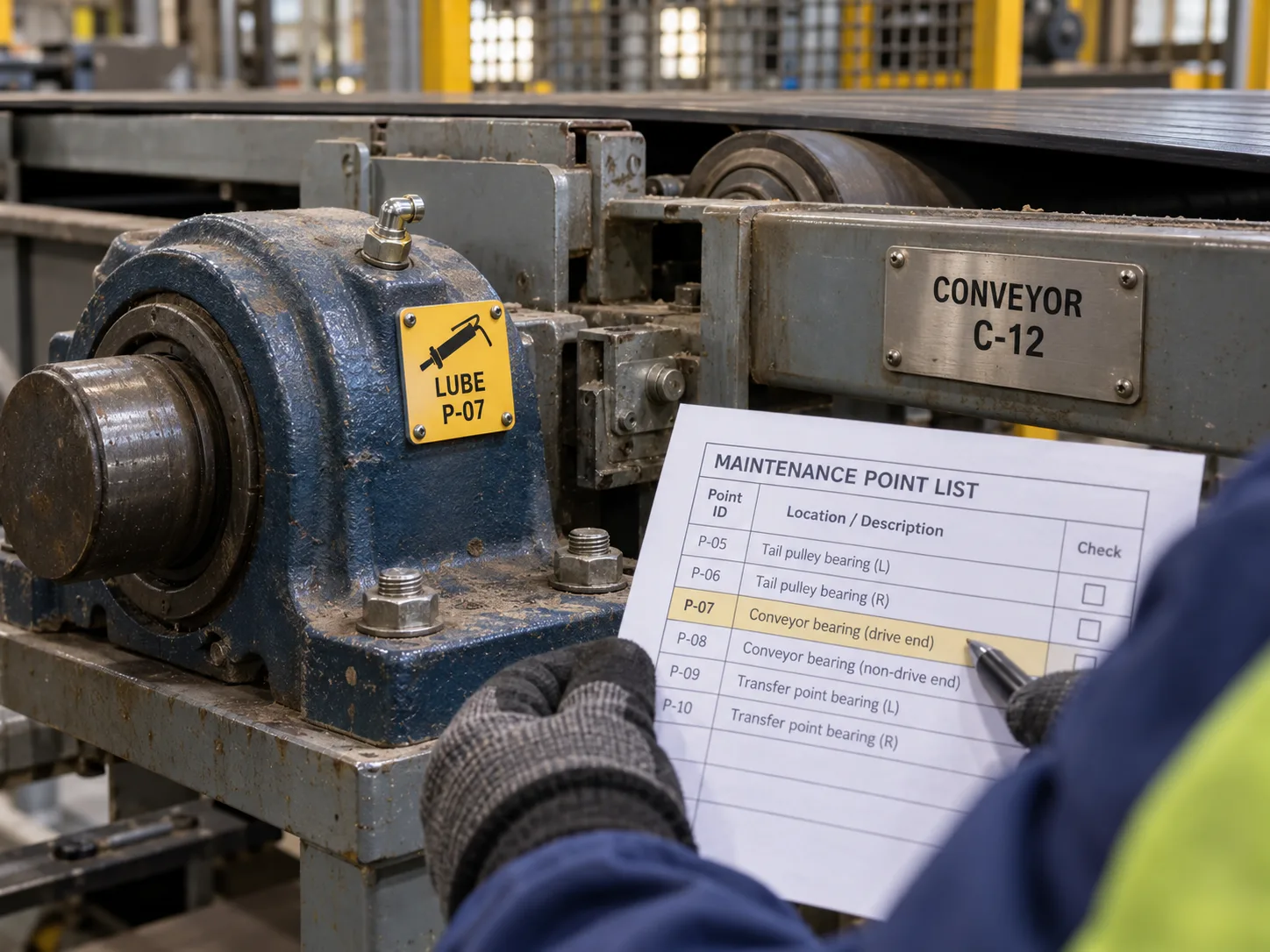
Keep the machine asset ID stable, and assign a separate point ID to each fitting or port in the approved lubrication plan. A technician should be able to match the physical ID to the route sheet without guessing from a machine photograph. SKF describes point identification and lubrication planning in its maintenance materials; the exact lubricant, quantity and interval for your equipment must come from the responsible maintenance owner and equipment documentation.
Manufacturer planning reference for point-based lubrication records, not a label performance test.
View detailsImagine a conveyor drive with two nearby grease fittings. The asset plate says CV-07, but the work order calls for point L-02. This is a composite example, not a reported plant incident. A single CV-07 sticker near both fittings still leaves the technician choosing a port by memory. Small L-01 and L-02 markers, checked against a marked-up location photograph, make the work order specific without printing changing service dates beside hot or moving parts.
The asset ID identifies the machine, the point ID identifies the physical service location, and the maintenance record holds the lubricant, interval, task and completion history. If a fitting is moved or a machine is modified, revise the location map and work instructions together. The label printer should reproduce the owner-approved point code, not infer a lubrication specification from the photograph.
Measure the available stationary surface near the service point, not the fitting itself. Keep the marker away from moving parts, manufacturer plates and surfaces that must be opened for maintenance. State the likely oil, cleaning and temperature exposure in the RFQ, then test a finished sample on a representative surface and through the expected cleaning routine. No catalog photograph can establish adhesion to every machine finish.
Provide the point list, machine asset IDs, location photographs, required code height, available mounting areas, quantity and likely exposure. If one machine has several points, include the numbering convention and a revision owner. Ask for one applied sample and a cross-check against the approved route before ordering a full set.
FAQ
It identifies the machine, but each distinct service point needs an unambiguous location in the approved route or point map.
Only when the maintenance owner controls revisions and approves the data. A point ID linked to the controlled record is often easier to maintain.