Magnetic Equipment Status Labels: Useful to Move, Easy to Misplace
Published
A status marker moves easily between machines. That is its attraction and its weakness. When the marker is transferred without the corresponding approval, a clear printed message can describe the wrong equipment just as confidently as the right one.
Use a movable status marker only when the owner has defined the receiving surface, attachment suitability and reassignment process. Keep the stable equipment ID separate, and connect every current status to the correct unit through the approved workflow. A magnetic format does not establish a status decision.
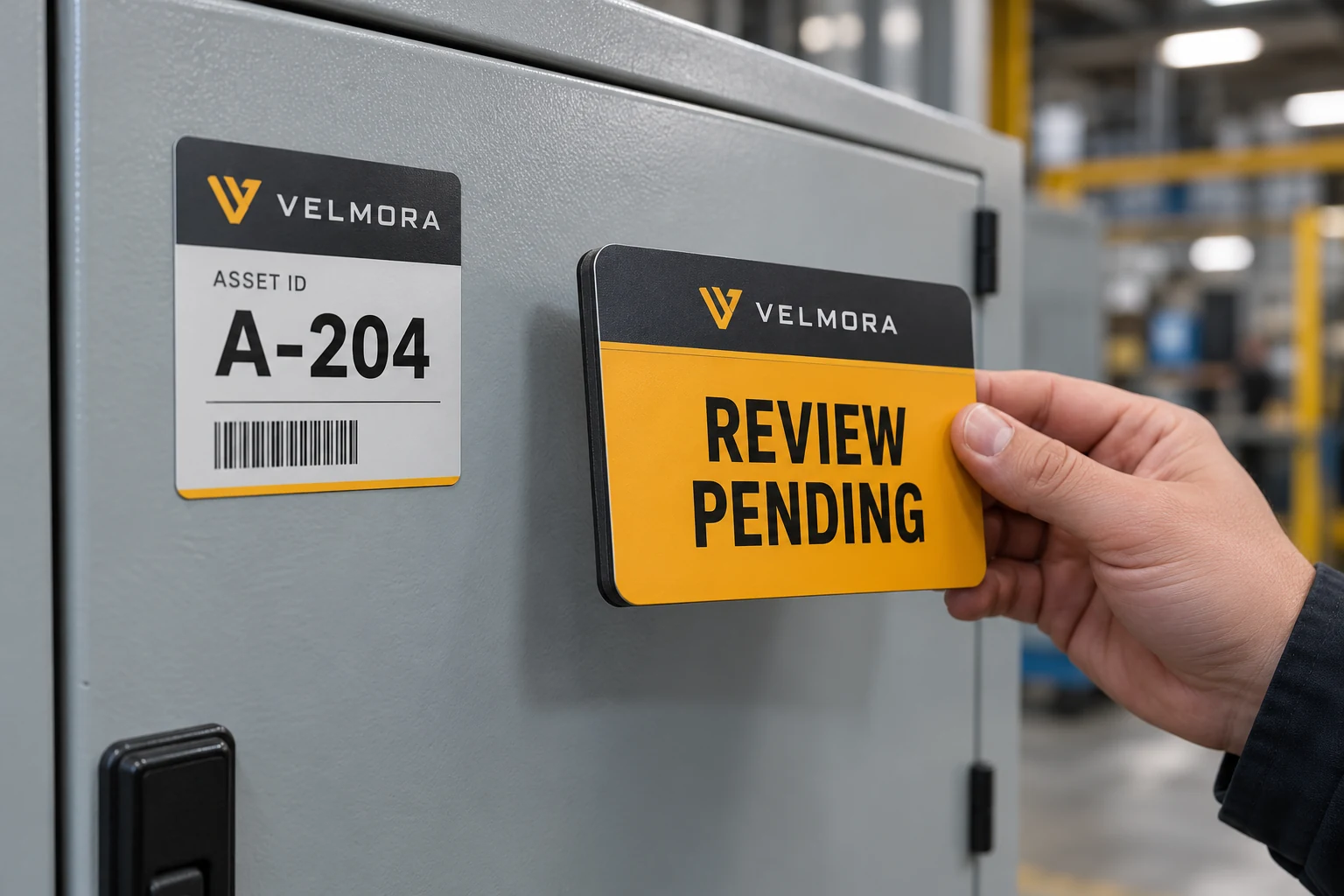
Confirm that the actual surface is suitable
Do not assume every metal enclosure provides the same magnetic attachment. Identify the actual substrate, coating, shape and available flat area. Ask the proposed supplier for the relevant product information and review a representative sample on the intended surface.
Record the conditions that matter to retention and use, such as handling, vibration, cleaning, temperature and proximity to sensitive equipment where relevant. The equipment owner should confirm suitability and any restrictions. This article supplies no universal holding-force or safety claim.
The powder-coated surface guide explains why the finished surface belongs in a label brief. A removable magnetic marker creates a different attachment question, but the need to identify the actual coating and geometry remains.
Define the status independently of its color
A red or green panel may attract attention, but the owner must define the approved wording and what action follows it. Do not let color alone determine whether equipment may be used. Keep any required operational approval in the responsible process.
Print enough context to make the marker's task clear without turning it into a permanent identity. A marker may refer to a controlled status record or work reference. It should not replace the asset ID, manufacturer plate or required warning.
The hold-versus-identity guide covers the general distinction. This procurement decision adds the controls needed because a physical marker can be detached, stored and reassigned repeatedly.
Plan the complete movement cycle
Do not stop the trial after confirming the marker stays on a closed panel. Follow its authorized lifecycle from issue to placement, removal, storage and reuse. Identify who may change its assignment and what record makes the current association clear.
| Stage | Proposed control to approve | What to observe |
|---|---|---|
| Issue | Marker identity and approved status reference | Correct marker selected |
| Placement | Asset ID and permitted zone checked | Marker belongs to the intended unit |
| Use | Owner-defined retention and visibility review | Message remains available as required |
| Removal | Authorized status change or other approved reason | Marker does not imply stale status |
| Storage | Clearly unassigned location or state | Loose marker cannot be mistaken for current approval |
| Reassignment | New asset and record confirmed | Previous association is closed |
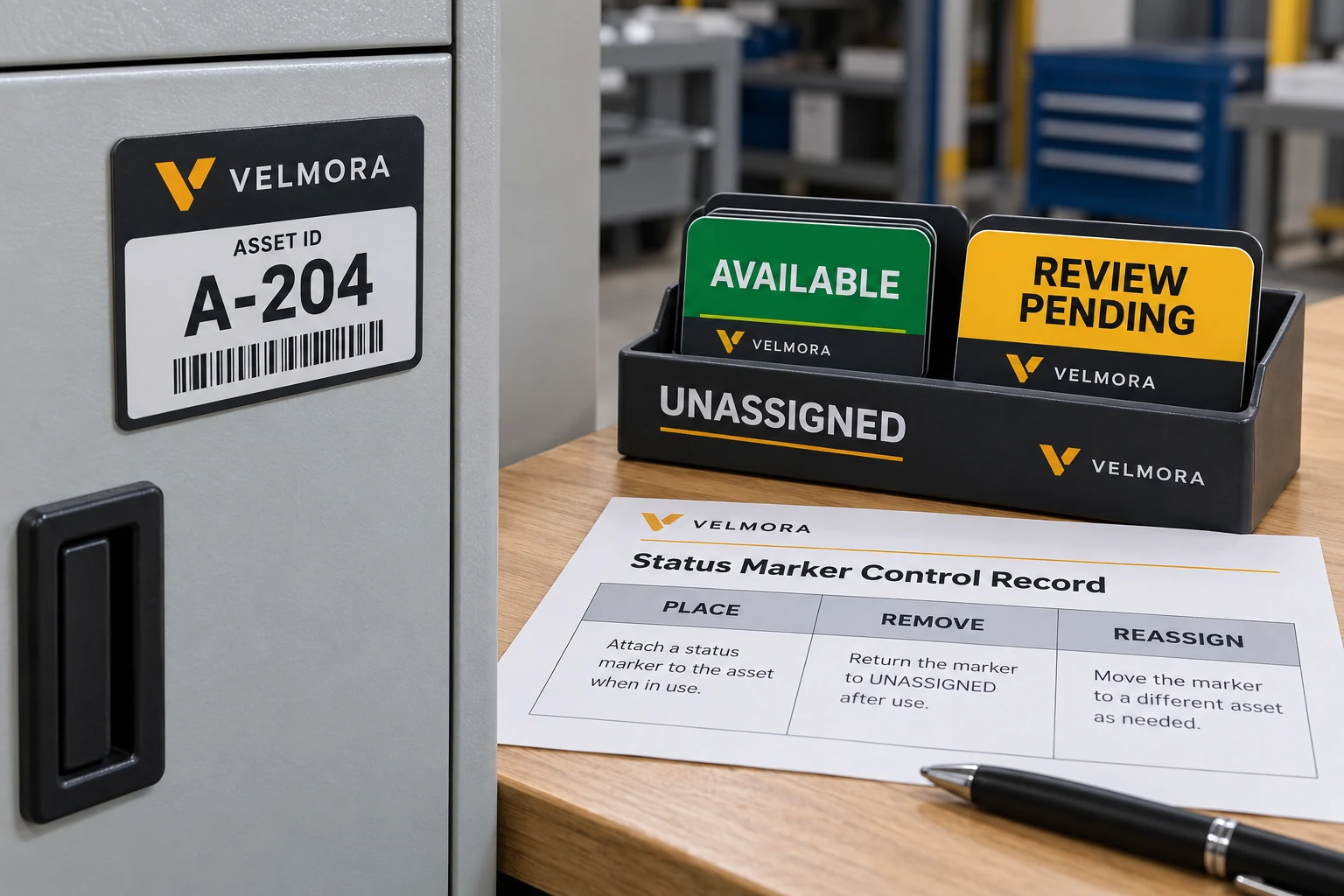
The table is a proposed workflow aid. It is not a substitute for a site's equipment-release, quality or safety procedures.
Test the awkward moments
Observe what happens when the panel is handled in the normal approved process, when staff clean nearby surfaces, and when the marker is removed. Do not introduce unapproved equipment actions merely to test a label.
Look for a marker that can be moved accidentally, blocks another important message or is set down where someone might assume it has a current assignment. Record the circumstances rather than declaring the format unsuitable from one unexplained movement.
If the marker includes a handwritten field, review that entry on the actual finished surface. If it includes a code, identify whether the code refers to the marker, the current status record or the equipment. One fixed code cannot silently change meaning every time the marker moves.
A different removable format may win
Where the surface or movement conditions do not support a suitable magnetic marker, an approved tag, holder or other presentation may be more appropriate. Compare the actual application and process rather than treating magnetic attachment as inherently cleaner or cheaper.
Where status changes rarely and must remain tightly associated with one unit, a controlled replaceable label may be easier to manage. Where the process requires a reusable visual marker and can control assignment, a movable format may be justified.
If the existing status process already gives users clear, reliable information, adding a magnetic marker may create another record to reconcile. Retain the simpler process unless the new marker solves a defined access or visibility problem.
Keep the purchasing request conditional on feasibility
CYJ's existing equipment-label page provides a route for discussing printed identification requirements. Do not assume that every magnetic construction, holder or attachment system is offered. State the requested format and ask the supplier to confirm its actual scope before treating it as a quoted product.
Retain the approved sample, surface details, current-assignment rule and storage method with the order. If the enclosure material or coating changes, review attachment again. If the status process changes, review the wording and reassignment controls even when the physical marker stays the same.
For equipment and machinery label requirements, prepare a movable-status brief with surface photos, the requested attachment format, approved status wording, assignment cycle, dimensions and quantity. Organize the requirements on the contact page and send supporting files through email or WhatsApp. The useful marker is one the team can move without losing track of what its message belongs to.