A Valid Tire GTIN Check Digit Does Not Confirm the Tire
Published
The number passes a check-digit calculation, so the proof is marked correct. At receiving, the code opens a different tire record. The calculation did its job; the approval asked it to answer a question it cannot settle by itself.
Separate three gates: the identifier's numeric integrity, its authorized allocation, and its association with the intended tire. A valid check digit is useful evidence for the first gate. It does not, on its own, prove the other two.
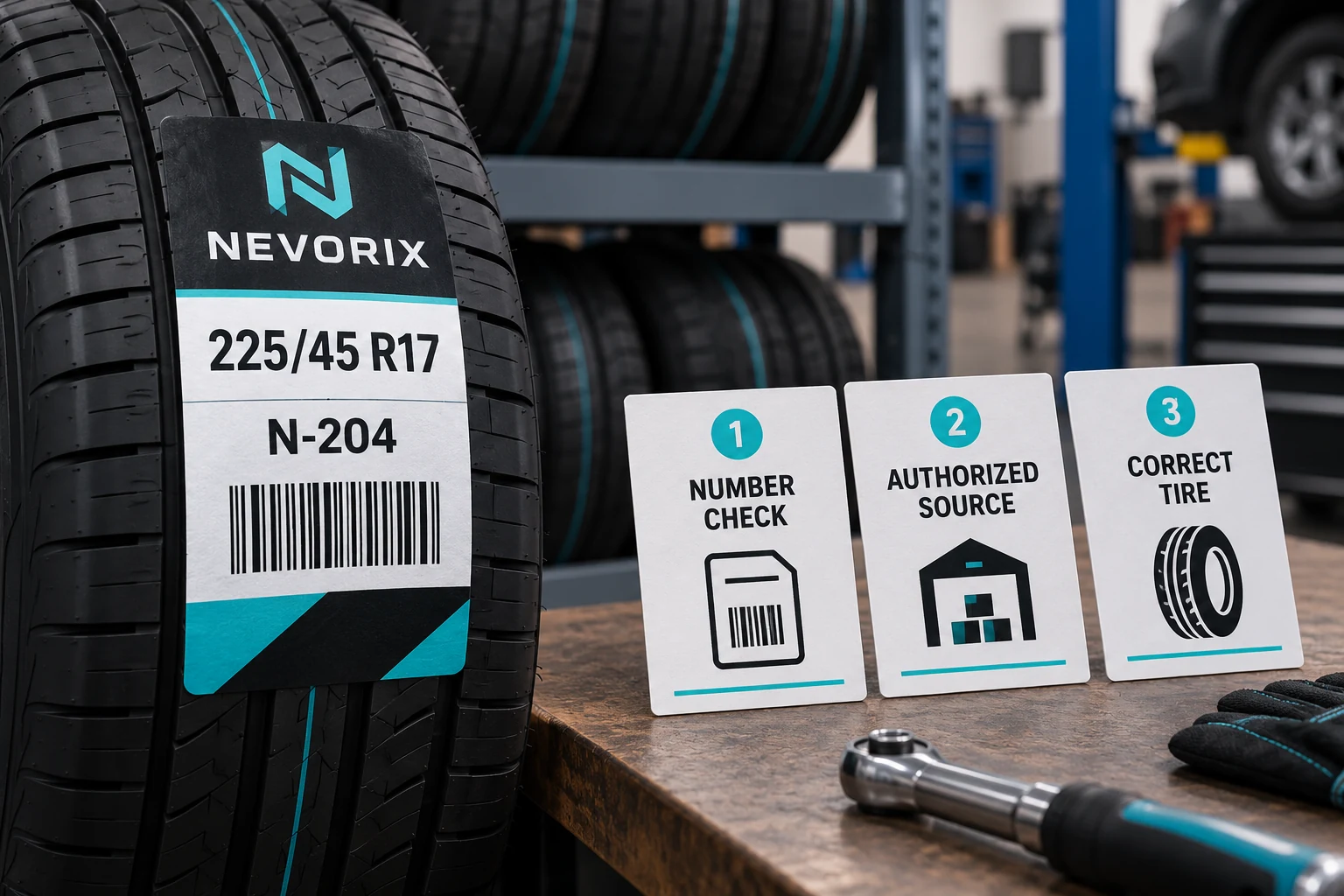
Keep the calculation in its proper role
GS1 Ireland's check-digit calculator calculates the final identifier digit from the supplied digits. The calculation operates on the number. It does not inspect the physical tire or approve a buyer's product-master relationship.
Use the applicable identifier and data-format rules supplied by the responsible owner. Do not apply a GTIN check-digit process to an unrelated internal SKU and then describe the result as GS1 validation. Different identifiers have different definitions and requirements.
If a candidate GTIN fails the required integrity check, return to the authorized source. Do not casually replace its last digit merely to make the number pass. That produces a different number without establishing that it is the number assigned to the product.
Establish where the number came from
Ask the brand or data owner for the approved identifier and the product reference it belongs to. Preserve that source in the print handoff. A number recovered from a photograph can be a useful comparison, but it should not outrank the controlled record.
Where appropriate, the owner can use the relevant GS1 services and assignment records to review identifier ownership or product information. Keep the scope of that review explicit. A registry result, a local master-data record and the physical tire each contribute different evidence.
The brand-change guide covers when a changed primary brand requires a separate identifier review. This article assumes the buyer is validating a proposed number before print and needs to avoid treating one arithmetic check as complete product approval.
Use a three-gate proof record
| Gate | Evidence to retain | What passing does not establish |
|---|---|---|
| Numeric integrity | Applicable format and check-digit result | Correct allocation to this tire |
| Authorized allocation | Owner-approved identifier source | Correct placement on this artwork row |
| Product association | Match to the intended tire record and version | Finished print quality or scan performance |
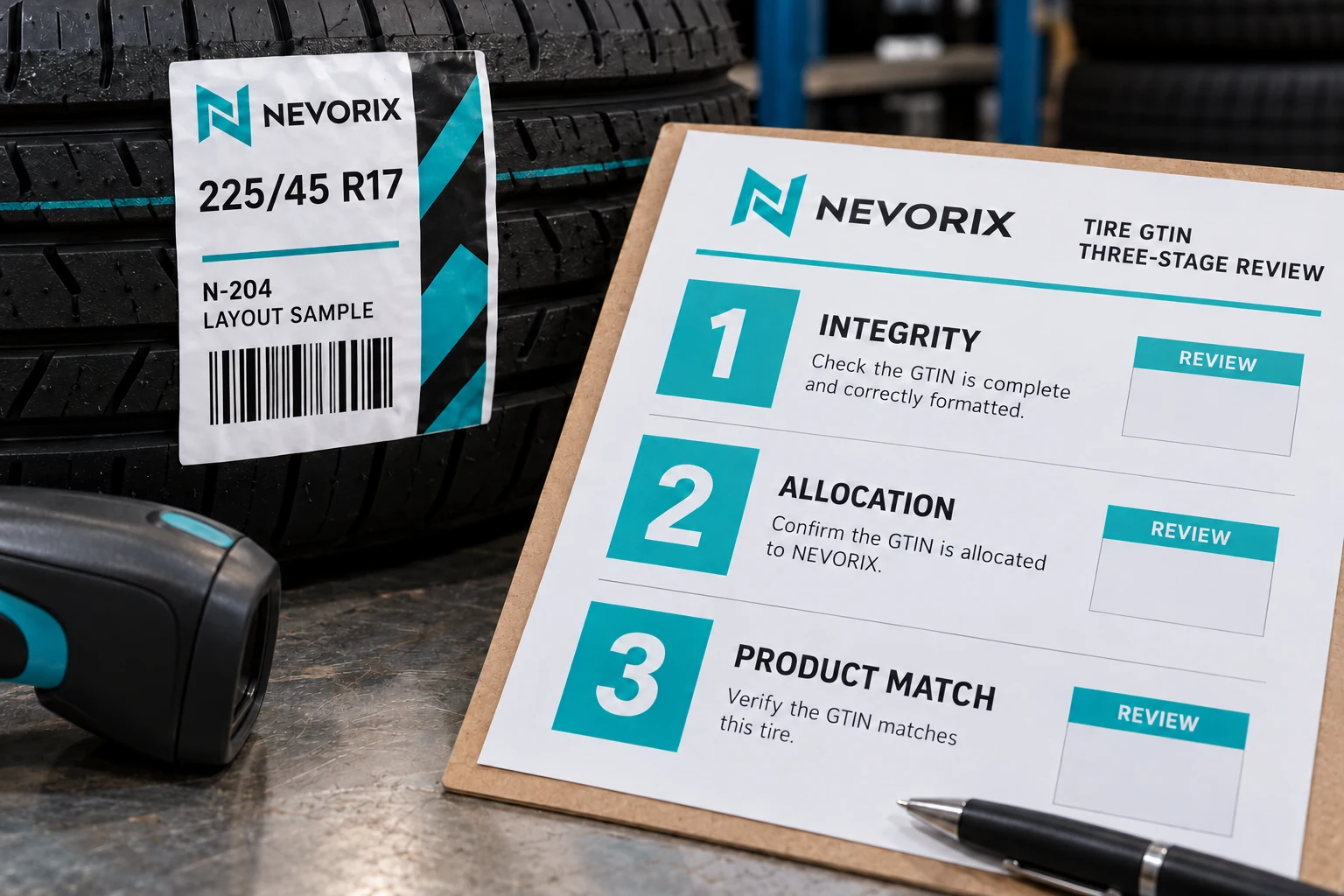
Add the final print and capture checks after these data gates. The printed symbol must still encode the approved value, and the intended receiving workflow must still interpret it correctly. Keep each result named so a later reviewer can identify what was actually checked.
For an illustrative mixed-size order, two valid numbers can both pass arithmetic validation while being swapped between rows. The failure is the association, not the check-digit formula. The witness review needs enough product context to expose the swap.
Compare the full record on the proof
Review the tire size, model or pattern, relevant approved specification, readable identifier and encoded value together. The product owner should define which attributes distinguish the records. Do not use tire size alone as proof of identity.
Keep the source row and artwork version visible during review. If a template imports data, verify that the intended fields are populated from the correct row. A proof containing the right number in one place and a different encoded value in another requires correction even if both numbers are individually valid.
Select representative edge cases from the actual order, including similar product records. This is a proposed review method, not a claim that checking a few rows proves every label in a run. Any broader acceptance or data-validation requirement should be agreed separately.
Keep unit and packaging identities distinct
A tire item and a case containing several items may use different approved identifiers. Do not substitute one because its number passes the same kind of integrity check. The expected object and packaging level belong in the data contract.
The case-quantity guide addresses packaging changes. Here the key point is simpler: a valid identifier can still identify the wrong thing for the scan task. The receiving-system owner should confirm the expected level before the artwork is released.
If the scanner returns an appropriate identifier but the application maps it incorrectly, review the system record before replacing labels. If the wrong value was printed, correct the source-to-print mapping and obtain an explicit disposition for affected stock. Keep those remedies separate.
Avoid unnecessary renumbering
When the authorized identifier is correct and only the local product association is wrong, a controlled master-data correction may preserve usable labels. The responsible owner must confirm that route. Issuing a new number just to avoid investigating the mapping can create additional catalog and trading-partner work.
When the source identifier itself is wrong or an allocation rule requires change, follow the owner's approved correction process. Do not let the printer invent a replacement sequence. Preserve the relationship between retired, corrected and current records where the owner's system requires it.
For tire barcode labels, prepare a three-gate data brief with the authorized identifier file, product association, packaging level, complete proof, scan requirement, dimensions and quantity. Organize the requirements on the contact page and send supporting files through email or WhatsApp. The check digit is a useful check; the tire still needs its own identity review.