Tire Label Cutting Tools: Clarify Reorder and Transfer Before Paying Setup
Published
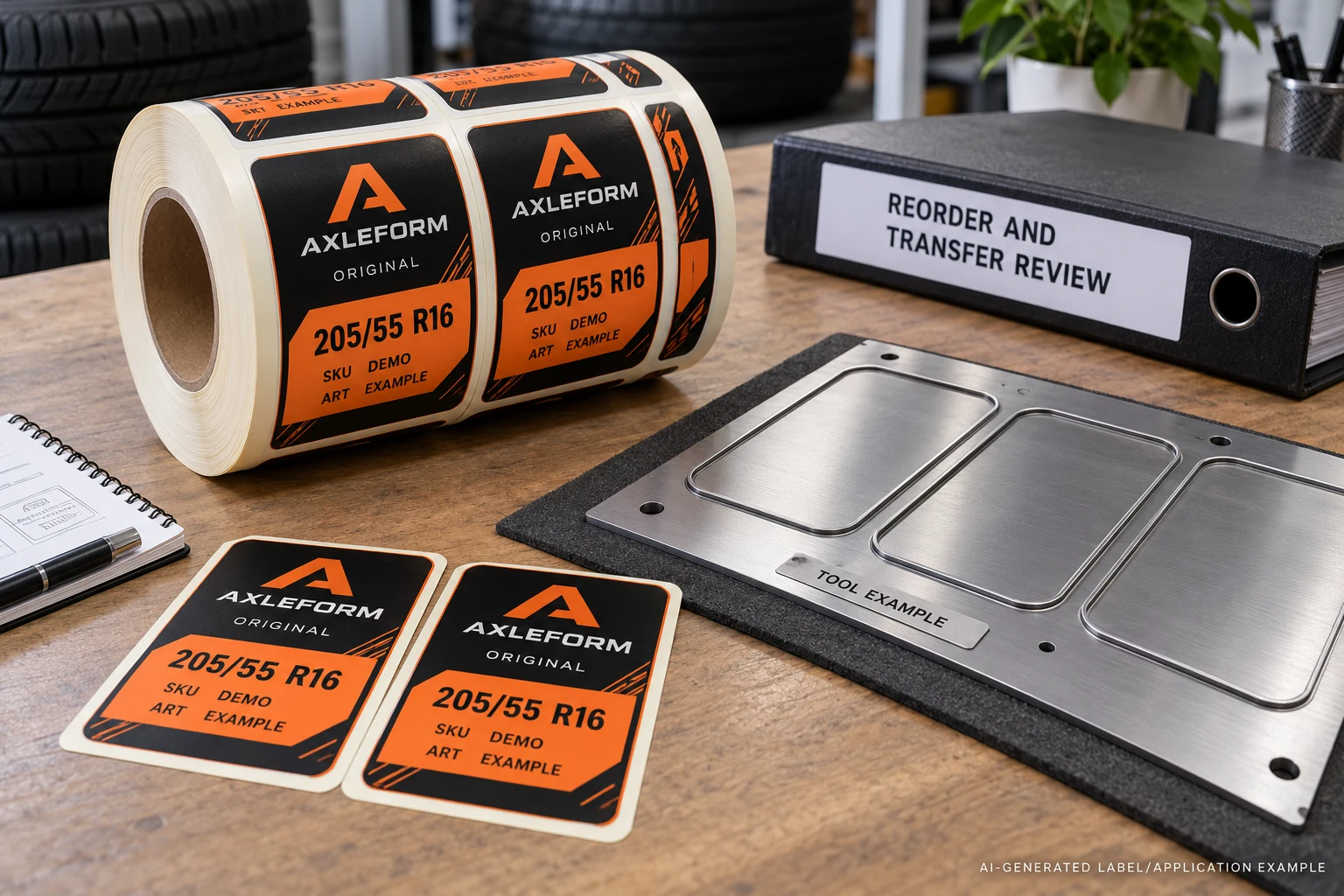
The quotation contains a setup or tooling line. The buyer expects to reorder the same tire-label shape later and assumes that paying the line now will settle the next order. Neither expectation explains what asset, if any, is being created.
Before approving the charge, ask which cutting route is proposed and what the line covers. If there is a reusable physical or digital asset, identify it and obtain explicit answers about repeat use, storage and transfer. A price description is not a complete asset record.
This is a procurement question sheet. It does not determine legal ownership, set a supplier's fee policy or promise that a tool can move between converters. Those matters require the actual technical review and agreed commercial terms.
First ask whether there is a physical tool
The word setup can cover different work. Do not assume that every label job creates a bespoke die that the buyer could collect later. Ask the converter to describe the proposed process and the particular item being charged.
ABG's DigiLase description gives a concrete counterexample to a universal physical-tool assumption: it describes a particular laser finishing system that does not require hard tooling. That is an equipment manufacturer's example, not a statement that CYJ owns the system, uses it for this project or can cut any proposed tire-label material by that route.
If a reusable die is proposed, request its reference. If the charge concerns digital preparation or another activity, record that instead. The buyer should know what repeats, what must be done again and what remains subject to a fresh review.
Keep the approved shape attached to the asset
The custom die-cut shape guide covers the label's placement and finished outline. Carry that approved drawing revision into the tooling discussion. A familiar file name does not establish that an existing cutting asset matches the current requirement.
Ask the technical contact which approved size, contour and production arrangement the asset serves. Identify any construction or layout constraints relevant to its intended reuse. Do not infer suitability for another material or web arrangement from the outline alone.
For a repeat order, the useful question is whether the identified asset is suitable and available for that job. For a changed label, the question is which differences require new preparation, adaptation or another route. Keep those answers tied to a drawing rather than a loose promise that the tool is reusable.
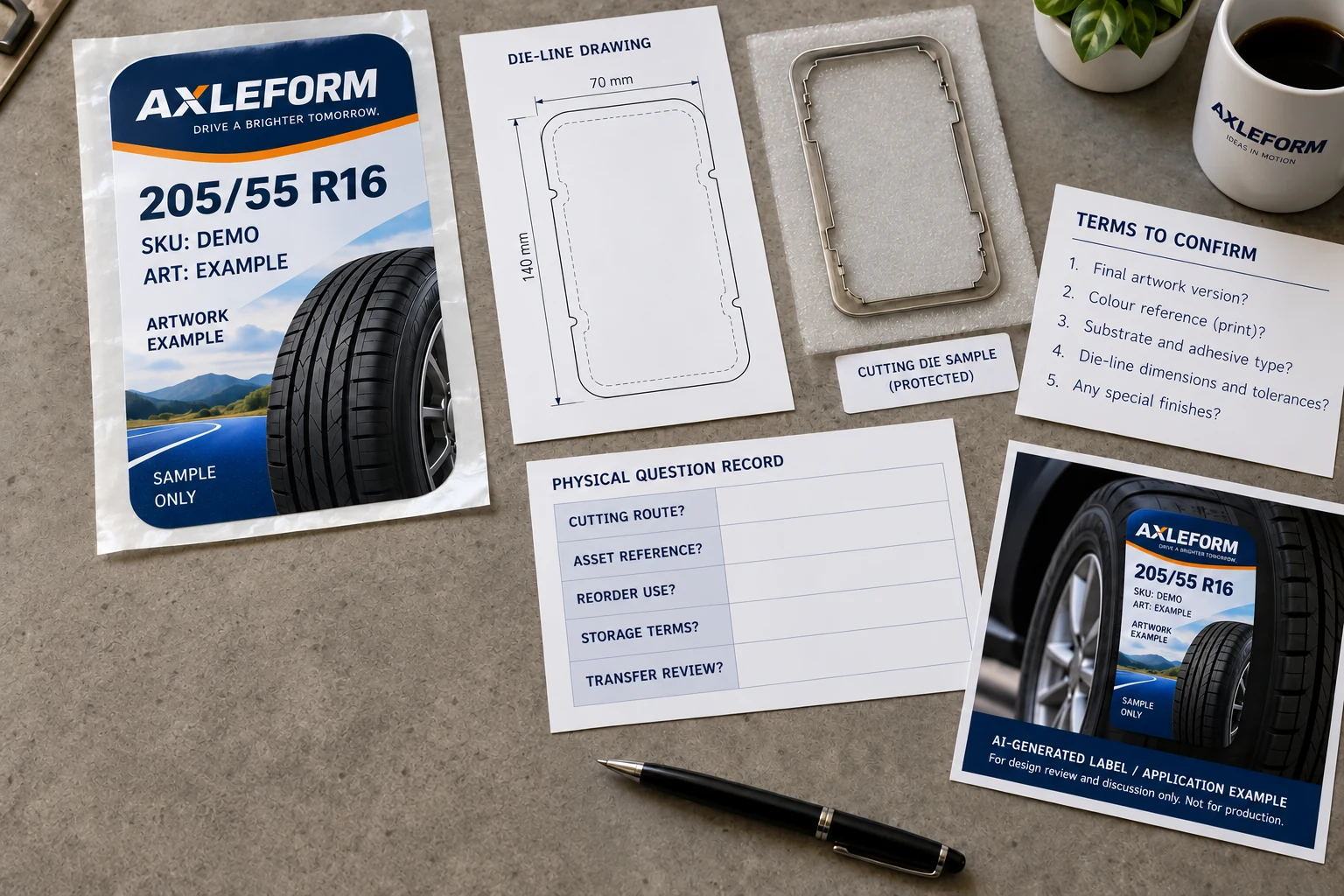
Put six questions beside the setup line
Use the quotation review to obtain answers the next buyer can find:
1. What work is included? Separate the charged preparation activity from any physical or digital asset created. 2. What identifies the asset? Link its reference to the approved drawing and intended production arrangement. 3. How will repeat orders use it? Ask what must remain unchanged and what further review or work may be needed. 4. How is it retained? Confirm any agreed storage, identification, retention or disposal arrangement. 5. What rights are actually agreed? Request explicit wording on use, access or transfer rather than inferring it from payment. 6. What would a transfer require? Identify receiving-converter review, available technical information and any agreed handling process.
These are questions, not default terms. Leave an answer unresolved when the parties have not agreed it. Procurement should not turn a blank response into an ownership or storage promise.
Reuse and transfer are different decisions
A tool may be suitable for repeat use in its current production arrangement without being suitable for a second converter's equipment. Ask the receiving technical owner what information is needed to assess the actual asset. A matching finished label size is not a complete compatibility decision.
Keep the supplier-transfer checklist for the wider label qualification. Moving a cutting asset would not, by itself, approve the replacement construction, printed data, liner behavior or applied tire sample.
Likewise, a usable digital drawing is different from a usable physical tool. The receiving converter may be able to prepare its own route from approved information, subject to confirmed rights and a new technical review. Compare that option with transfer instead of assuming that moving the old asset must be the easiest path.
Give an existing or tool-free route a fair comparison
If an already available suitable tool can produce the approved shape, ask whether that route is practical for the actual order. Do not change a functional label outline merely to avoid discussing setup; the shape still has to suit the tire and application workflow.
A confirmed tool-free route may also deserve consideration where the converter can support the construction and output. It does not automatically remove every preparation cost or guarantee a lower total. Compare the confirmed finished result and the actual quoted scope.
For a stable repeat program, a defined reusable asset arrangement may be useful. For a changing design, flexibility may matter more. The right decision depends on what the buyer expects to repeat, and on the technical and commercial arrangements both parties actually accept.
Close the record before it becomes institutional memory
Attach the answers to the order reference, approved drawing and quotation revision. Identify the person who can authorize a future change. If a supplier contact changes, the next discussion should begin from the record rather than someone's memory of a setup payment.
For custom tire labels, I would request this clarification while the quote is open. It gives the buyer a defined reorder question without claiming rights or production capabilities that have not been confirmed.
Reviewing a tooling line? Prepare a cutting and reorder brief with the finished drawing, dimensions, construction reference, application format, quantity, anticipated repeat use and explicit setup, retention or transfer questions. Organize the requirements on the contact page, then send supporting references through the existing email or WhatsApp path for a project-specific discussion.