Tire Label Acceptance Sampling: Define the Lot Before the Check
Published
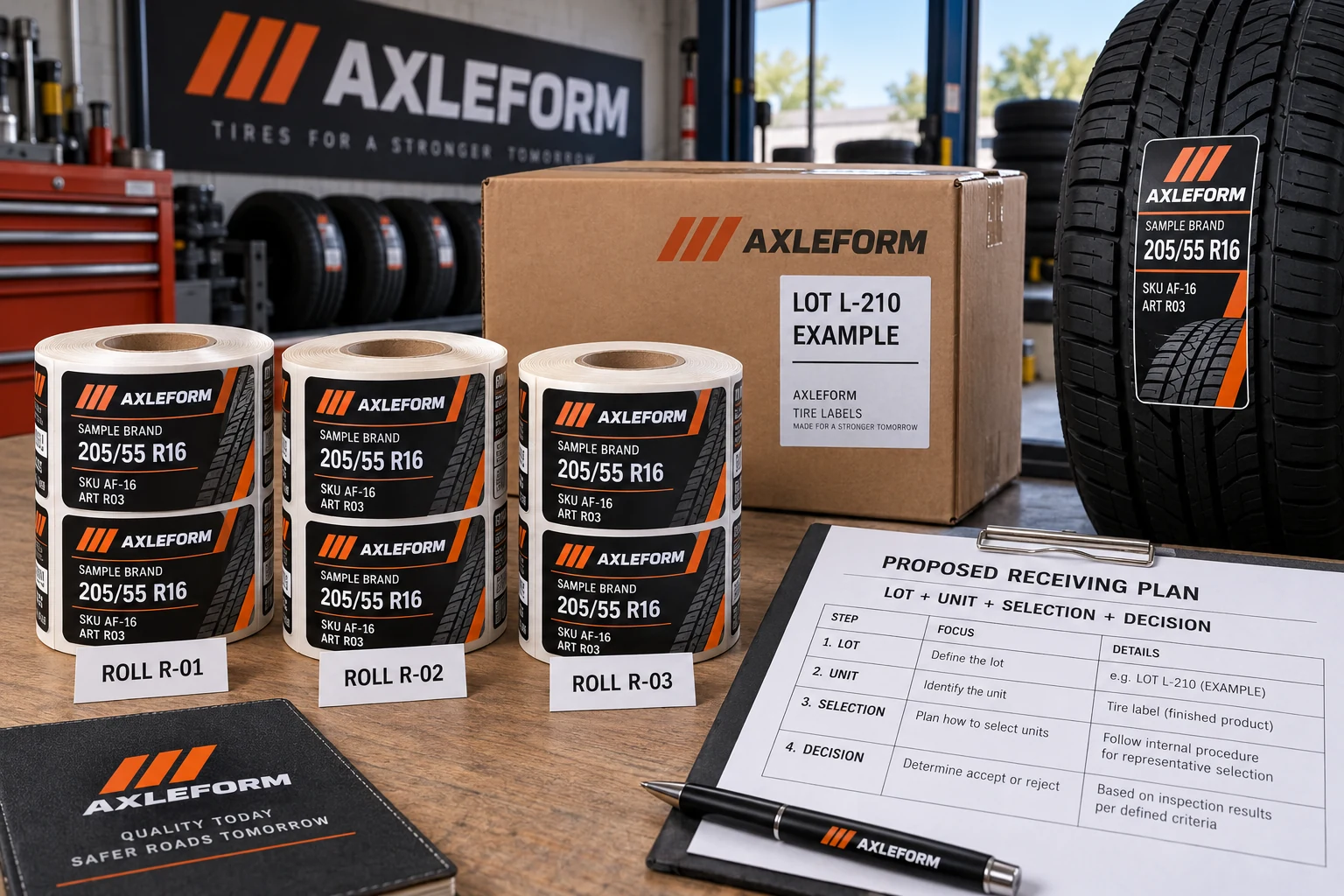
The approved tire-label sample is on the buyer's desk. The delivery is in several cartons. Receiving opens one carton, looks at the first label on a convenient roll and asks whether the shipment can be released.
That is a plausible receiving situation, not a reported order. The reference sample may show exactly what the buyer approved. It does not define which delivered material the receiving decision covers, how units are selected or what observation requires a hold.
Agree the lot and the decision rules before the stock arrives. Then receiving can carry out a stated check instead of inventing the acceptance basis beside the packing bench. For a tire-label order, the useful purchase discussion starts with the population, the inspected unit and the scope of the release.
Name the supply that one decision will cover
An order number is a convenient reference, but it may contain several tire SKUs, artwork revisions or separately identified production supplies. Ask the buyer's quality owner and supplier to define the lot that will receive one acceptance decision. Do not silently combine different supplies because they arrived in the same truck.
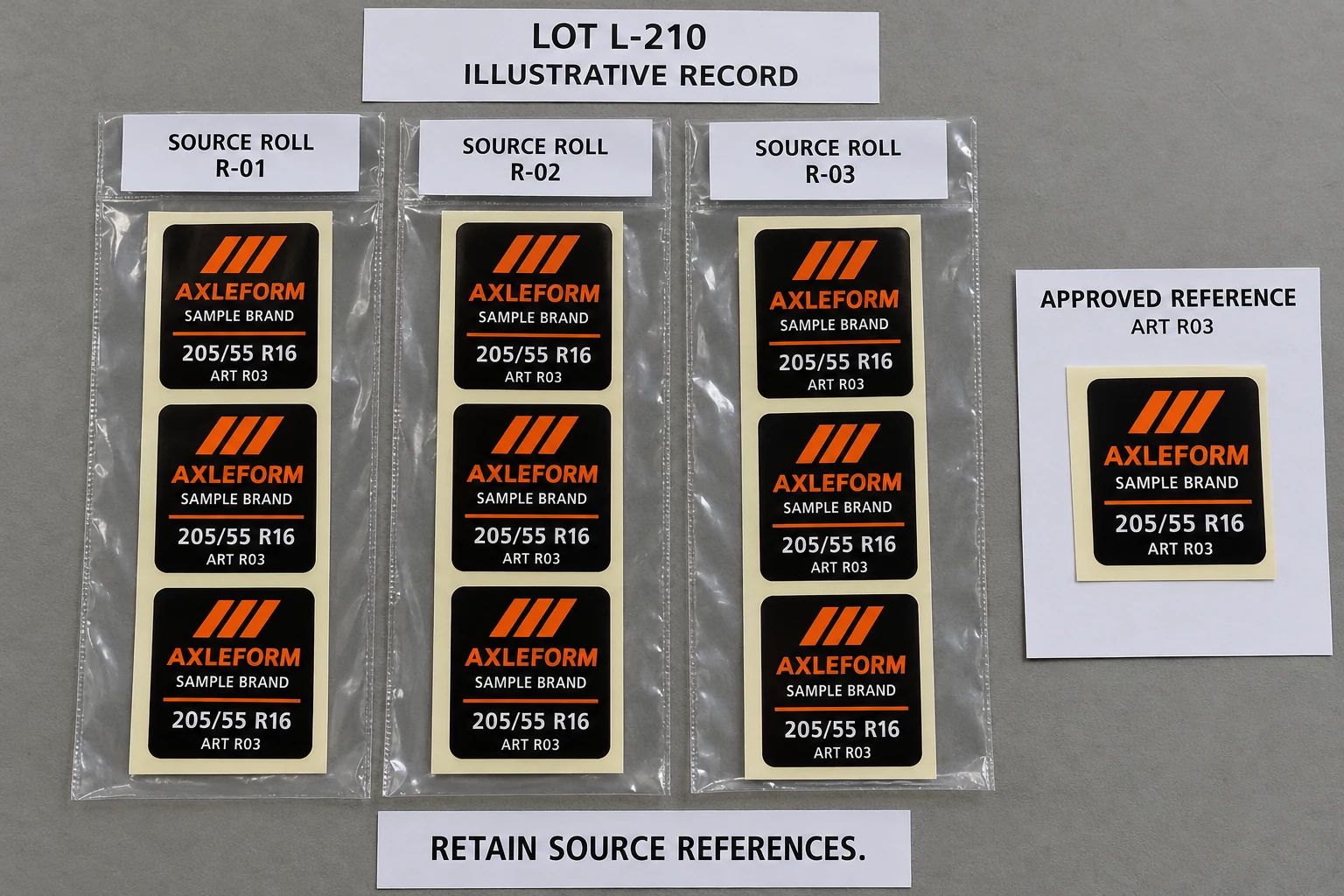
For example, fictional lot L-210 could identify a stated supply of SKU AF-16 against artwork R03. That description is only an illustration. The parties must decide what production and packing references make sense for the real order, and how those references remain visible on the cartons and rolls.
If the receiving record lists one SKU but the delivery contains another revision too, resolve the scope before inspection. A neat report becomes less useful when no one can identify the material to which its conclusion applies.
Choose what counts as one inspected unit
A label, a roll and a carton answer different questions. A label can be checked for stated print features. A roll can carry a supplied-format or identification requirement. A carton can be checked against its packing description. Calling each of them a sample without naming the unit leaves room for different interpretations.
List the characteristics being checked and the unit to which each observation belongs. A roll identification issue should remain linked to that roll. An observed label issue should retain the accessible position or sample reference used in the agreed procedure. Do not convert one convenient observation into an undocumented conclusion about every position inside the roll.
The sample-approval checklist establishes the intended label, revision and product use. Keep that reference available, while giving delivery inspection its own lot and unit definitions.
Separate the check from the selection method
The NIST introduction to acceptance sampling describes random selection from a lot to support its disposition. It also distinguishes that purpose from estimating the lot's quality. This is statistical context, not a tire-label inspection specification or a sample-size recommendation.
Checking several outer labels does not by itself establish a random selection method. Ask the responsible quality owner how the agreed units will be selected and accessed, what supplier evidence is relevant and how sample identity will be retained. A roll is a continuous physical supply; access to internal positions needs a practical agreed procedure.
Do not unroll every carton simply to create the appearance of a thorough check. Inspection can consume material or affect its original condition. Record what was actually examined, and avoid claiming that inaccessible sections were checked when they were not.
Write the decision rule before seeing the result
A plan needs more than an instruction to inspect carefully. NIST's discussion of sampling plans treats the selection scheme and the decision rules together. Choosing the appropriate plan involves its intended properties and practical complexity.
Have the buyer's qualified quality owner and supplier agree the method, relevant criteria and possible next actions. This article does not select an AQL, sample count, acceptance number or universal defect allowance. Those values cannot be inferred from the tire size, the order quantity alone or a supplier's marketing phrase.
| Acceptance-plan field | What to settle for this order |
|---|---|
| Lot identity | Which SKU, revision and identified supply one decision covers |
| Inspection unit | Whether a stated check concerns a label, roll, carton or another agreed unit |
| Selection and access | How units are chosen, accessed and linked back to their source |
| Check and decision rule | The agreed method, criteria and actions, with responsible approval |
| Disposition record | Evidence reviewed, supply covered, limitations and exception route |
Keep the actual check method explicit too. A visual text comparison, an operational scan and a specified barcode-verification measurement are different activities. The existing scan-versus-verification guide explains that distinction. Naming a sampling plan does not make one activity prove the others.
Close the decision with its limits visible
Suppose receiving has completed the agreed checks for the identified lot. The release record should name that lot, the reviewed evidence and the person authorized to make the disposition. It should not expand automatically to an unreviewed SKU or a later delivery merely because the printed design looks similar.
If an exception appears later, preserve the affected roll reference and the observation. Follow the agreed review route rather than quietly selecting more convenient samples until a reassuring result appears. Any additional inspection needs its own documented basis and connection to the original decision.
An acceptance decision also does not replace the order's quantity agreement. Nominal positions, excluded labels and usable quantities belong in the supplied-count record. Keeping the two records connected helps the buyer discuss an identified issue without confusing quality disposition with how many labels were delivered.
Choose the amount of inspection for a reason
Sampling is not automatically the best arrangement for every task. An agreed full inspection may suit a particular small or critical requirement, provided its method and limits are understood. It still needs a defined check; looking at every label does not establish every possible property.
For a repeat order, established supplier evidence may help the quality owner design a practical receiving approach. A new construction or a changed application requirement may need separate qualification before shipment inspection is even useful. Compare the work each proposal requires, rather than treating fewer inspected pieces as an unconditional saving.
For custom tire labels, I would put the proposed acceptance-plan reference beside the approved specification. It tells both parties what receiving will do with the stock they are discussing.
Preparing a tire-label receiving plan? Prepare an acceptance brief with SKU and artwork references, proposed lot and inspection-unit definitions, quantity, application method, required checks and the buyer's quality approver. Use the contact page to organize the requirements, then share the supporting specification and plan through the existing email or WhatsApp path for a project-specific discussion.