Goodyear Tread Life Limited Warranty
Manufacturer example of program-specific claim evidence; check the applicable warranty instead of reusing this rule.
View detailsResource Guide
The returned tire is a physical item on a bench. The claim is a decision process that may still be open. A bright tag can keep the tire from being sold or mixed with stock, but it cannot decide coverage.
Published 2026-10-07
Digital proof before production. Material and adhesive options are discussed according to your application requirements.
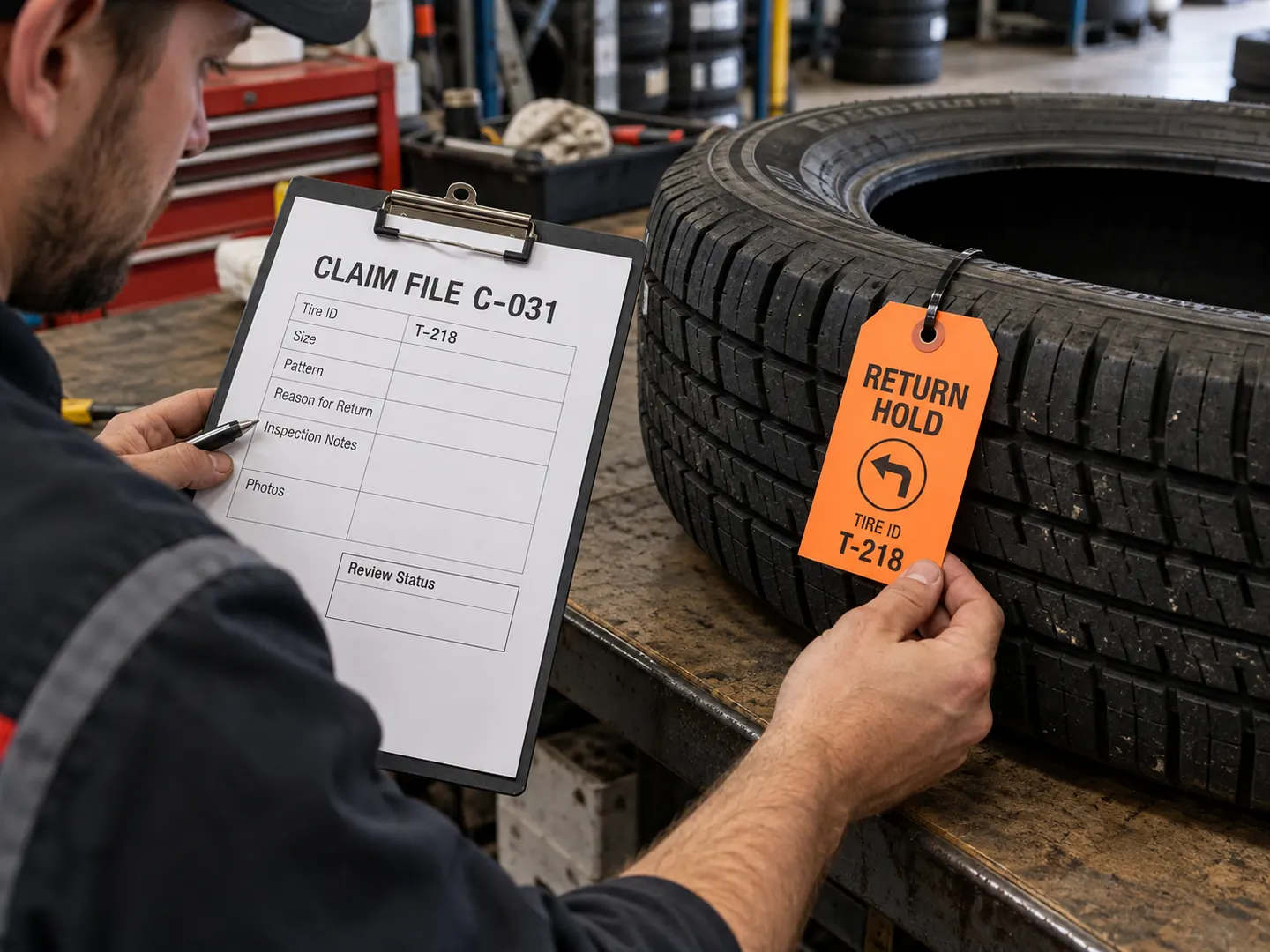
Print or write a unique return ID on a conspicuous temporary tag, then link it to the buyer-owned claim record. The record can hold purchase evidence, photos, tire details, reported concern, review status and the person authorized to decide the next step. Do not print WARRANTY APPROVED or REPLACE on a stock tag before the responsible party has reviewed the case. Specific warranty requirements vary by program; for example, Goodyear published claim terms require an original purchase invoice for its tread-life warranty. That example is not a rule for every tire brand.
Manufacturer example of program-specific claim evidence; check the applicable warranty instead of reusing this rule.
View detailsImagine two tires of the same size arriving from different stores. One has a partial handwritten note on the tread and the other has a claim number only on a delivery sheet. This is a composite example, not an actual customer dispute. At receiving, staff assign a distinct tire return ID and photograph it with the tire. That ID stays on the held item; the claim file carries the evolving assessment. Similar size and appearance no longer stand in for identity.
Use a status phrase such as HOLD FOR REVIEW with a visible return ID and a clear link to the owner record. Agree who can change the status, what happens if the tag is damaged, and where a reviewed tire goes next. If the tag is attached to a bag or rack rather than the tire, make that physical relationship explicit at every handoff. Avoid an image or icon that implies a test, certification or safety judgment.
Ask whether the tire will be handled, photographed, shipped to another reviewer or returned to the customer. Test the chosen temporary tag or label at that route. Keep manufacturer markings and the area needed for inspection visible. A tag on a loose tire may work differently from a self-adhesive label on a dusty tread; the supplier needs an actual photo and handling brief before recommending a construction.
Provide the intake and storage photos, size of the proposed tag, attachment method, quantity, fields to be preprinted versus completed at receiving, scanner requirements and sample data. Request a proof showing a fictional return ID and an undecided review status. If the workflow needs a customer-facing decision form, treat it as a separate document with its own approval.
FAQ
No. It identifies and holds the physical tire while the applicable claim process reaches a decision.
It can be a linked field if the owner workflow guarantees one-to-one traceability. The physical item still needs a readable identifier at every handoff.