Resource Guide
Used Tire Inventory Labels vs Inspection Records
A used tire can move from intake to inspection to a rack before anyone decides how it should be sold. Give the tire a stable stock ID first. Let the inspection record carry the judgment.
Published 2026-10-04
Digital proof before production. Material and adhesive options are discussed according to your application requirements.
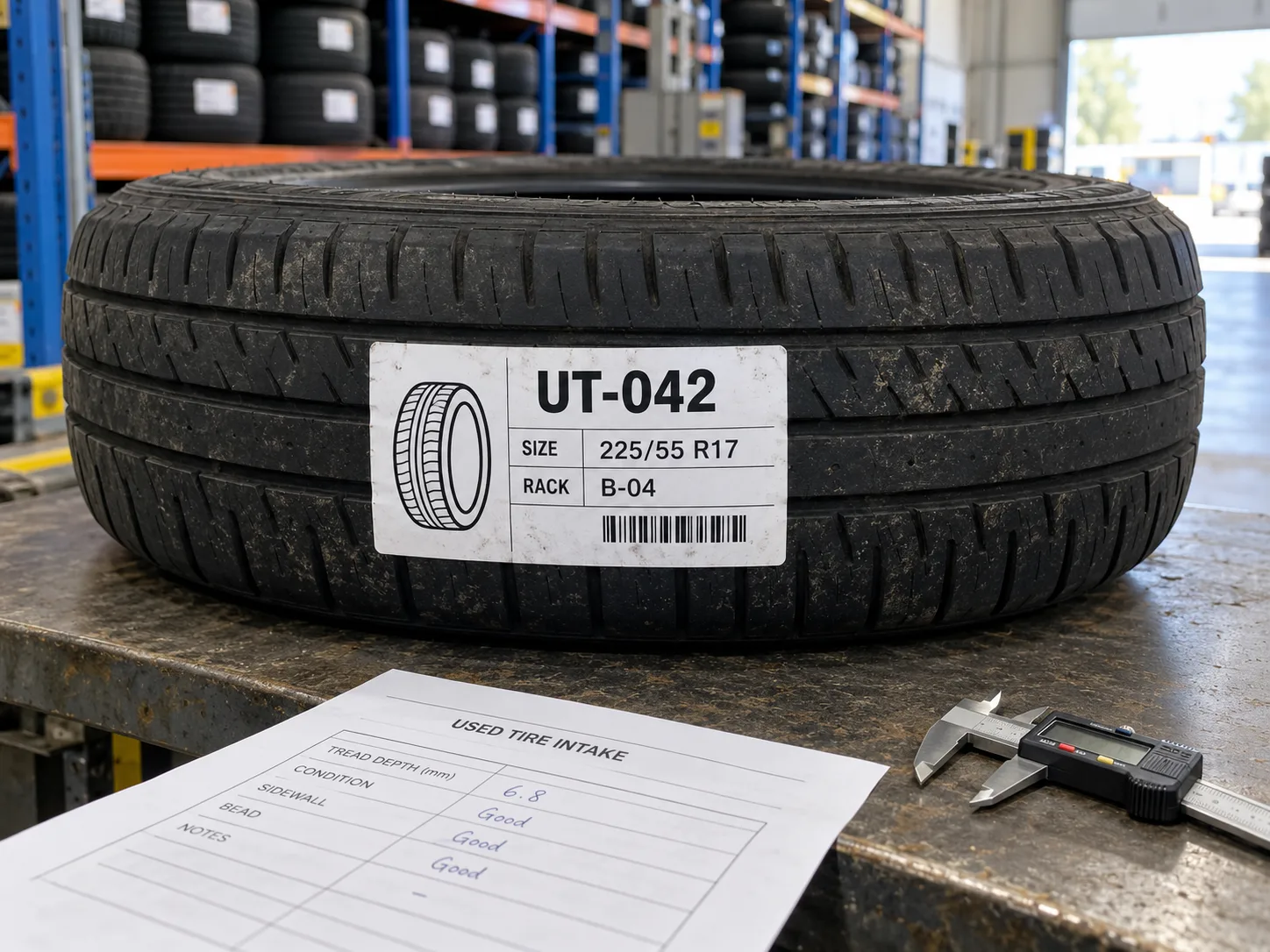
Quick Answer: Identify First, Evaluate Separately
Print a unique internal stock ID and the minimum fields a picker needs, such as recorded size and storage location. The label should lead to the buyer-owned inspection record; it should not silently become a safety, roadworthiness or resale approval. If condition changes after a second review, update the record and the stock status under a controlled workflow. Agree who owns each field before the printer receives a data file.
An Illustrative Intake Bench
Imagine a dealer receives four loose tires of the same nominal size. One goes to inspection, one is held for a better photograph, and two are placed in different rack locations. This is a composite buying scene, not a reported customer case. A size-only sticker cannot tell the four apart. A unique ID keeps each tire connected to its own photos and notes even when the rack assignment changes. A handwritten condition word on the sticker can be stale by the time another worker picks the tire.
Decide Which Fields Belong on the Label
Keep the stock ID visually dominant. Add size only when it has been checked, and use a location field only if the process will reprint or replace labels as stock moves. If a barcode is used, the warehouse team must own the encoded value and test it with the actual scanner at the intake and rack. Do not place a condition grade, tread measurement or sale promise in artwork until the responsible reviewer has approved both the value and how updates will be controlled.
- TIRE: unique stock ID and confirmed size.
- RECORD: inspection notes, photographs, dates and reviewer-owned status.
- LOCATION: rack address that can change without changing the tire identity.
- SCAN: approved payload and a human-readable fallback.
- HOLD: a clear way to prevent a doubtful item from being selected.
Match the Construction to the Real Handling
A dusty, textured used tread is not the same application surface as a clean liner sheet. Request a finished-size sample for the exact placement area and hand-application method. Compare label edge hold after normal storage and handling; do not infer adhesion from a photograph or from another tire. If labels must be removed before onward sale, make that part of the sample brief and check residue on the representative surface. The identifier is only useful while it stays readable and attached.
What to Send With the RFQ
Send photos of the actual tire surface, expected size range, proposed label size and location, stock-ID format, scanner model, quantity, roll or sheet preference, handling route and whether the label is temporary. Include one approved sample data row with fictional identifiers for proofing. Ask the supplier to show the printed hierarchy at finished size. The supplier can print the buyer-approved fields; the dealer must still own inspection decisions.
FAQ
Questions Buyers Ask
Should a used tire label show a condition grade?
Only if the responsible buyer has approved that field, its meaning and how it is updated. An inventory ID alone does not certify condition.
Can one stock ID follow a tire through several rack moves?
Yes. Keep the tire ID stable and update the location in the inventory record rather than treating the rack address as the tire identity.