Resource Guide
Relabeling Tires During Return or Rework: A Buyer Checklist
A damaged tread label is easy to spot. The harder question is whether the replacement information is still tied to the correct physical tire and approved artwork revision.
Published 2026-09-28
Digital proof before production. Material and adhesive options are discussed according to your application requirements.
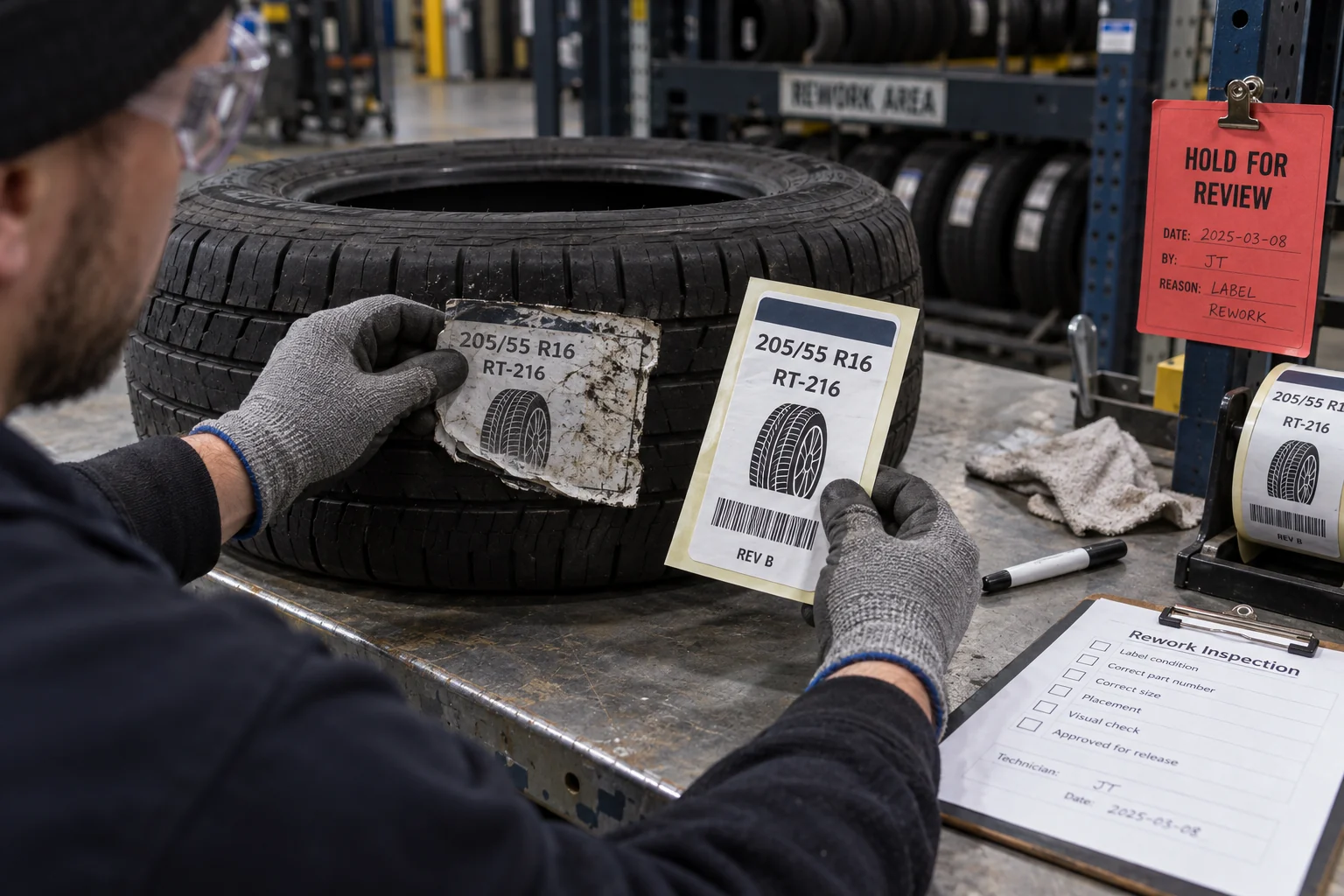
Quick Answer: Hold, Verify, Replace, Release
Treat replacement labeling as a controlled rework step. Hold the tire until its identity is confirmed from an authorized source, select the current approved label version, record why the label changed and let the designated owner release it. A new-looking sticker cannot repair an uncertain product record. Where the required identity or performance information cannot be verified, escalate rather than inventing it from a similar tire.
A Composite Return-Desk Scene
Imagine a returned tire with a torn label and a still-readable molded size on the sidewall. The size narrows the possibilities, but it may not confirm the buyer SKU, market version, batch or code data. This is a hypothetical situation, not a factory case study. The operator should consult the order or manufacturing record, not pick the closest roll from an open box. The hold tag stays with the tire until the data and disposition are clear.
Decide Whether the Old Label Comes Off
An old label can obscure a new code or leave adhesive and fibers on the application area. But aggressive removal can affect the surface or make identification harder. Define the removal method, cleaning procedure and allowable placement with the responsible tire owner. Test the replacement construction on the same tread condition seen in rework, not only on a clean new tire. Never cover an essential marking with a convenient larger label.
Print From a Controlled Source
The rework station needs a short field list: physical tire ID, buyer SKU, approved artwork file, revision, market if relevant, replacement reason, operator and release decision. Decode any printed code and compare it with the human-readable data. Segregate obsolete rolls and track how many replacement labels were printed and used. A barcode scan confirms the code is readable, not that its underlying product data is true.
- HOLD: record what is unreadable and prevent premature dispatch.
- VERIFY: use approved product and order records to confirm identity.
- REPRINT: lock the current artwork and code data.
- REVIEW: check the applied label and scan result at the real workstation.
- RELEASE: retain a traceable disposition record.
What to Ask the Label Supplier
Share a photo of the returned tread surface, the existing label, required dimensions, whether the old adhesive stays and the application temperature. Ask for material and adhesive options for that specific surface. The supplier can help with construction and proofing; it should not decide the tire identity or regulated product information. If only a few replacements are needed, discuss on-demand printing versus preprinted spare rolls and who controls the variable data.
FAQ
Questions Buyers Ask
Can an operator copy the old label to make a new one?
Only if the old content is complete and confirmed against the approved current product record. A damaged or obsolete label is not an authoritative source.
Does a successful barcode scan approve the reworked tire?
No. A scan tests readability; the responsible owner must also confirm the identity, content and release decision.