Resource Guide
Forklift Asset ID Labels vs Capacity Plates: Know Which One You Are Printing
A fleet number helps maintenance find a truck. A capacity plate tells an operator what the truck can lift. Put the first where staff can read it without covering, imitating or altering the second.
Published 2026-10-01
Digital proof before production. Material and adhesive options are discussed according to your application requirements.
Quick Answer: Treat the Plate as a Separate Safety Item
OSHA explains that the forklift nameplate or data plate carries model, serial, capacity and other operating information, and that operators must understand it. Its forklift guide also says warning decals should remain legible. A custom asset sticker is an additional fleet-control marker, not a replacement manufacturer capacity plate or warning decal. Have the truck owner or qualified safety lead approve placement and any replacement of required markings. Do not print a fictional load rating on an asset ID label.
An Illustrative Fleet Walk
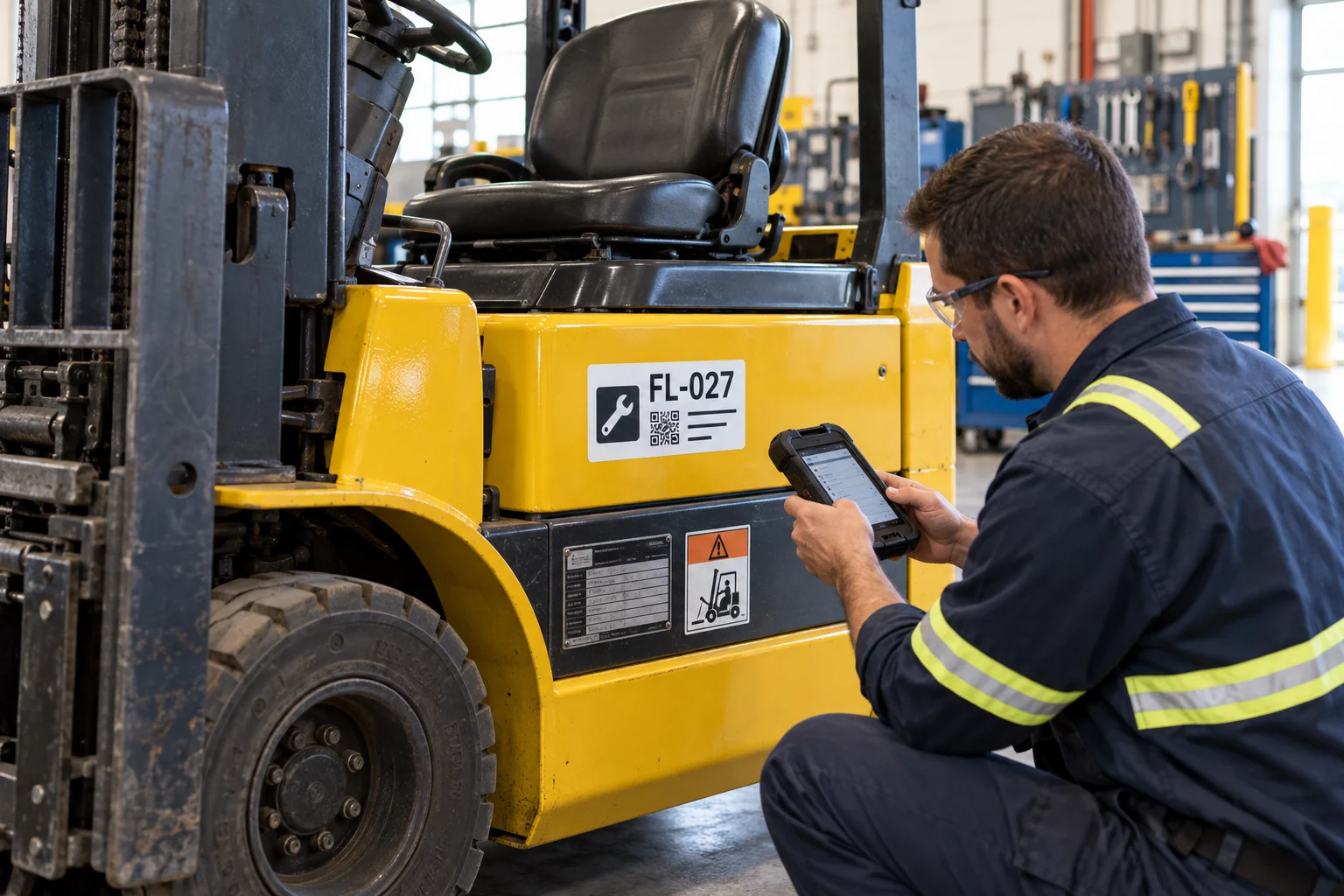
Imagine a maintenance worker trying to locate forklift FL-027 among several similar trucks. A large asset sticker on the side is easy to see, but the proposed spot overlaps a faded capacity plate. This is an illustrative scene, not a field inspection. Moving the asset ID to a clean approved panel solves the identification problem without treating the plate as spare graphic space. If the plate is illegible, escalate through the truck owner and manufacturer process; a print shop should not invent its data.
Plan Two Read Distances
Fleet IDs may be read from a few steps away or scanned during daily checks. Make the human-readable number prominent, then size any code for the actual mobile device and angle. Check that the chosen panel is not routinely rubbed by forks, pallets, doors, hoses or operators. Avoid vents, moving joints, hot surfaces and maintenance access points. A QR code can link to a maintenance record, but the fleet number should remain readable when the phone or network is unavailable. Keep the ID system separate from operating instructions.
- OWNER: who issues and retires fleet numbers?
- PLACE: approved panel clear of safety markings and service access.
- SURFACE: paint, texture, cleaners and oil exposure.
- SCAN: device, distance and offline fallback.
- REPLACE: who removes an old ID when a truck is retired?
A Better Sample Review
Apply a finished-size sample to a representative truck only after checking the surface preparation specified for that construction. Walk around the parked vehicle and look for visibility from the maintenance approach. Test the code with the real device, including glare from shop lights. Inspect after normal wash and handling. A supplier catalog statement for a different film is not proof of this sample. If a plate or safety decal needs replacement, manage that as a separate approved task rather than combining it with the fleet-tag order.
What to Send With the RFQ
Supply fleet-number format, truck models, approved placement photos, surface details, quantity, cleaning process, variable data and intended lifetime. Flag any existing plate or warning-marking problems separately. Ask for proofed artwork and a sample on one truck before producing the fleet roll. The label supplier can quote an identification sticker; the fleet owner retains responsibility for safety information and its accuracy.
FAQ
Questions Buyers Ask
Can an asset sticker replace a missing forklift capacity plate?
No. Capacity and operating data require the appropriate approved manufacturer or fleet process; a custom fleet ID is not a substitute.
Where should a fleet ID go?
Choose an approved visible panel that avoids the nameplate, warning decals, moving parts and service access, then test it on the actual truck.