Retiring Equipment: Close the Asset Record Before Reusing Its Label Number
Published
The machine has left the workshop, but its asset number still appears on unused labels in the stores cabinet. A new machine needs an ID. Reusing that number would save a small print order and could also connect two different physical assets to one history.
Close the equipment record and decide the identifier's future before issuing any remaining labels. Keep retirement status, physical label disposition and historical access connected. Removing a sticker from a machine does not, by itself, retire the number in the asset register.
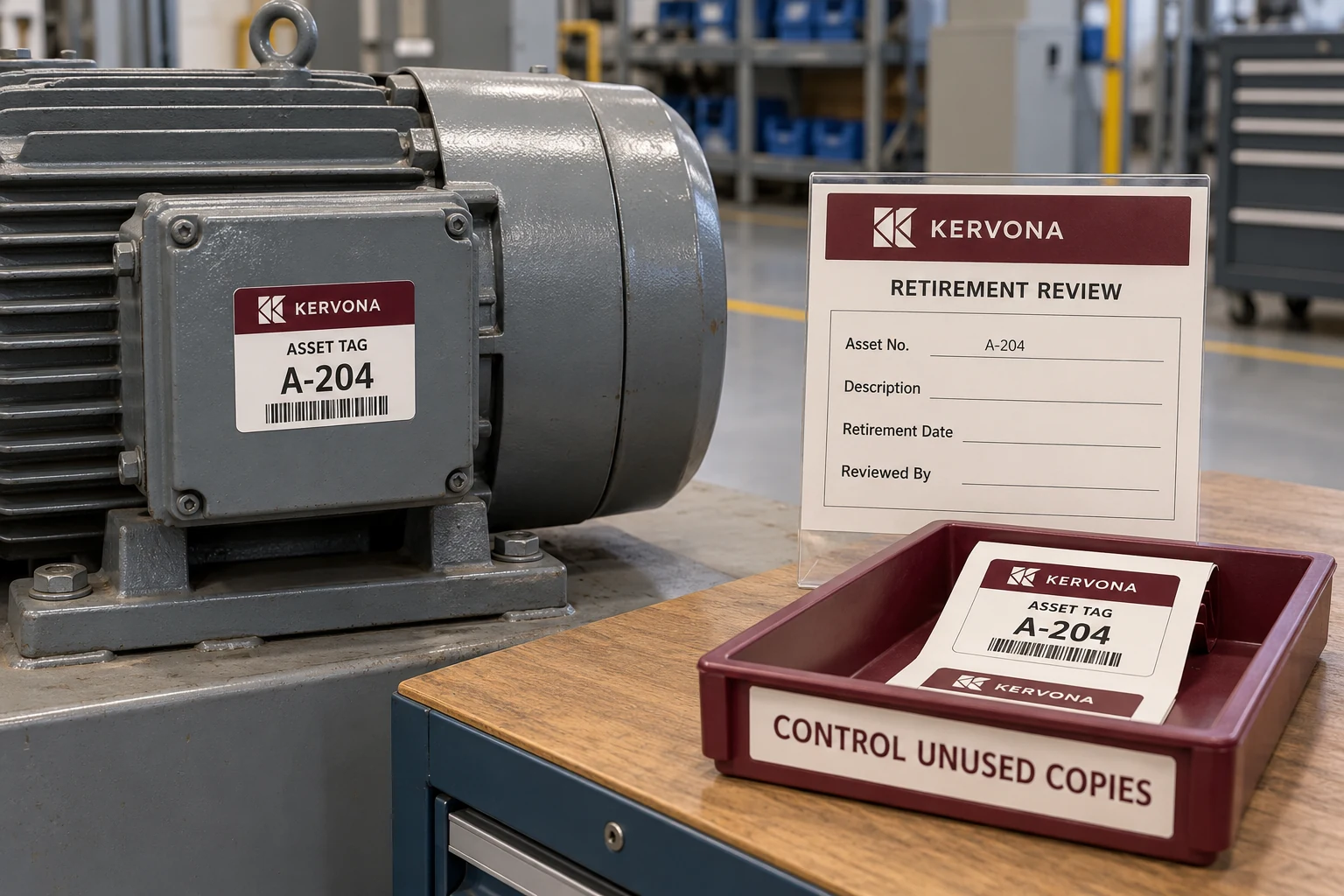
Establish what retired means in this process
Equipment can be scrapped, sold, transferred or placed in long-term storage. Those events may require different records and label decisions. Ask the asset owner to identify the actual event and who is authorized to close it.
Do not infer retirement from an empty bay or a missing maintenance job. A machine temporarily removed for repair may still need its stable identity. The relocation guide explains why moving equipment and changing its identity are separate decisions.
If the organization uses a decommissioning or disposal process, the label task should follow that approved process. This article does not authorize disposal, destruction of records or removal of manufacturer markings. It addresses how the buyer prevents retired internal identification from being issued casually to another unit.
Reconcile the record with the physical unit
Confirm the asset ID against the actual equipment and the controlled register before changing status. Preserve any required manufacturer serial reference separately. A locally printed asset number and a manufacturer's serial number are different identifiers with different owners.
Record the event date, disposition reference and responsible authorization under the organization's rules. Keep enough history to distinguish the retired asset from an active unit with a similar model name. The buyer should determine retention requirements; the printer cannot supply a universal retention period.
Where equipment is transferred to another organization, agree what internal identification remains and how any linked destination behaves. A public QR code should not continue presenting misleading active status or unauthorized private information merely because the physical label travels with the unit.
Account for labels that never reached the machine
Search the approved issue records for unused copies, matched-set members and pending reprint orders. The risk is not limited to the label still attached to the retired asset. A spare copy in a drawer can later be applied to an unrelated machine.
| Closeout item | Evidence to retain | Decision owner |
|---|---|---|
| Physical identity | Asset and relevant manufacturer references | Equipment owner |
| Retirement event | Approved disposition record | Asset governance function |
| Applied internal labels | Agreed removal, retention or marking action | Authorized equipment/process owner |
| Unused copies | Count and controlled disposition | Label issue owner |
| Pending orders | Cancelled or revised print instruction | Purchasing |
| Digital destination | Appropriate retired or transferred behavior | System and information owner |
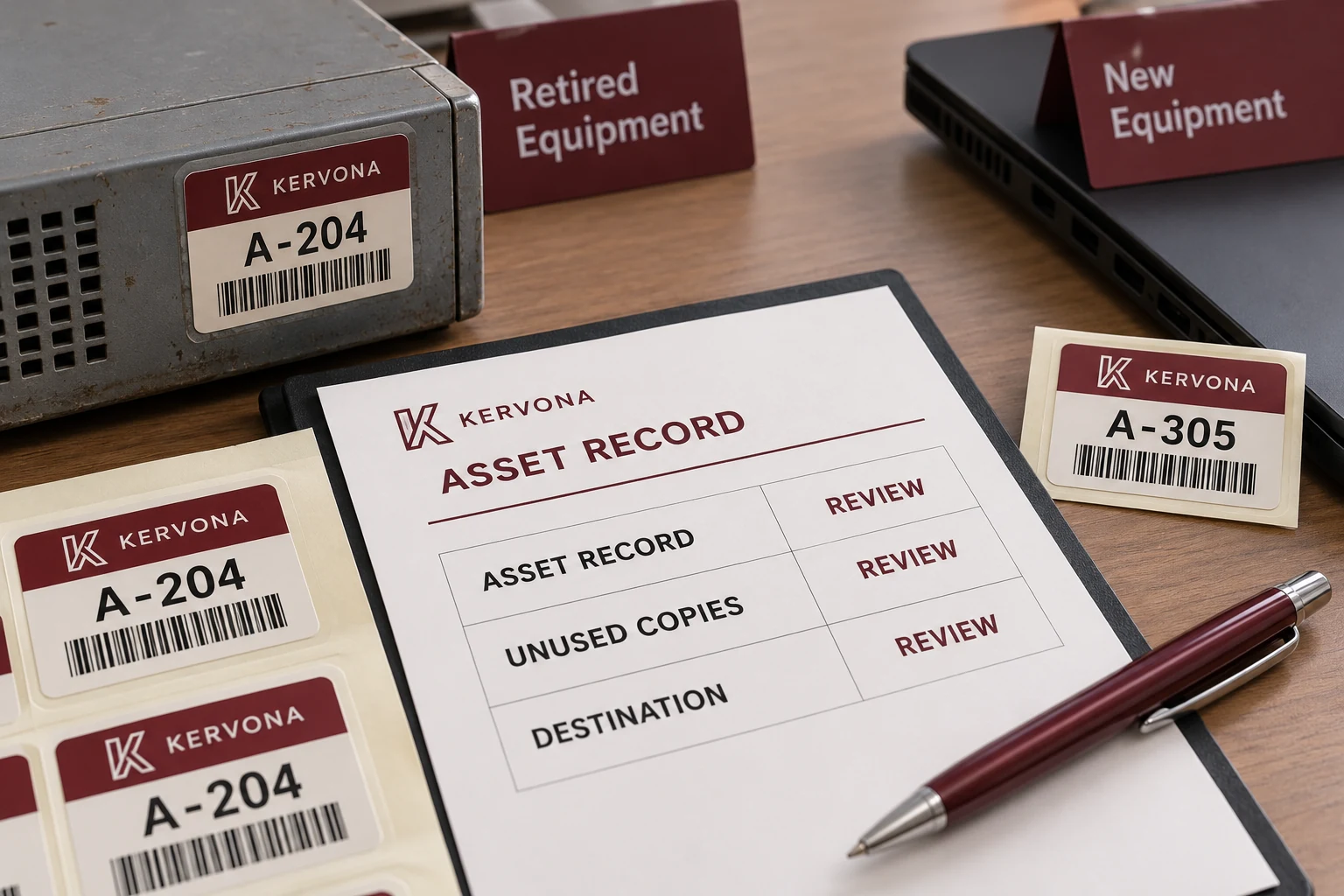
The table is a proposed closeout aid. It does not replace the organization's asset, environmental, contractual or records procedures. Use the fields that answer the actual identification decision.
Decide whether the number may ever be reused
For long-lived asset histories, retaining an identifier as retired can avoid ambiguity between generations of equipment. The number-range guide discusses issued, reserved and void values. A retirement rule should connect to that same controlled register.
If the organization's approved scheme permits reuse, it needs an explicit way to keep historical records unambiguous. The data owner must define that scheme and its limits. The label supplier should not decide that a number is available because it no longer appears in the active print file.
Do not invent a reuse interval from the label's service life. Physical durability says nothing about how long the maintenance, financial or operational history remains relevant. Those requirements belong to the responsible business functions.
Keep a readable history without leaving an active instruction
The system owner should decide what an old code returns after retirement. A controlled retired record can preserve identity while making status clear. A broken link provides less context; an unchanged active page can be misleading. The appropriate result depends on the approved system design and access policy.
Review any printed wording that could imply current service or ownership. A stable ID may remain meaningful even after the asset is retired, while a status label may need separate disposition. Do not cover warnings or alter required plates as part of a routine internal-tag cleanup.
Where the old label remains on a retained display or stored asset, document that decision. The goal is not to remove every trace of identity. It is to prevent physical and digital records from presenting an ambiguous or unauthorized current use.
An existing allocation rule may already solve the problem
If the buyer's register permanently reserves retired numbers and its issue process blocks unused copies, no new label design may be needed. A closeout check and stock disposition can complete the task using the existing scheme.
If labels have been distributed without an issue record, begin by reconciling what is known. Do not order a new range and assume that erases the old ambiguity. Identify unresolved copies and obtain the owner's decision about how they will be controlled.
For asset and serial number labels, prepare an identifier-closeout brief with the approved retired-ID list, unused-copy disposition, replacement-ID rule if needed, artwork, dimensions and authorized quantity. Organize the requirements on the contact page and send supporting files through email or WhatsApp. A number becomes available only under the owner's rule, not when a machine leaves the floor.