Resource Guide
Reusable Tote Labels: Keep the Container ID, Change the Trip Data
The tote returns; the shipment changes. Give the container a stable identity, and put route or order information on a separate changeable label.
Published 2026-09-29
Digital proof before production. Material and adhesive options are discussed according to your application requirements.
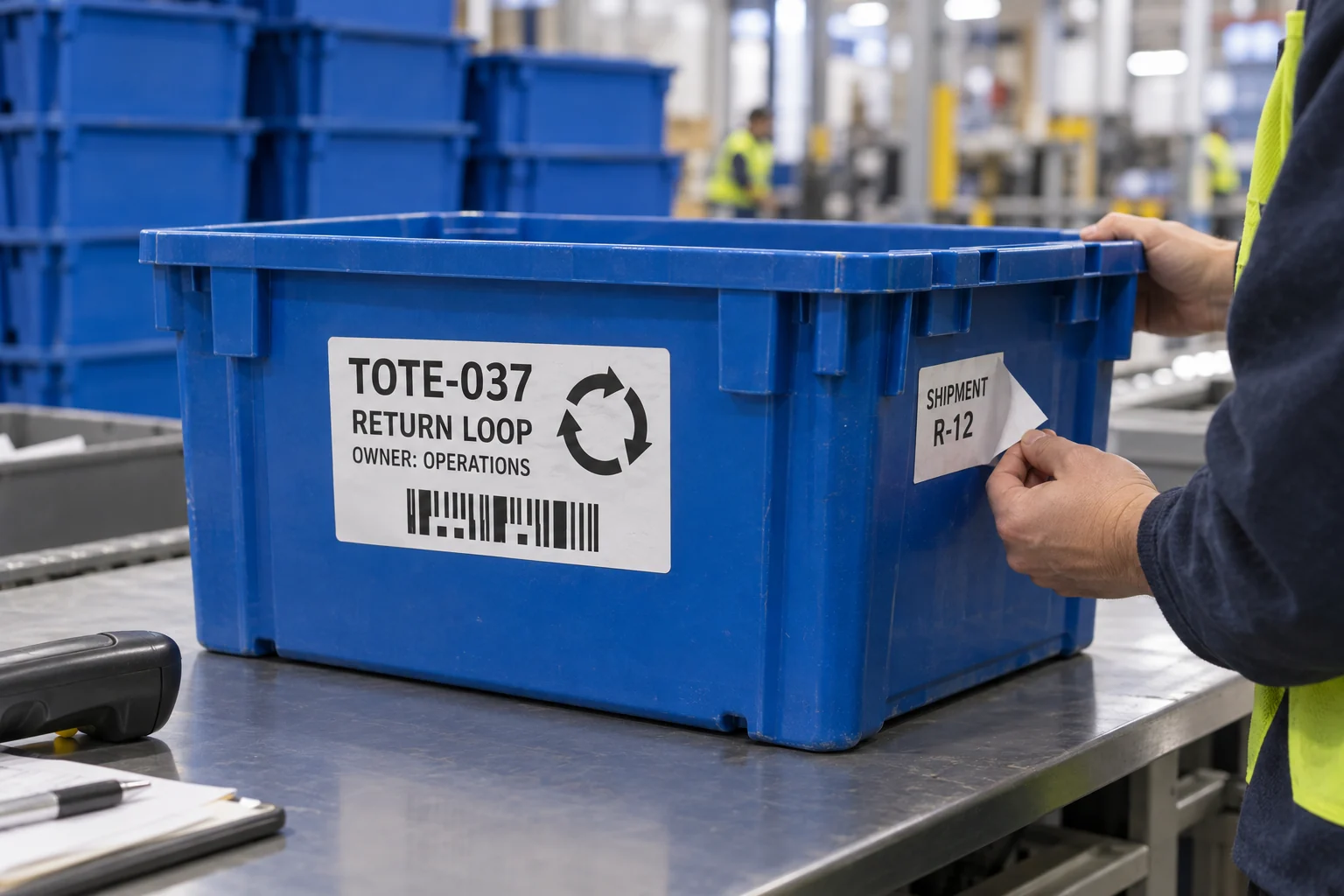
Quick Answer: Use Two Information Lifetimes
A reusable tote may need a durable asset identifier that survives repeated handling. Each trip may also need a temporary shipment or route label. The two should not overwrite each other. GS1 describes the Global Returnable Asset Identifier (GRAI) as a key suited to reusable transport items, potentially identifying them individually. That does not mean every tote needs a GRAI; use the owner-approved internal or standards-based scheme required by the receiving network. The printer should not invent a standards identifier.
An Illustrative Returns-Aisle Scene
Imagine a blue tote arriving with three old route stickers layered over its permanent number. The worker scans the most visible sticker and opens last weeks delivery record instead of the tote asset record. This is a composite scenario, not a customer case. The fix is to reserve a protected, consistent position for the permanent ID and a separate removable zone for trip information. The return process should remove the old trip label without damaging or hiding the tote ID.
Choose the Label by the Actual Loop
Ask how the tote is washed, nested, stacked, dragged and scanned. A label that sits inside a recess may avoid scuffs but be hard for a scanner to see on a conveyor. A removable shipment label should come away when required without leaving so much residue that the permanent ID becomes unreadable. If the tote body is PP or PE plastic, adhesion may need special review; do not select solely by the word plastic. Some programs may use in-mold marking, tags or RFID instead of a sticker. Compare the full maintenance workflow.
- PERMANENT: container ID, owner and optional asset data carrier.
- TEMPORARY: order, route, destination and current-trip fields.
- LOCATION: one fixed scan point for the durable ID.
- REMOVAL: clear old trip labels at the return station.
- RECORD: define who can reissue a damaged container ID.
Do Not Duplicate the Asset Number by Reprint
When a permanent label is lost, check the tote against the asset ledger before printing a replacement. Do not issue a new number to the same container casually, and do not reprint an old number for a different tote. Keep a human-readable fallback for damaged codes. If the scheme uses GS1 keys, follow the responsible owners assignment rules. The cover image uses a fictional tote ID and a non-scannable graphic only; it is not a documented shipment.
What to Send for a Quote
Provide tote material, surface texture, recessed areas, cleaning and stacking process, label quantity, ID file, scanner type and removal timing for temporary labels. Ask for both constructions separately and apply each to a representative tote. Review the permanent label after the expected handling cycle and the temporary one at the return station. A supplier can recommend materials and print methods; only the program owner can define identity and lifecycle rules.
FAQ
Questions Buyers Ask
Can a shipment label serve as the tote asset label?
Not if the trip data is removed or replaced on each use. Keep the stable asset identity separate.
Is every plastic tote suitable for the same adhesive?
No. Plastic type, texture, cleaning and placement vary. Test the exact construction on representative totes.